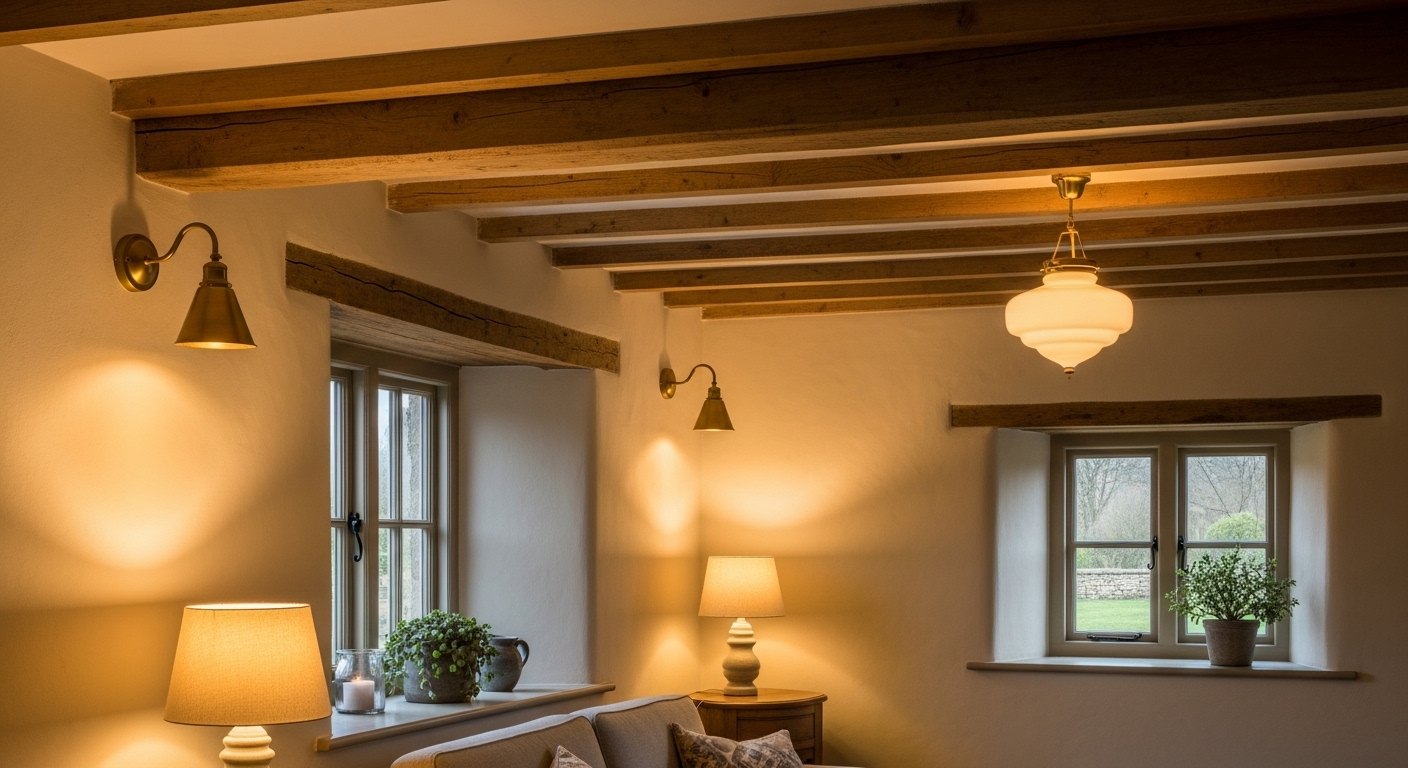
Pendants and low ceilings are a tricky pairing, and getting it wrong means a cracked head and a flattened room. But pendants aren't banned from a cottage. They just belong only in the right spots, hung the right way. After hanging (and re-hanging, and removing) a few in our low-beamed rooms, here's how to choose and place a pendant where ceilings are low.
Where Pendants Actually Work
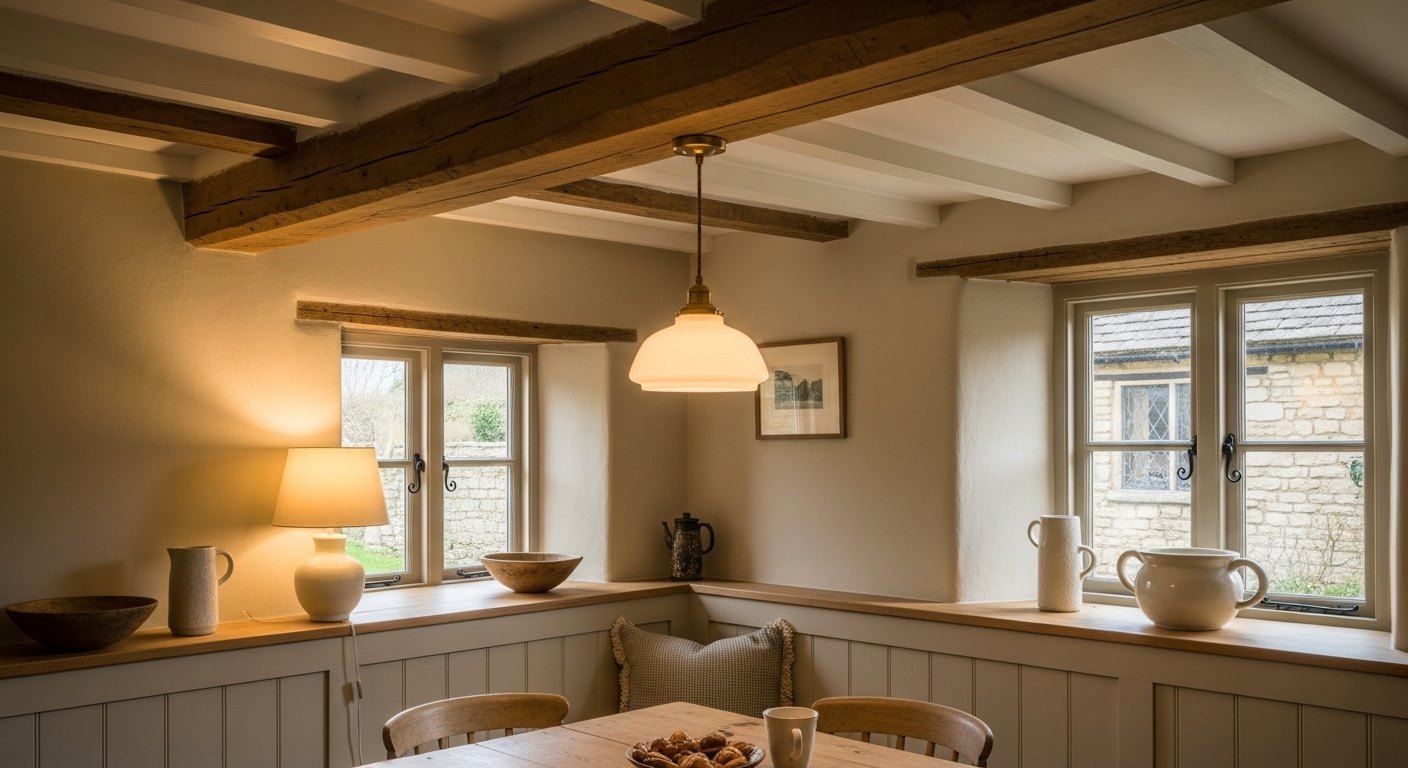
The rule is simple: a pendant belongs only where no one walks beneath it. Over a dining table, over a kitchen island, tucked into a corner by a chair. In those spots the drop is never in anyone's way, so you can hang a lovely pendant low and enjoy it. Over open floor in a low room, though, a pendant is a hazard, that's flush-fixture territory.
How Low to Hang Over a Table
Over a dining table or island, hang the bottom of the pendant 70 to 85cm above the surface, even with a low ceiling, because no one stands there, you can hang it low for an intimate pool of light. And in a beamed room this also tucks it safely below the oak. Over a walkway you'd need full standing clearance, which a low ceiling rarely allows, so don't try.
Flush and Semi-Flush for Walkways
Where there's foot traffic and a low ceiling, a flush or semi-flush fixture is the answer. A flush mount sits tight to the ceiling with no drop, ideal for the lowest rooms; a semi-flush hangs a short way down for a little more presence while still suiting modest ceilings. Both avoid the head-height problem entirely, and a soft flush milk-glass fixture is genuinely lovely in a hall or landing.
Choose a Compact, Soft Shade
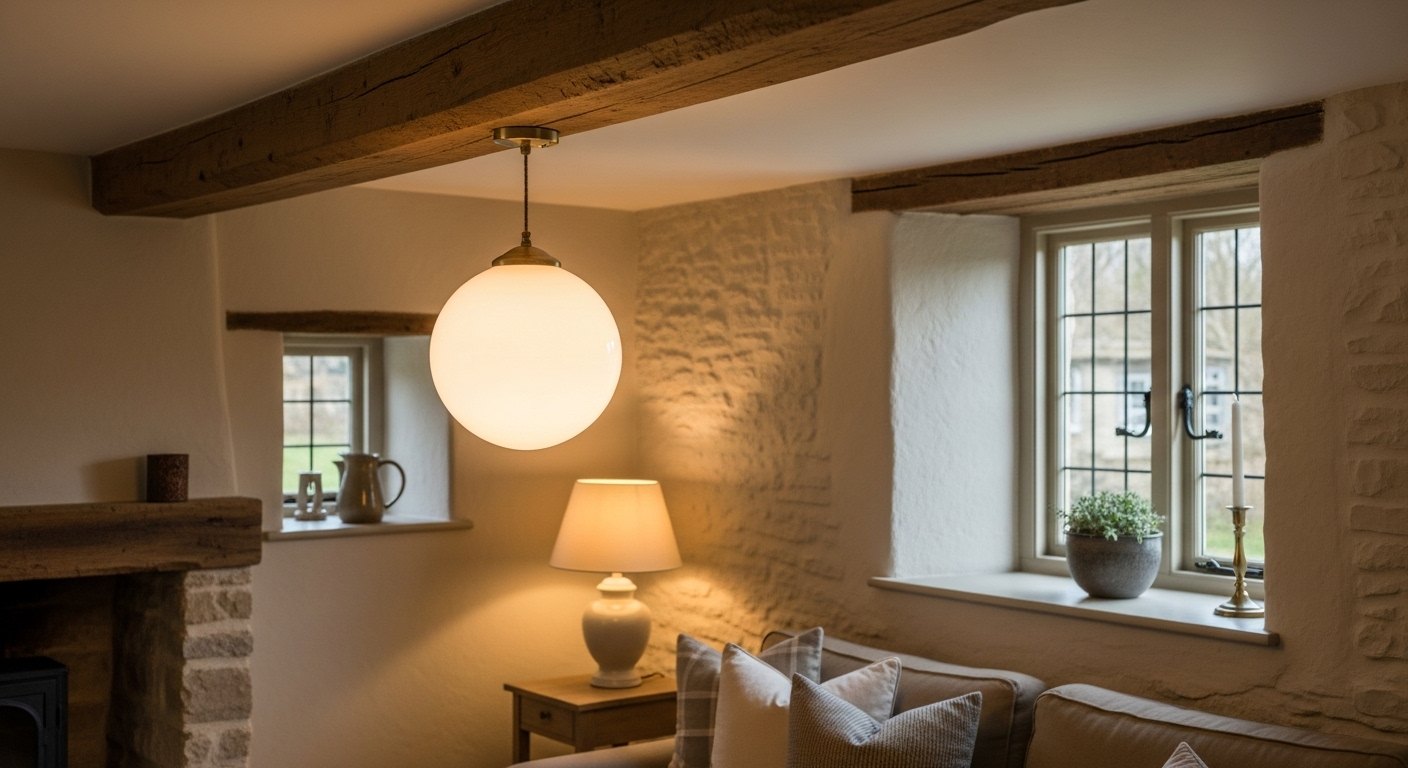
Lower ceilings call for more compact pendants that don't crowd the room. Soft, traditional shapes suit a cottage best, a milk-glass globe or dome glows gently and reads period-appropriate against beams and stone. Avoid large or industrial fixtures, which dominate a low room and feel wrong with the architecture. Smaller and softer is the cottage way.
Scale to the Ceiling
Pendant size should drop with ceiling height. A big, long-drop fixture that would suit a tall room crowds a low one both visually and physically. Reserve any larger pendants for the few tall-ceilinged spots a cottage might have, and keep the low-ceilinged rooms to compact, shallow fixtures. The right scale is what stops a pendant overwhelming a small old room.
Mind the Beams
In a beamed room, position a pendant between the beams, not below them where possible, and always check the lowest beam against head height. The beams are both a constraint and a gift, hung carefully between them, a soft pendant nestles into the architecture and looks as though it belongs. Hung below them, it just gets in the way.
Test Before You Fix
Before committing, hang the pendant temporarily and live with it, walk the room, sit at the table, have the tallest person in the house stand beneath where it'll go. I removed an early pendant after cracking my head on it twice. Five minutes of testing saves a wrongly placed fixture and a sore head.
When in Doubt, Go to the Wall
If a spot can't take a pendant safely, don't force it, a wall light or a lamp will do the job better. In most low-beamed cottage rooms, the honest answer is that a pendant only works over the table, and everywhere else wants sconces and lamps. Reserve the pendant for where it shines, and light the rest from the walls.
Low Ceiling Lighting Ideas: Flush vs Pendant
The core low ceiling lighting question is flush or pendant. Use a flush or semi-flush fixture over walkways and open floor where headroom is tight, and reserve pendants for spots with no foot traffic beneath, over a table or in a corner, hung clear of the beams. Match the fixture to the foot traffic and a low room stays both lit and bump-free.
Scaling a Pendant to a Low Room
Lower ceilings call for more compact, shallower pendants that don't crowd the room or hang into head space. A soft milk-glass globe at a modest scale suits a low-beamed room; a large or long-drop fixture overwhelms it. When in doubt in a low room, go smaller and shallower, and reserve the bigger fixtures for any tall-ceilinged spots.
Shop this post: pendant lights and milk-glass pendant lights