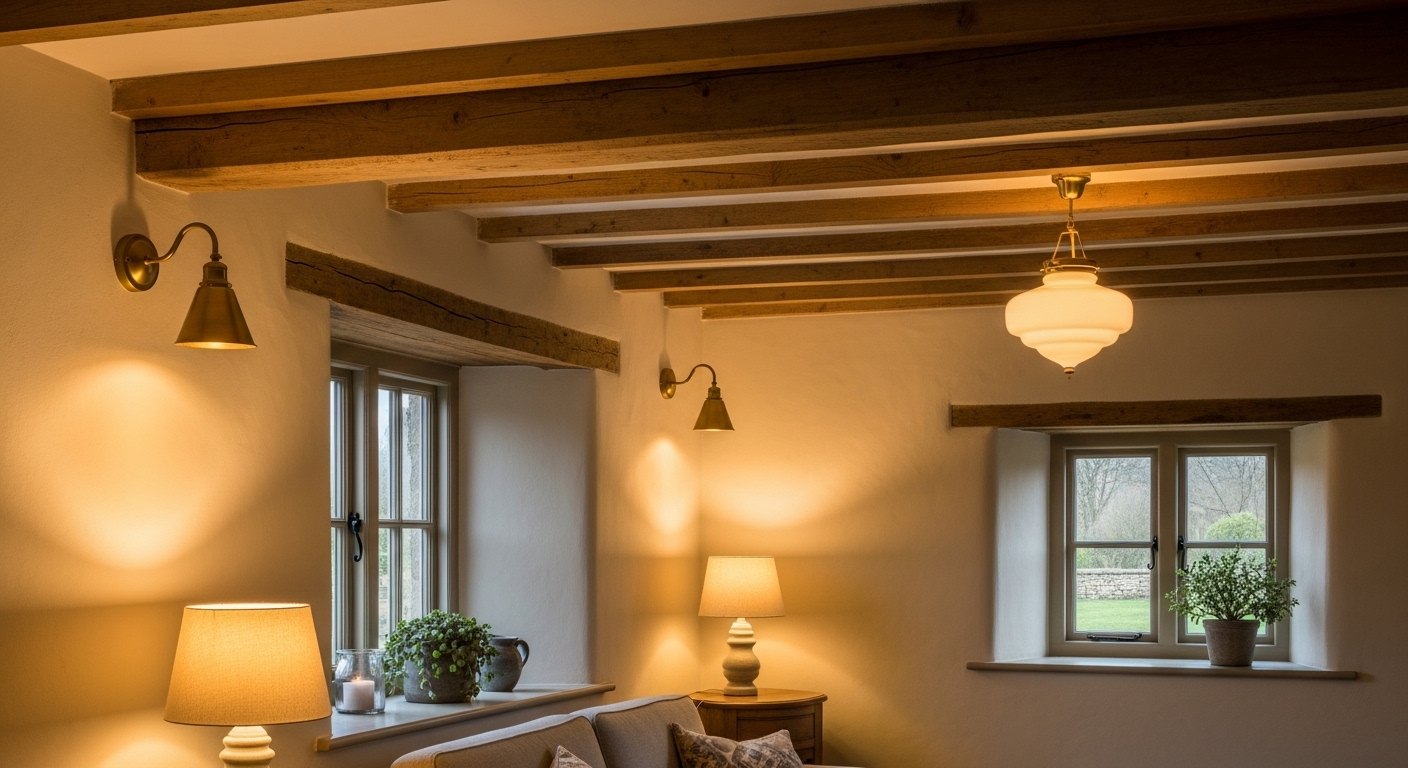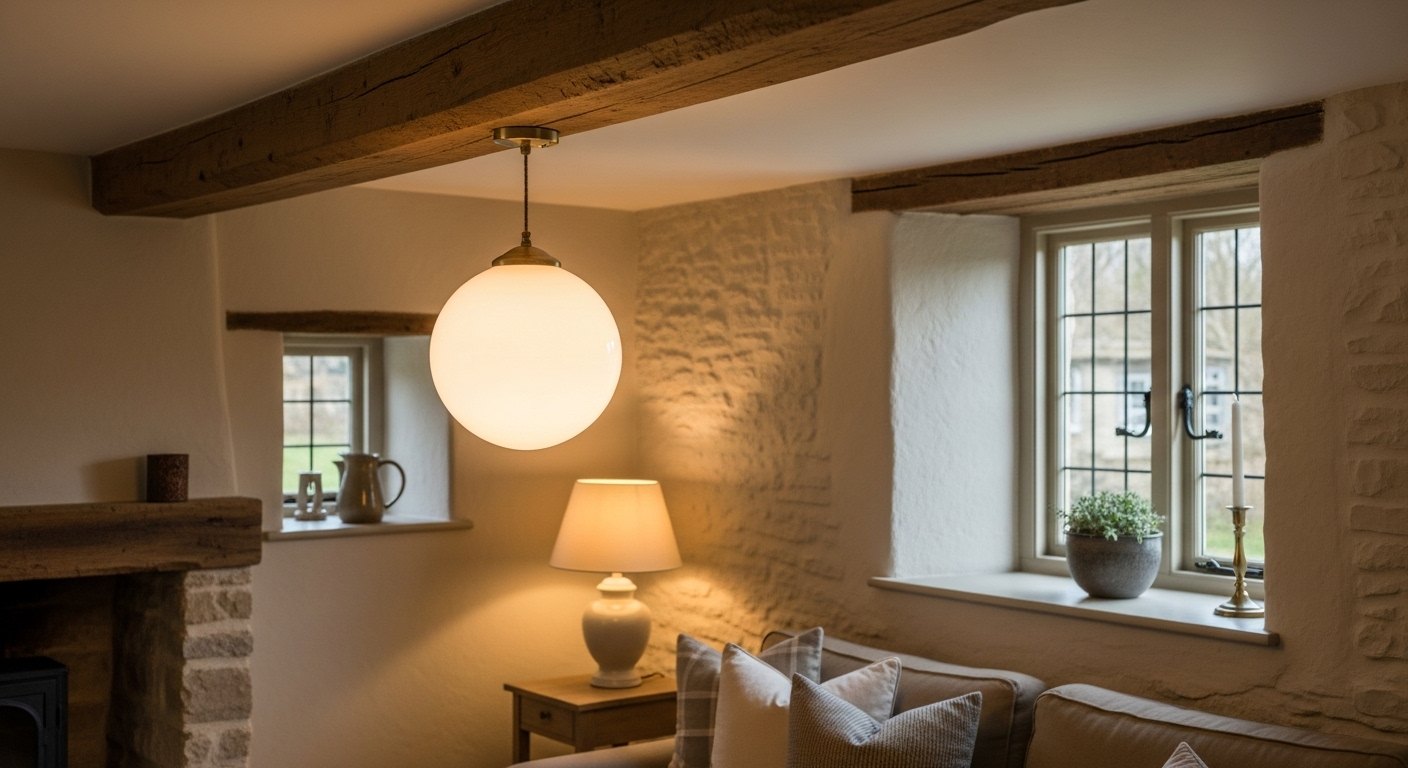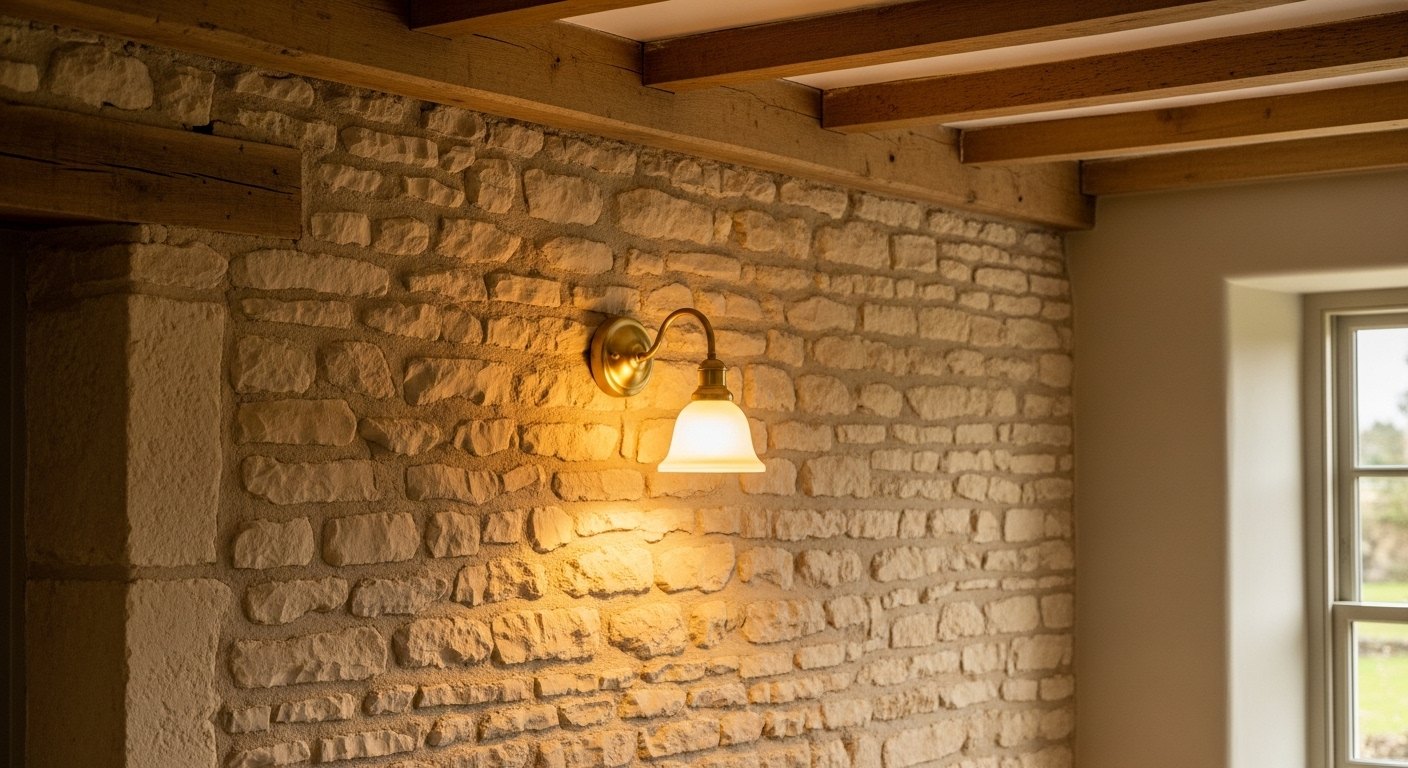
Old cottages were built for candle and lamplight, not overhead bulbs. These rooms went up long before electricity, around the warm low glow of fire and candle, and they still look their best lit that way. Lamps are simply the cottage way. And once you embrace them, a dark old room becomes the cosiest place in the world. Here's why lamplight suits a cottage, and how to layer it.
Built Before Electricity
The proportions of a cottage, low ceilings, deep windows, thick walls, were designed around firelight and candlelight at low levels, not a bright bulb in the middle of the ceiling. That's why a single overhead fixture always feels wrong in an old room: it lights the space in a way the room was never meant to be lit. Lamplight, low and warm, fits the architecture.
Lamplight Is Flattering
Warm light at eye level and below, from lamps and sconces, fills the shadows that overhead light carves under faces, the same reason candlelight has always been flattering. A cottage room lit by lamps glows softly and kindly, where the same room under a ceiling light feels harsh and flat. Low warm light is simply more beautiful to be in.
Layer Several Lamps
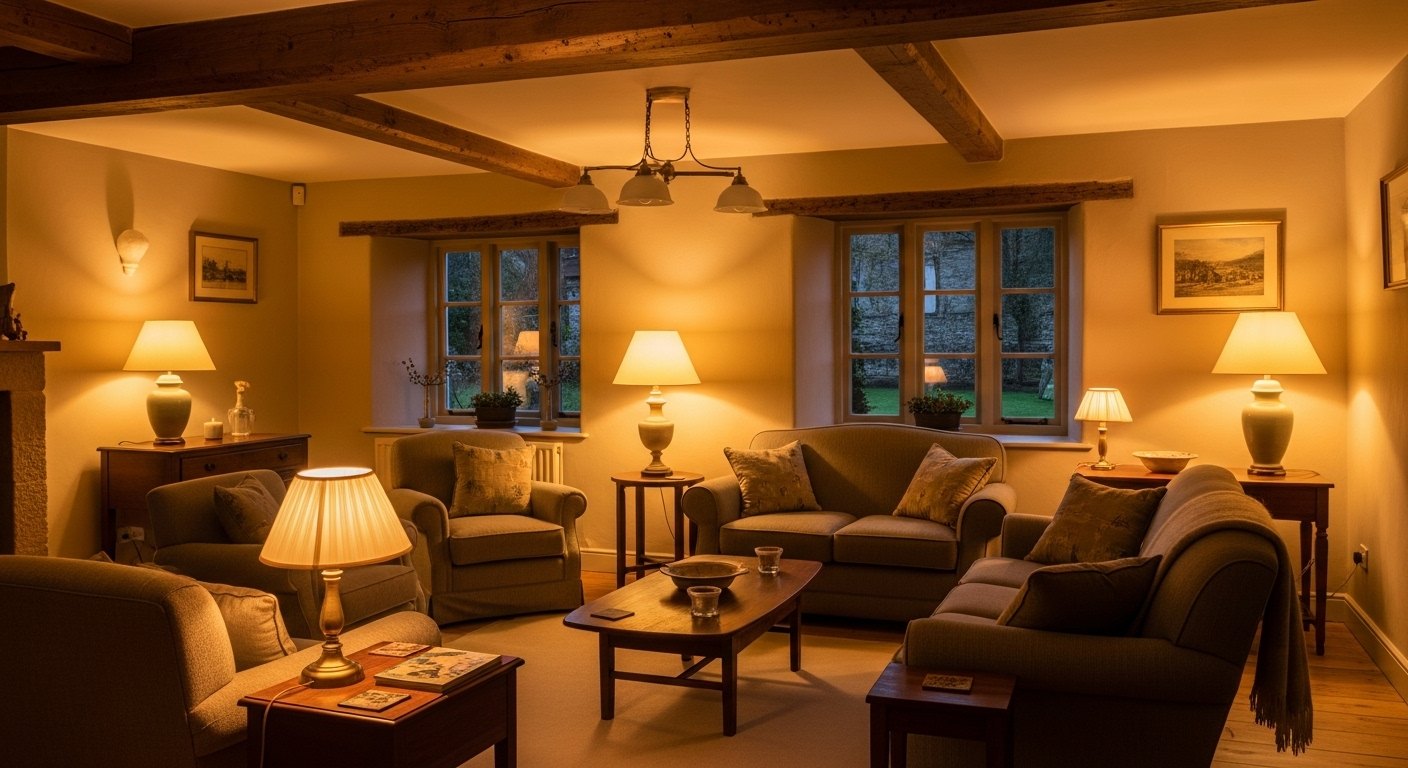
A cottage sitting room wants three to five table lamps and a floor lamp or two, at different heights, almost never all on at once. The point is layered, warm, low light and the flexibility to set the mood, not maximum brightness. Several lamps glowing in a dark room is the whole cosy secret.
Where to Place Them
Distribute lamps around the room at varying heights: one by the seating for reading, one on a dresser or bureau for ambient glow, a floor lamp tucked into a dark corner. Spreading warm light around the perimeter at low levels creates a layered, lived-in glow a single central light could never manage.
You Often Need No Overhead at All
Many of our cottage rooms have no ceiling fixture whatsoever, just lamps and a wall light or two. In a low-beamed room that avoids the awkward pendant problem entirely, and the result is more cosy and characterful, not less. A room lit purely by warm lamplight is the most cottage thing there is.
Warm and Consistent
Every lamp should carry a warm 2700K bulb, kept consistent across the room so the pools of light read as one cohesive glow rather than a jumble of colours. A single cool lamp among warm ones jars instantly. Consistency in warm bulb colour is what makes a collection of lamps feel intentional.
Dimmable Where You Can
Lamps on dimmers, or with dimmable bulbs and a plug-in dimmer, let the whole layer drop low in the evening, which is when a cottage's lamplight matters most. As the light fades outside and the fire's lit, dialling the lamps down to a warm glow is the daily ritual that turns the room into an evening room.
The Cottage Way
If there's a single principle behind lighting an old cottage, it's this: light low and warm, the way the rooms were built to be lit. Lamps and sconces and candles, glowing softly at eye level and below, suit a cottage in a way no overhead ever will. Embrace lamplight, and a dark old house becomes the warmest place you know.
How Many Lamps Does a Cottage Room Need?
More than you'd think, often three to five lamps in a single sitting room, at different heights, almost never all on at once. Cottages were built around candle and firelight at low levels, so layered warm lamplight suits their proportions far better than a bright overhead. The point is choice and warmth, not total brightness.
You Often Need No Overhead at All
Many cottage rooms are lit beautifully with no ceiling fixture whatsoever, just lamps and a wall light or two. In a low-beamed room that sidesteps the awkward pendant problem entirely, and the result is more cosy, not less. A room lit purely by warm lamplight is the most cottage thing there is, and it suits the old proportions perfectly.
Shop this post: table lamps for the living room and floor lamps for the living room