An inglenook or any cottage fireplace needs careful lighting, because the fire must always win. The whole job of the lighting around a hearth is to set the scene without ever competing with the flames. Having lit around our great inglenook, here's the approach that works for any cottage fireplace, from a grand recessed hearth to a simple woodburner.
The Fire Is the Focal Point
Start from one principle: on a winter evening, nothing in the room should be brighter than the fire. That rules out bright downlights, harsh overheads, and anything aimed at the hearth. The fire is the focal point and a primary light source; everything else is a soft supporting glow. Get that hierarchy right and the room almost lights itself.
Flanking Sconces
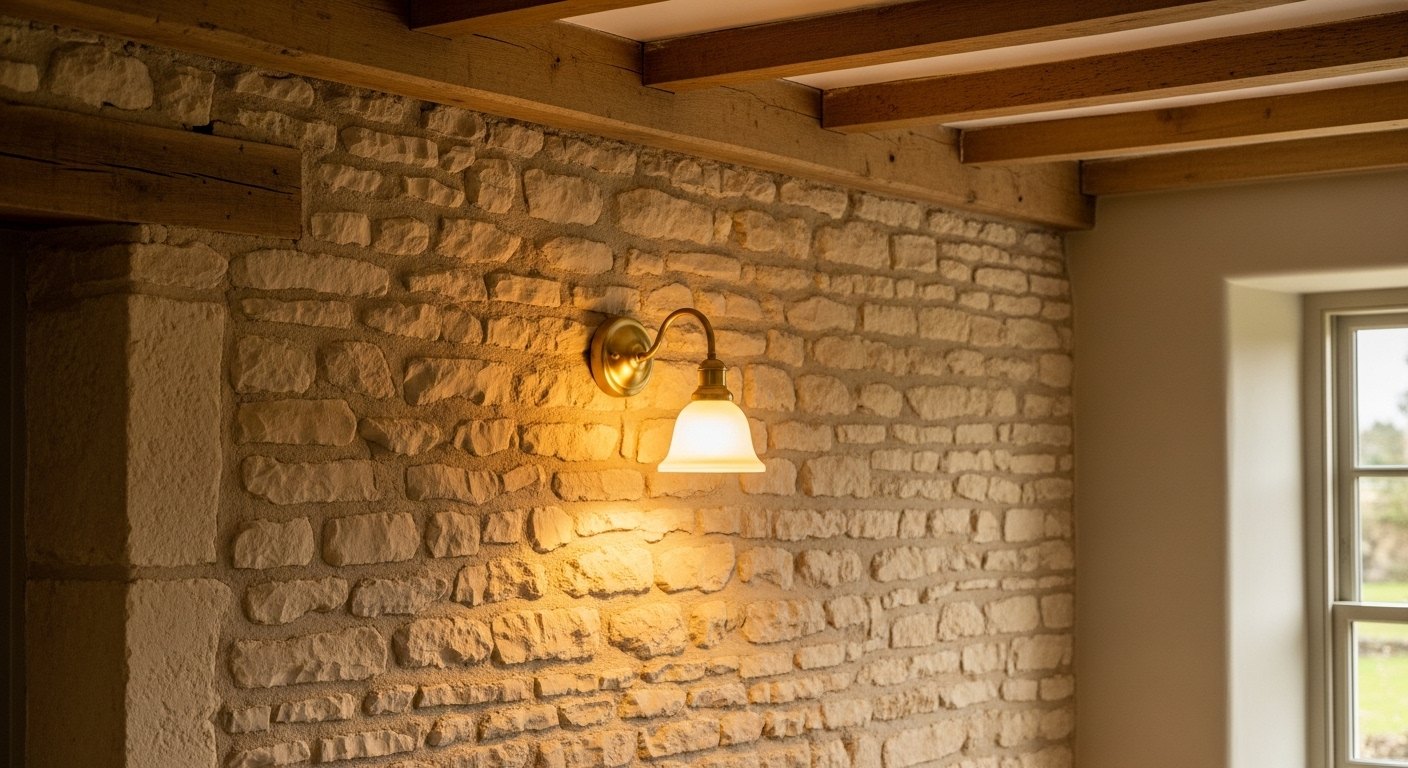
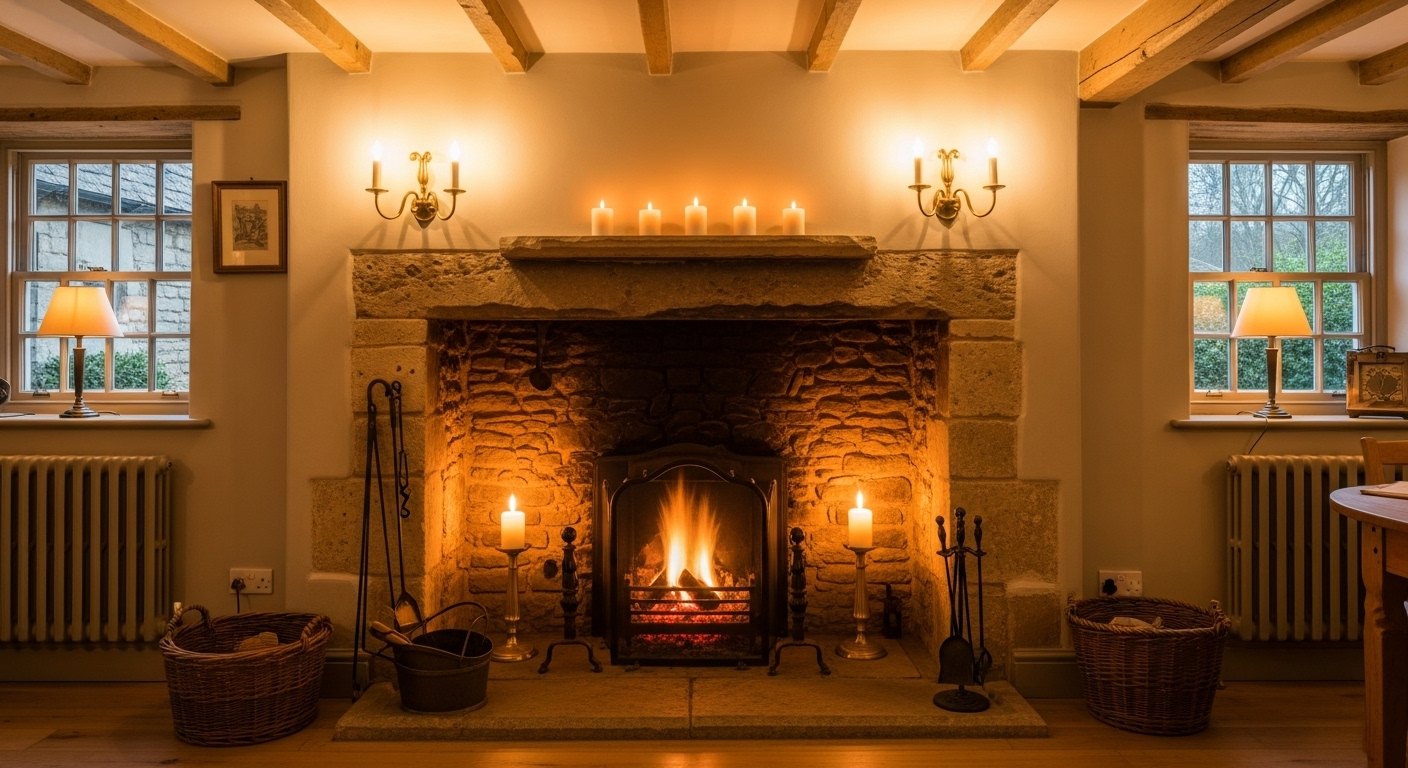
The classic move is a pair of warm brass sconces flanking the chimney breast at eye level, washing the wall on either side. Kept warm and dimmable, they frame the fireplace without competing with it, and they drop right down when the fire is lit. A symmetrical pair flanking a hearth almost always looks intentional and balanced.
Inside the Recess
A deep inglenook goes cave-dark when there's no fire, so a discreet, heat-safe warm light tucked inside can graze the old stone and beam and turn the empty recess into a glowing feature. It must be well-protected from heat and kept subtle. In summer, when no fire's lit, that little light keeps the hearth from becoming a black hole.
The Mantel
The mantelshelf wants soft, period-appropriate light, candles above all. A row of tapers along the mantel is the most cottage-appropriate light there is, doubling the warm flicker when the fire's going. A picture light over a painting above the mantel adds another gentle layer if you have one. Keep the mantel display simple so the light, not the clutter, is what you notice.
Soft Light Elsewhere in the Room
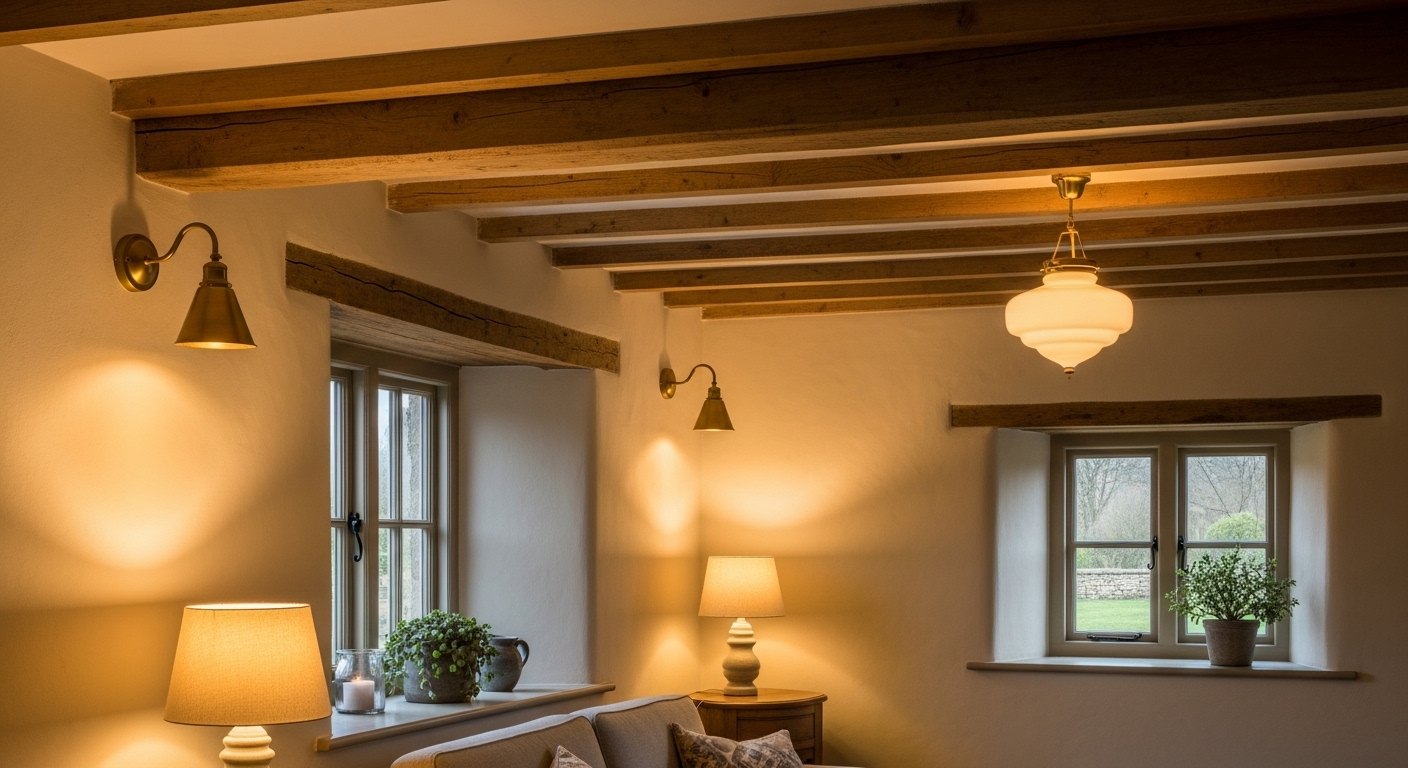
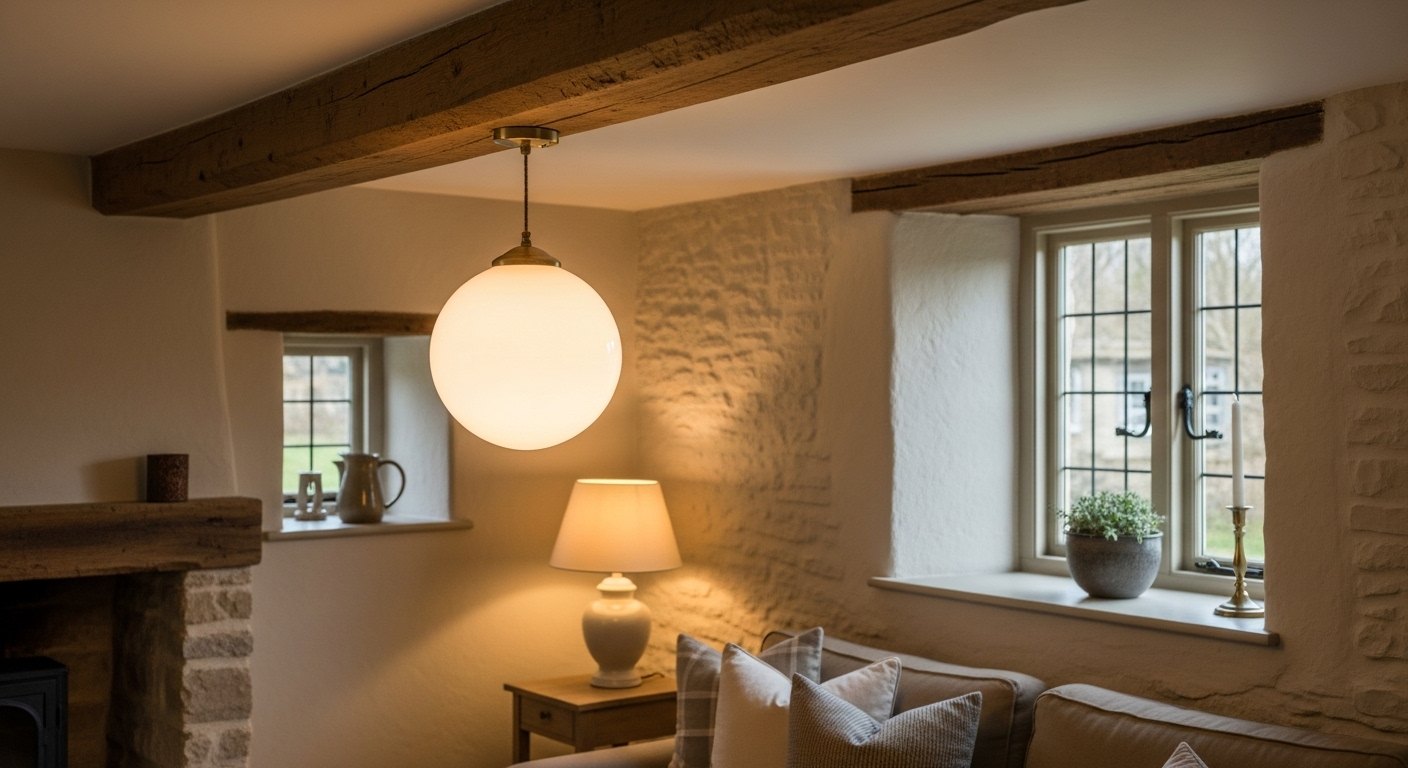
Around the rest of the room, keep to lamps and the occasional sconce at low levels, pools of warm light that fill the room gently without drawing the eye from the fire. The whole scheme should pull you toward the hearth, which is exactly where a cottage wants you to sit on a cold evening.
Dimmers for Two Moods
A fireplace room has two completely different moods, a grey morning with no fire, and a golden evening with the flames going. So everything around the hearth should be on a dimmer. Dimming the warm bulbs makes them glow even more like firelight, so the lighting and the fire blend into one warm scheme rather than competing.
Warm Materials, Warm Light
Old stone, blackened oak, and brass all want warm 2700K light to come alive; cool light makes them grey and dead. The materials around a hearth are warm, so the light must be too. Match them and the whole fireplace wall reads as warm and ancient, exactly as it should.
Let the Hearth Lead the Room
Lit well, a cottage fireplace becomes the unquestioned heart of the room. The spot everyone gravitates to, the focal point the seating faces, the warm glow that defines a winter evening. The lighting's only job is to honour that, never to outshine it. Soft, warm, dimmable, and from the sides: that's the whole secret to lighting around a fire.
Inglenook Fireplace Ideas for Lighting
The key inglenook fireplace ideas for lighting are simple: flank the chimney breast with warm brass sconces, tuck a discreet heat-safe light inside the recess for when there's no fire, line the mantel beam with candles, and put everything on a dimmer. The fire is always the star; the lighting only sets the scene around it, soft and warm and from the sides.
Letting the Fire Lead
On a winter evening nothing should be brighter than the flames, so every light around the hearth dims right down once the fire is lit. Dimming the warm bulbs makes them glow even more like firelight, so the sconces, the candles, and the fire blend into one warm scheme rather than competing. The whole room should pull you toward the hearth.
Shop this post: brass wall sconces and wall sconces