On a grey English afternoon. And there are many. The bulb is everything. When the sky won't cooperate and the deep-set windows let in only a thin, flat light, the warmth of your bulbs is what decides whether a cottage glows or sulks. After living through a few Cotswold winters, I'm convinced the humble bulb is the most important and most overlooked decision in a cottage. Here's the warm-light secret.
The Number That Matters: 2700K
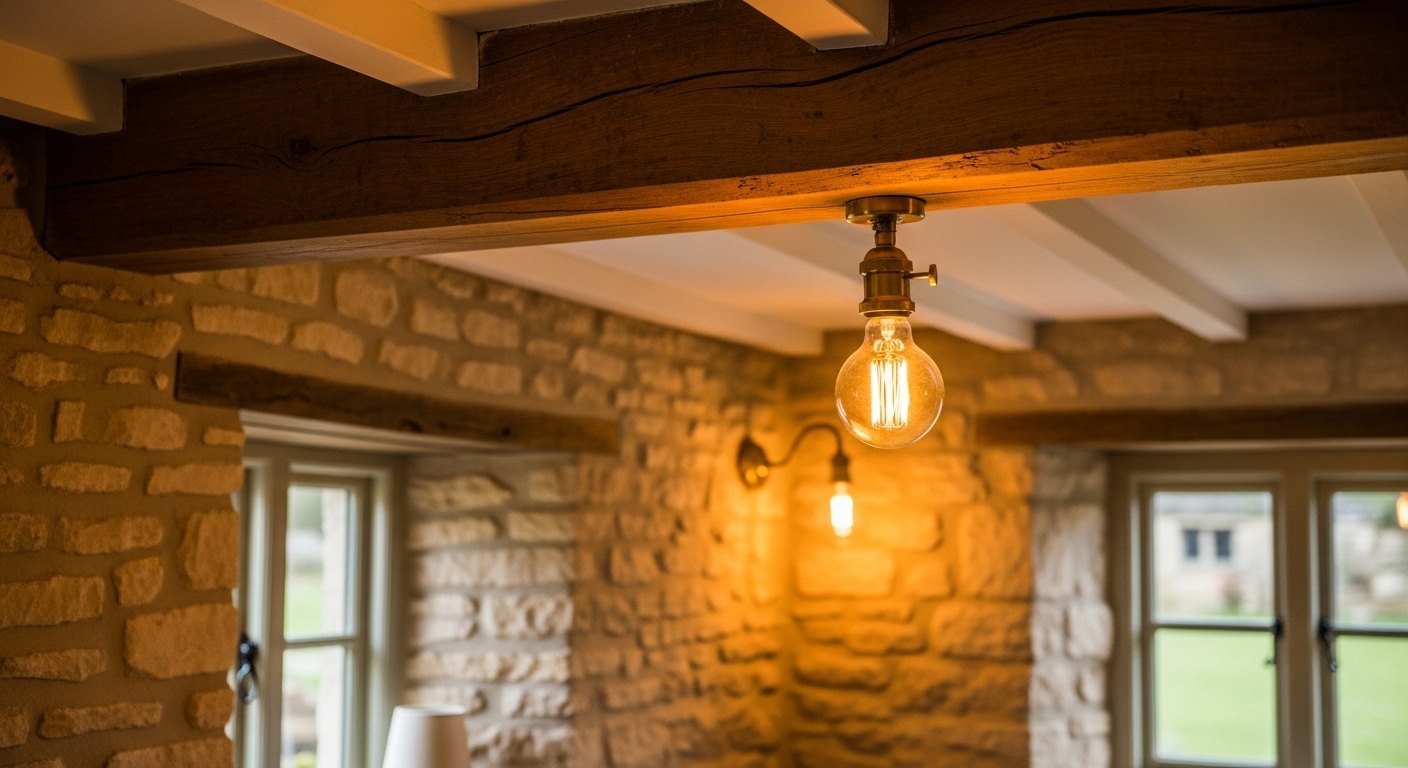
Bulbs carry a Kelvin number for colour temperature, and lower is warmer. For a cottage I use 2700K everywhere. It echoes candle and firelight and makes stone, oak, and plaster glow. Some go even lower, to 2400K, for an extra-cosy register. What you must avoid is cool 'daylight' bulbs, which make warm old materials look grey and the whole room feel wrong.
Warm Light and Old Materials
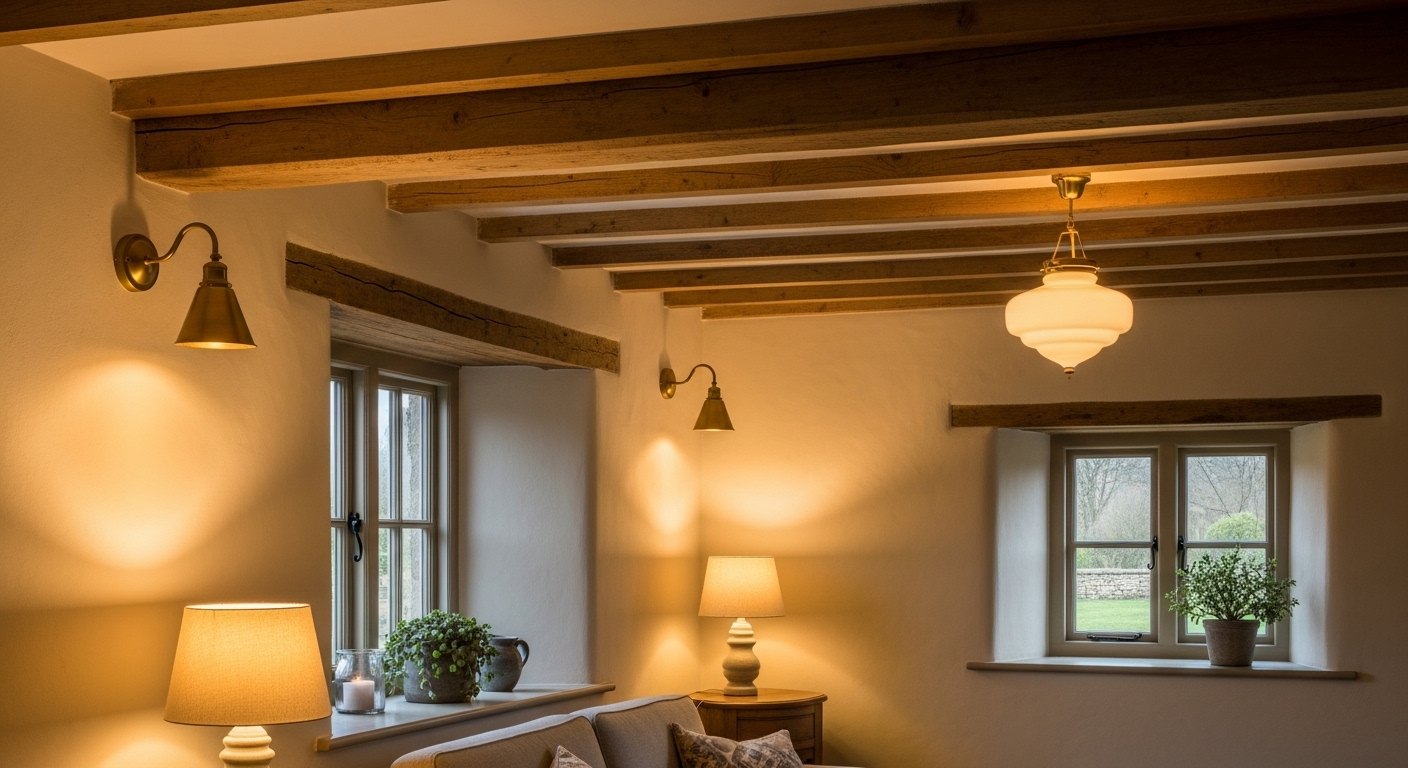
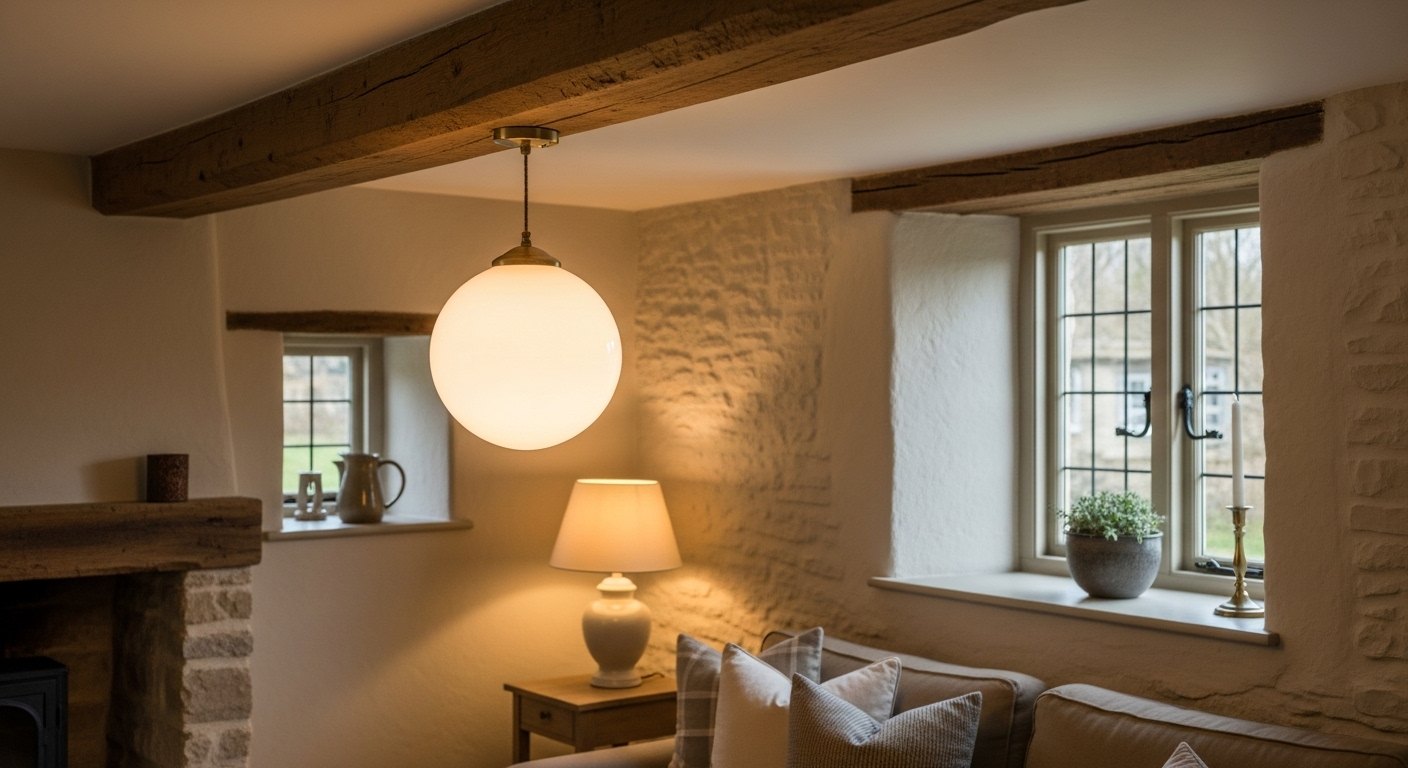
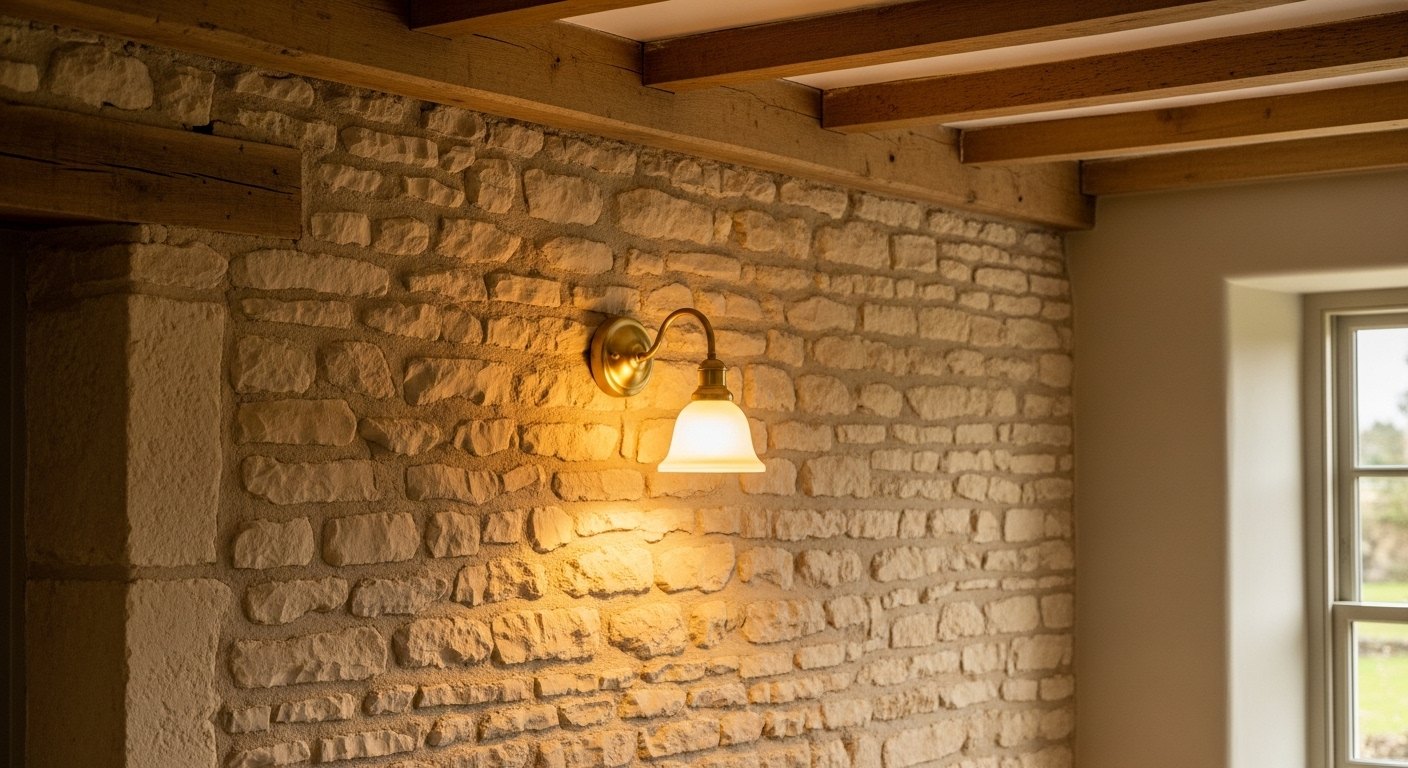
A cottage is built of warm materials, honey-coloured stone, oak beams, lime plaster. And they only come alive under warm light. A sconce or pendant with a warm bulb makes the stone read golden and the oak rich; the same fixture with a cool bulb makes them grey and dead. Warm light isn't a preference in a cottage, it's a requirement for the materials to look right.
Don't Forget CRI
Beyond colour temperature, CRI, colour rendering index, measures how truthfully a bulb shows colour. A bulb at 90 or above makes stone, wood, and warm tones look rich and true; a cheap low-CRI bulb dulls everything to grey. In a cottage full of natural materials, high-CRI warm bulbs are worth the small extra cost. Check the fine print on the box.
Warm Doesn't Mean Dim
A common worry is that warm bulbs are dimmer, they're not. Brightness is lumens; warmth is Kelvin, and they're separate. A warm 2700K bulb can be every bit as bright as a cool one. So on a dark grey day you can have plenty of warm light: choose the lumens for brightness and the Kelvin for warmth, and you get both.
Beating the Grey-Day Gloom
The reason a cottage feels gloomy on an overcast afternoon is the thick walls and small windows, not the bulbs themselves. So the cure is plenty of warm light from several low sources, plus lightened walls and a mirror to bounce daylight. Layered warm lamplight is what keeps a cottage glowing when the sky outside has given up.
Keep It Consistent
One overlooked detail: every bulb in a room should be the same warm colour. A warm lamp beside a cool one reads as a mistake even when you can't say why. Pick 2700K and use it in every fixture, so the lamps and sconces read as one cohesive golden glow rather than a clashing jumble. Consistency is what makes a layered scheme feel intentional.
Dimmable, Naturally
Warm and dimmable together are the cottage ideal, bright-ish warm light on a dark afternoon, dialled low and golden in the evening. Buy dimmable warm bulbs by default, because a cottage room needs that whole range from grey-day practical to firelit-evening cosy. Just pair them with a dimmer rated for LEDs to avoid flicker.
The Cheapest Transformation
Bulbs cost a few pounds. Swapping every bulb in a cottage to warm, high-CRI 2700K is the cheapest and most transformative thing you can do. It makes the stone glow, the oak warm, and the grey day bearable, before you buy a single new fixture. If you do one thing after reading this, change your bulbs.
Best Light Bulbs for a Cottage
The best light bulbs for a cottage are warm white 2700K with a high colour rendering index of 90 or above, dimmable wherever there's a dimmer. Warm colour makes stone, oak, and plaster glow; high CRI keeps the warm tones true; dimmable lets one fixture serve a grey morning and a firelit evening. Those three labels, 2700K, 90+ CRI, dimmable, are all you need to check.
Warm Doesn't Mean Dim
A common worry is that warm bulbs are dimmer, they're not. Brightness is lumens; warmth is Kelvin, and the two are separate. A warm 2700K bulb can be just as bright as a cool one, so on a dark grey afternoon you can have plenty of warm light. Choose the lumens for brightness and the Kelvin for warmth, and you get both at once.
Shop this post: pendant lights and wall sconces