Lighting a low-beamed cottage breaks all the usual rules. Everything modern lighting advice assumes, high ceilings, a central pendant, downlights, is exactly wrong in a room with oak beams at head height, thick stone walls. And small deep-set windows. After restoring our 1720s cottage room by room, here's the whole approach I wish I'd known at the start.
Why the Usual Rules Don't Apply
A cottage is dark by nature: thick walls and tiny windows let little daylight in, and dark beams drink what there is. And you can't simply hang a big pendant in the middle of a room where the ceiling is barely above your head. So cottage lighting throws out the central-pendant playbook and works instead from the edges and from low down. Accept that, and everything else follows.
Lead With Wall Lights
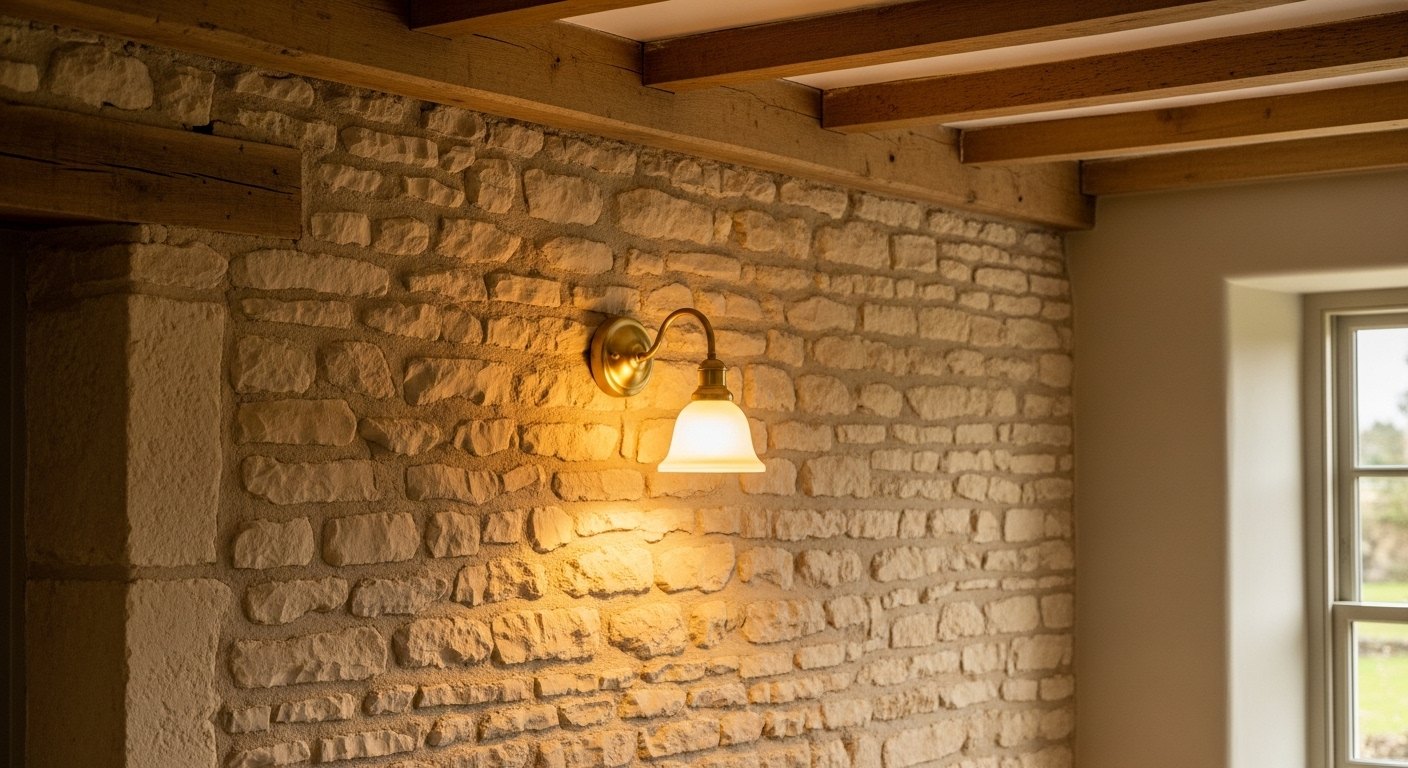
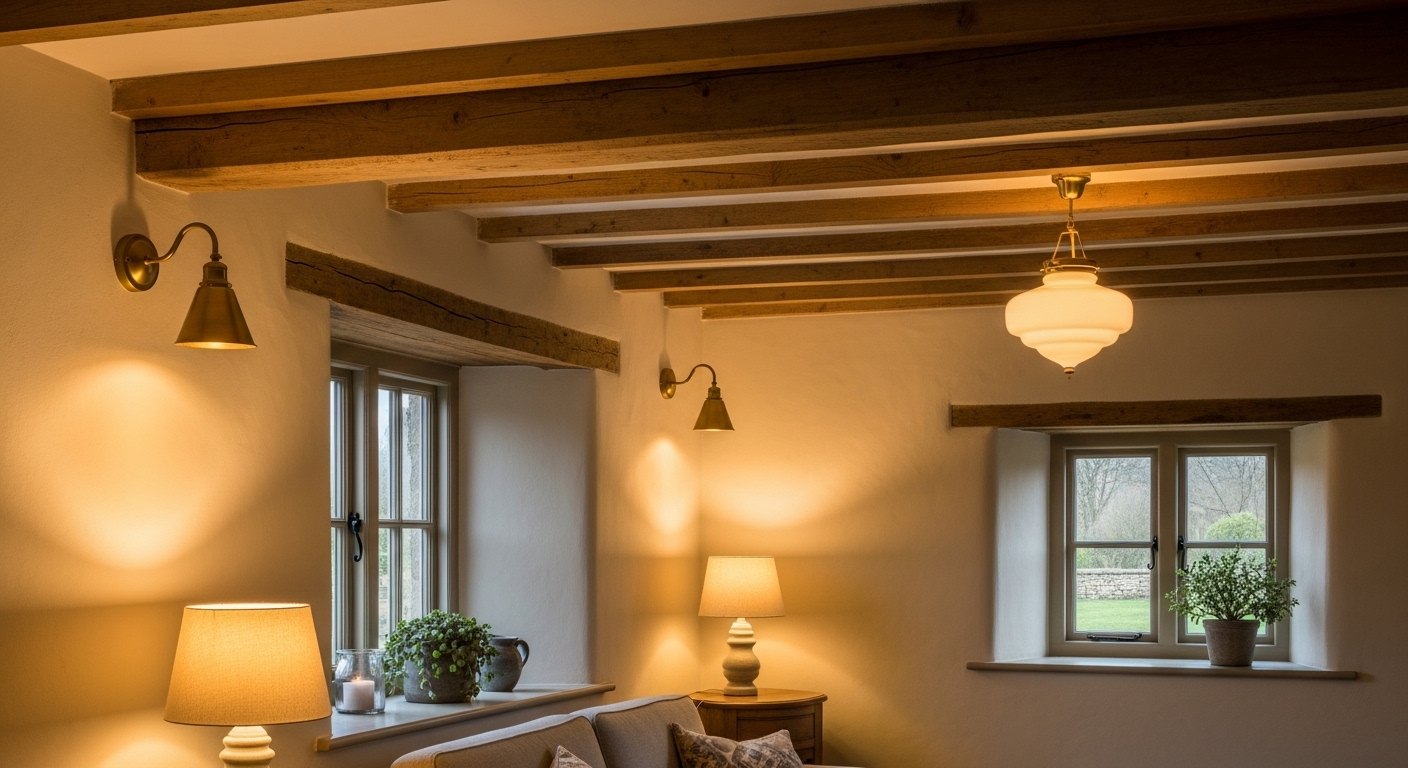
The workhorses of a low-beamed room are wall sconces at eye level. They throw warm light onto the walls without dropping anything into the room, they're flattering the way lamplight is. And they suit the period, brass or milk glass against stone or plaster is the heart of the cottage glow. In most cottage rooms, sconces do the job a central pendant would in a modern one.
Where Pendants Still Work
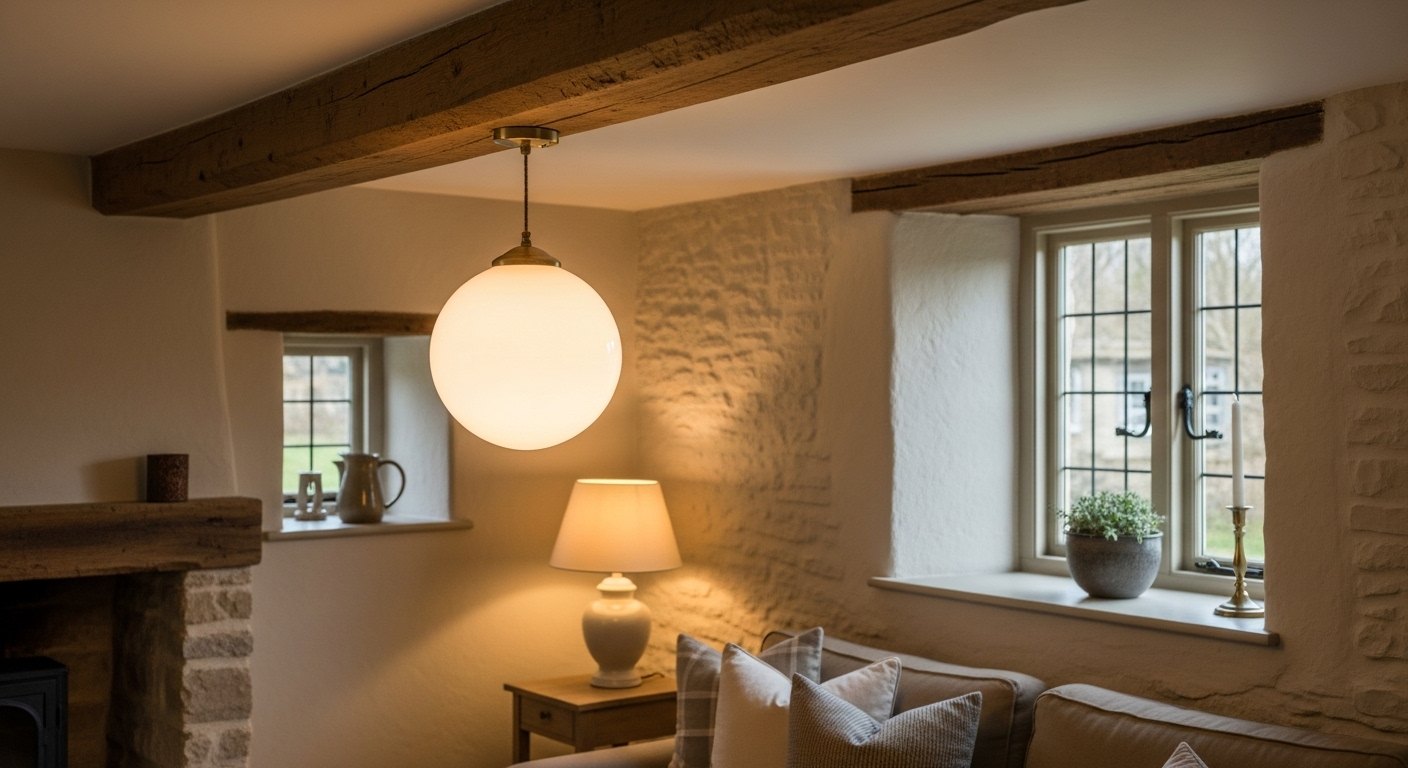
Pendants aren't banned. They just belong only where there's no foot traffic beneath. Over a dining table, over a kitchen island, tucked into a corner. Even then, hang them carefully clear of head height under the beams. A soft milk-glass pendant over a table is one of the loveliest lights in a cottage; the same pendant over open floor is a hazard.
Lamps Everywhere
A cottage wants lamps the way a garden wants flowers. Table lamps on side tables and dressers, a floor lamp by a chair, pools of warm light at different heights. Several lamps in a room, almost never all on at once, are what turn a dark cottage cosy rather than gloomy. Layered low light is the whole secret.
Lighten the Walls
Fixtures alone won't beat the gloom. The walls matter too. Lime wash or a warm off-white lifts a dark room and bounces what daylight there is, and makes the beams read as warm character rather than oppressive dark lines. Pale walls make every lamp and sconce work harder.
The Warm-Bulb Secret
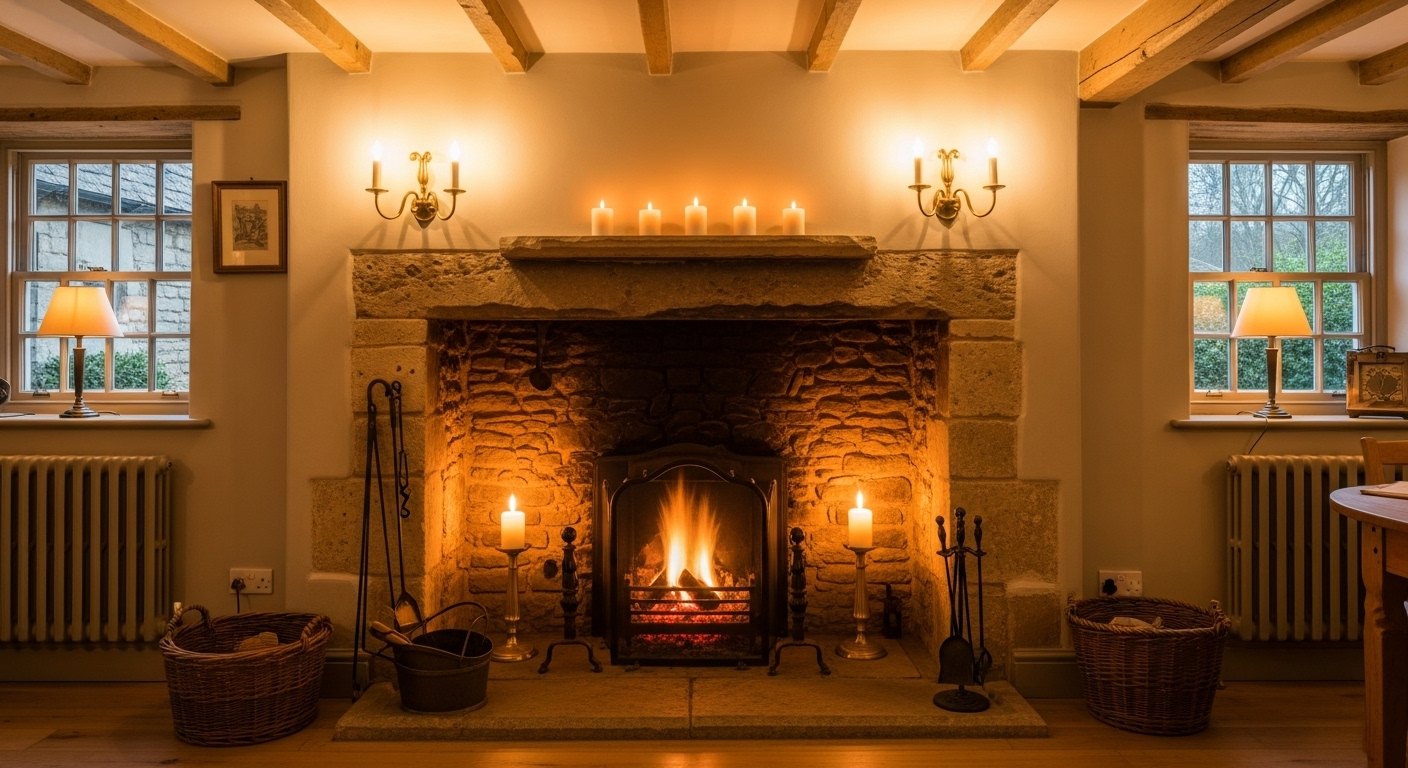
Every bulb in a cottage should be warm 2700K. Warm light echoes the candle and firelight the rooms were built around, and it makes stone, oak, and plaster glow; cool light makes them look grey and dead. It's the single most important and cheapest decision in cottage lighting. The ENERGY STAR bulb guide explains the numbers if the box confuses you.
Mirrors and Reflective Surfaces
A mirror opposite a deep-set window bounces daylight further into a thick-walled room, worth a whole extra window. Polished brass, glass, and pale surfaces all bounce the lamplight in the evening too. In a naturally dark cottage, reflecting light around is as useful as adding more of it.
Dimmers for Two Moods
A cottage room has two completely different moods, a grey morning with no fire, and a golden evening with the lamps low and the hearth lit. Dimmers let the same fixtures serve both, and dimming warm bulbs makes them glow even more like firelight. Put the main lights on dimmers and a cottage room can be whatever the hour needs.
A Low-Beamed Lighting Checklist
To light a low-beamed cottage, work down this list: lead with wall lights at eye level; reserve pendants for spots with no foot traffic and hang them clear of the beams; add lamps generously; choose shallow flush fixtures for low walkways; lighten the walls; warm every bulb to 2700K; and put it all on dimmers. Tick those off and a dark, beamed room glows warmly without a single head-height hazard.
Common Cottage Lighting Mistakes
The mistakes I see most: a single bright overhead that flattens the room; a deep central pendant you crack your head on; cool-white bulbs that make stone and oak look grey; and relying on one fixture instead of layering several warm sources. Fix those four and a cottage transforms, usually before you've spent anything beyond a box of warm bulbs.
Shop this post: wall sconces and milk-glass pendant lights