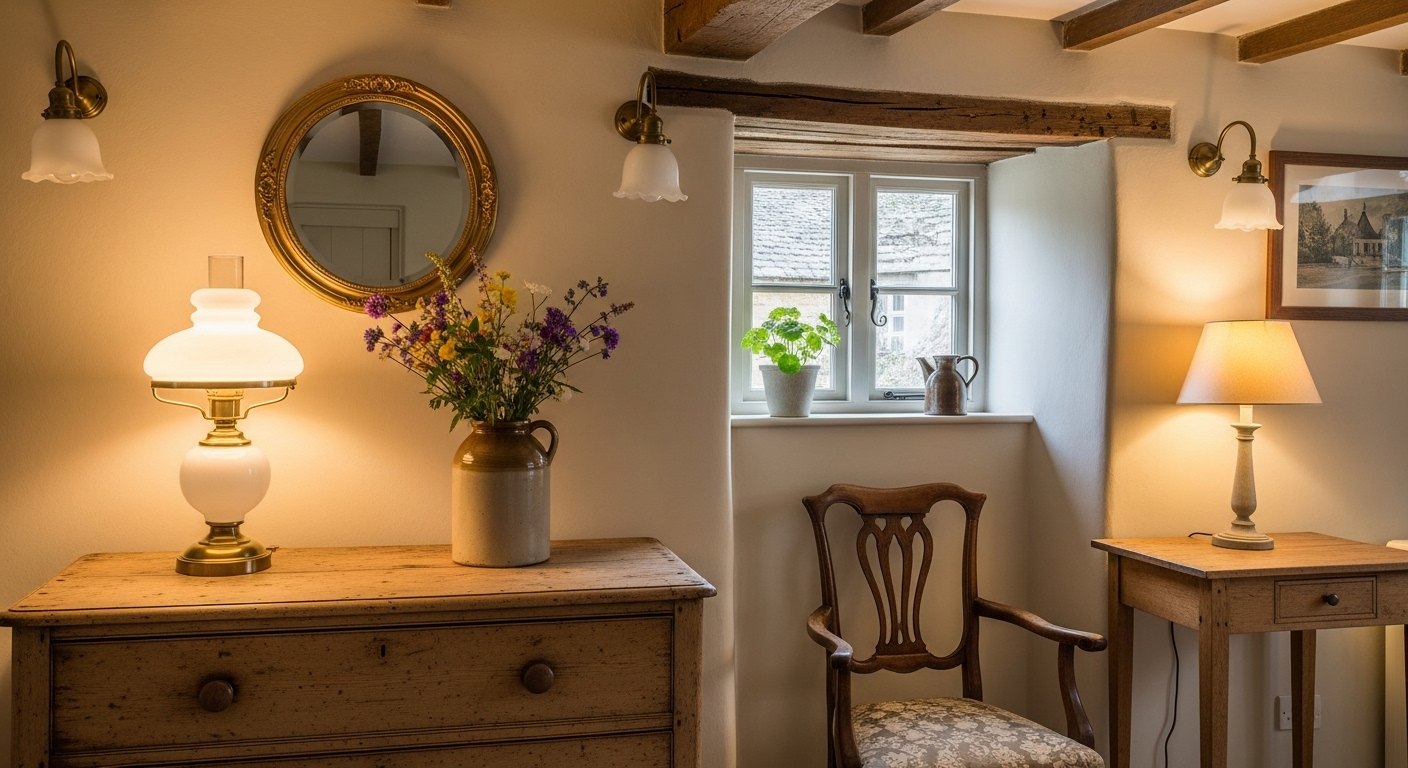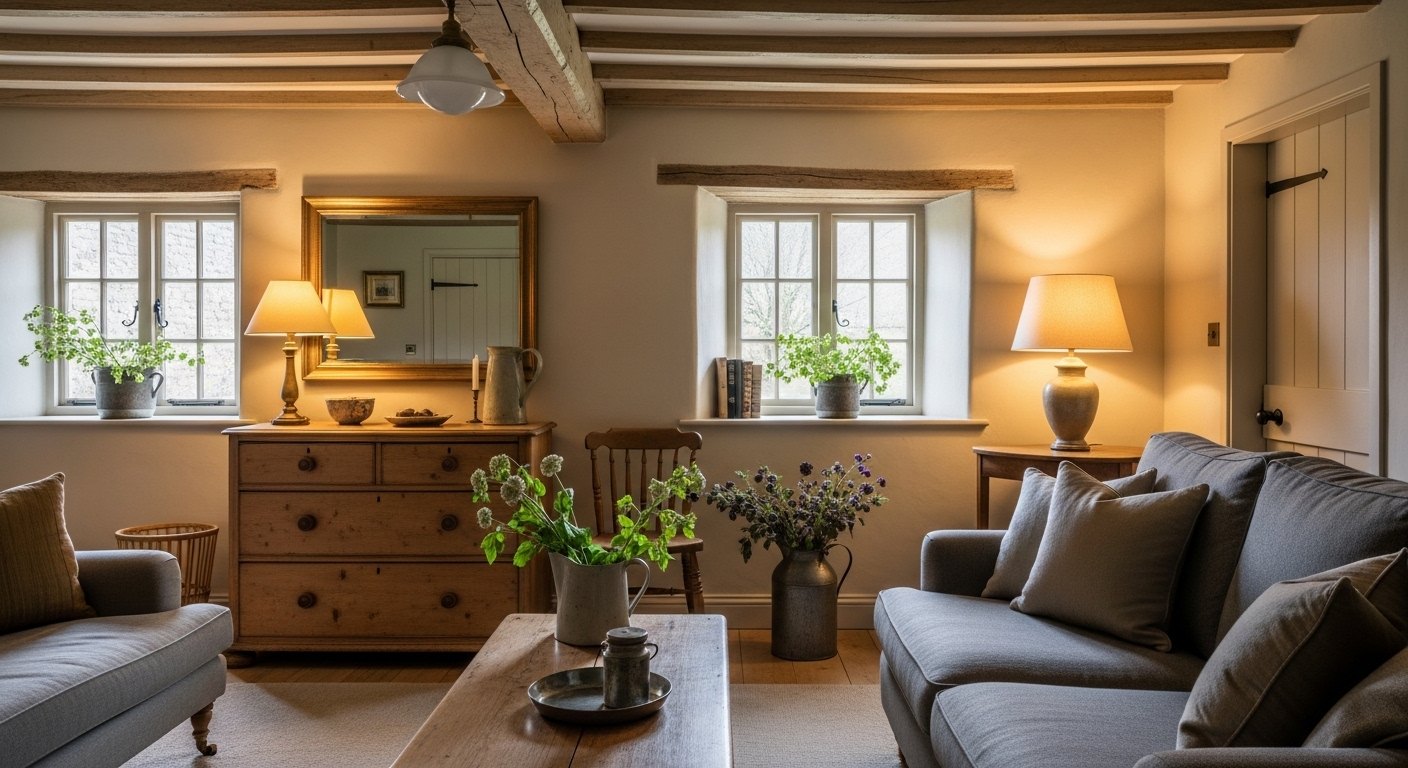
Antiques fairs and salvage yards are a cottage's best friend. I've furnished whole rooms this way for under £300. The Cotswolds are full of them, and there's no better way to furnish an old house with soul than to hunt for the worn, characterful pieces that look as though they've always belonged. Hunting is also how a cottage avoids the matched-set, bought-new look. Here's how I shop.
Where to Look
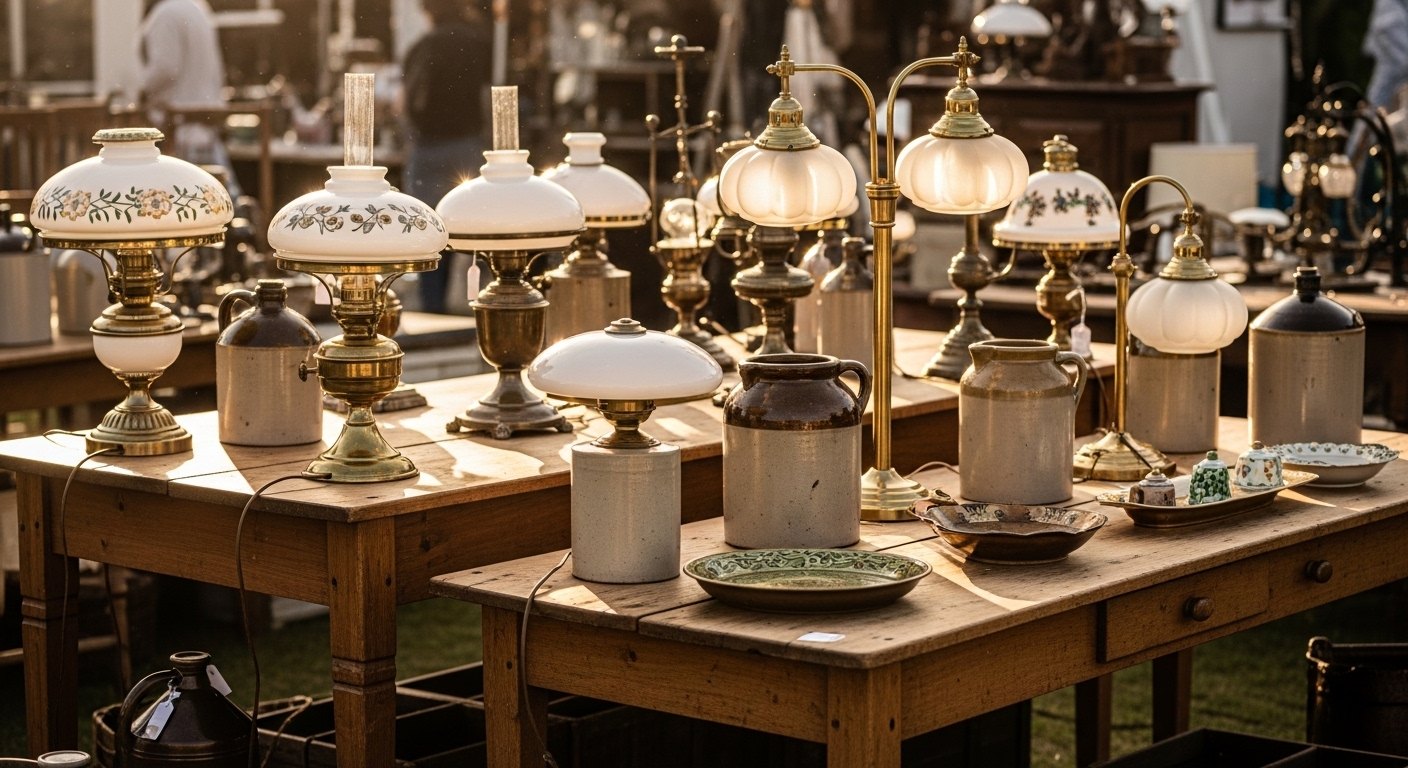
Country antiques fairs, reclamation and salvage yards, auction houses, charity shops, and marketplace listings are all rich sources. Fairs and salvage yards are especially good for cottage pieces, worn timber furniture, brass and glass lighting, old jugs and crocks, the odd architectural salvage. Patience and frequent looking beat any single source; the best finds come to those who go often and buy rarely.
What to Look For
Hunt for solid construction, natural materials, and timeless forms, real wood, sound joinery, real brass, quality glass, simple classic shapes. Check drawers, legs, and joints for stability, and look for solid timber rather than veneer over board where it matters. The best finds are well-built pieces in honest shapes that need only a clean or light restoration to look right in a cottage.
Lighting Is the Best Value
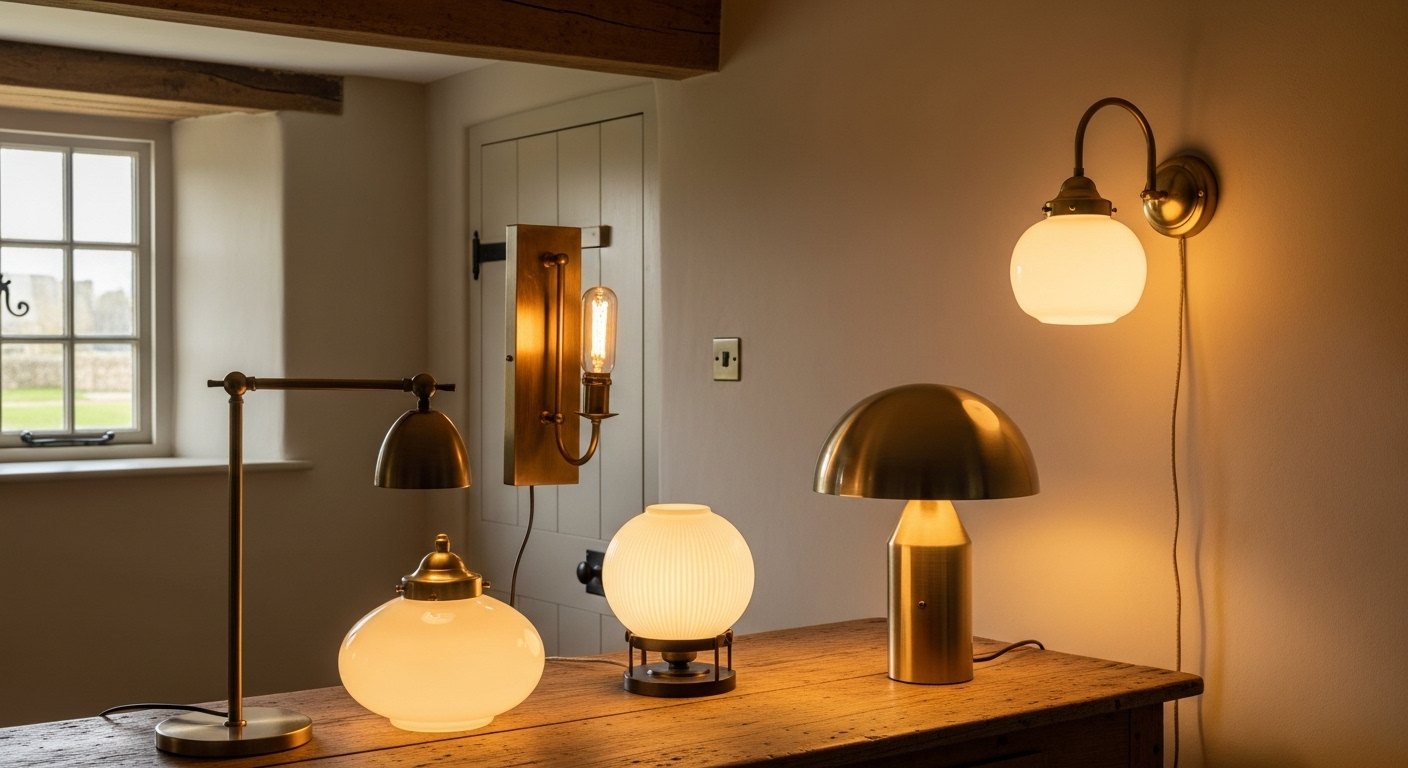
Vintage lighting is some of the best value at a fair. A brass lamp base, a retro glass wall lamp, a simple lantern. These bring instant cottage glow. The retro wall lamp and table lamp collections are a good reference for the shapes to hunt for, and if a genuine vintage piece is too far gone to rewire safely, a vintage-inspired version gives the look with safe modern wiring.
Check the Wiring
Secondhand lamps and fixtures need a careful look before you trust them, frayed or cracked cords, intact plugs, sockets that aren't scorched. Rewiring is cheap and easy if you're handy or through a shop, and a great old base is worth it. In an old cottage with old circuits, it's worth having the wiring checked too. Walk away from anything that flickers, buzzes, or smells of burning.
Is It Worth Restoring?
A solid timber piece with good bones is often worth cleaning, waxing, or refinishing, and a beautiful lamp base is worth rewiring. Restore when the construction is sound and the form timeless. Skip woodworm, structural damage, heavy water damage, or repairs that would cost more than the piece is worth. Sound bones and light restoration is the sweet spot for a cottage find.
Don't Overpay for a Label
The word 'antique' inflates prices on plenty of ordinary pieces. Set a budget before you go, learn roughly what common items are worth, and don't be talked into overpaying. Salvage yards and general fairs are usually fairer than hand-picked dealers, dealers often expect a little gentle haggling. And walking away nearly always turns up something better at a fairer price.
Buy Slowly
The best cottages are gathered over years, so resist the urge to furnish a room in one fair. Carry your palette and your room measurements in your head, go often, and let the right pieces find you. That patience is exactly what gives a cottage its collected, soulful, can't-buy-it-new character, a room filled in a single trip never quite has it.
The Joy of the Hunt
Half the pleasure of a cottage is the hunting itself. The early-morning fair in the drizzle, the salvage-yard rummage, the lamp base you rewire on a wet Sunday. The pieces you've found and restored mean more than anything ordered new, and they carry the stories of the hunt as well as their own history. A cottage furnished this way is never just decorated; it's collected, lived, and loved.
What to Look for at an Antiques Fair
At a fair, look for solid construction, natural materials, timeless forms, and lighting with sound or fixable wiring, worn timber furniture, brass and glass, old jugs and crocks. The best finds are well-built pieces in honest shapes that need only a clean or light restoration. Vintage lighting is especially good value and brings instant cottage character.
Restore, or Walk Away?
Restore when the bones are sound and the form timeless, a solid timber piece is worth waxing, a great lamp base worth rewiring. Walk away from woodworm, structural damage, or repairs costing more than the piece is worth. Set a budget, learn what common pieces cost, don't overpay for an 'antique' label, and be willing to leave it; patience turns up something better.
Shop this post: retro and vintage wall lamps and living room table lamps