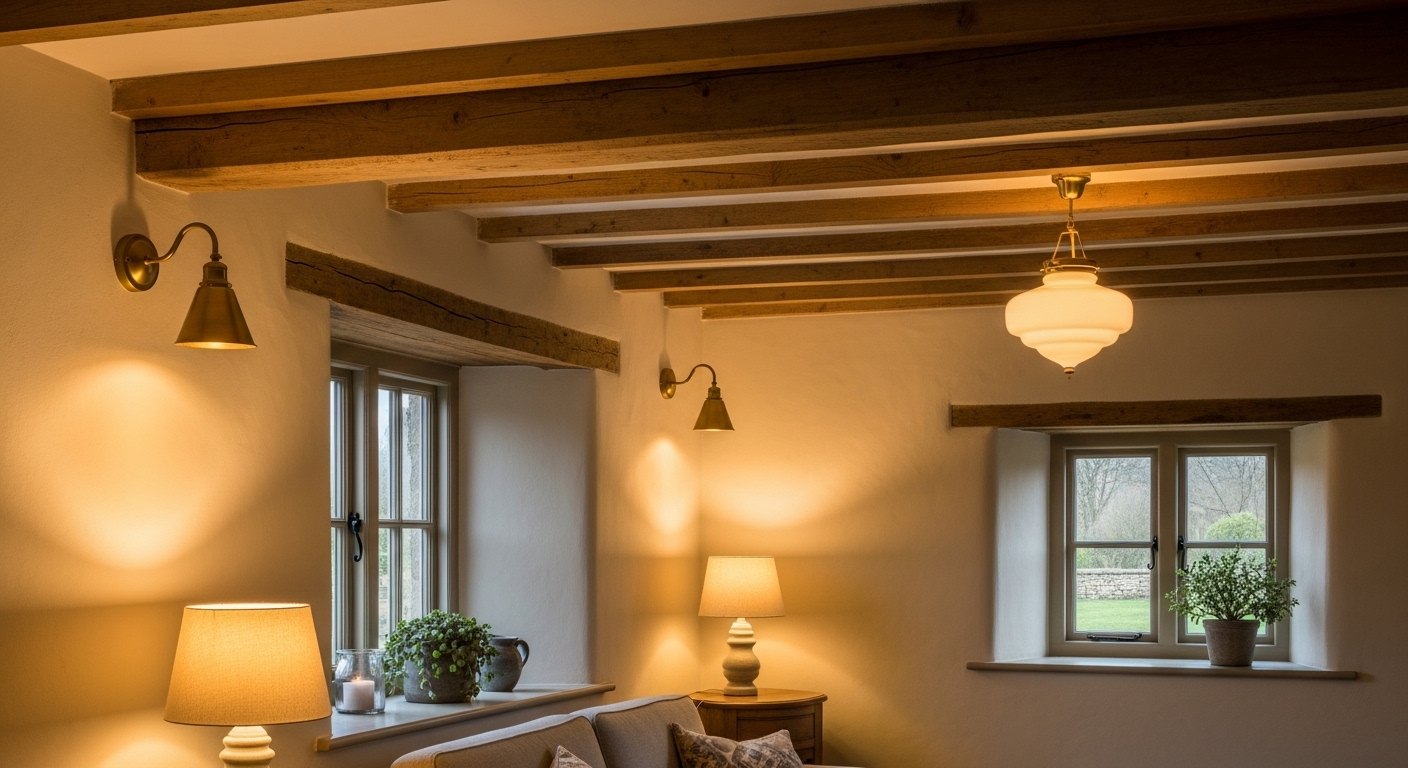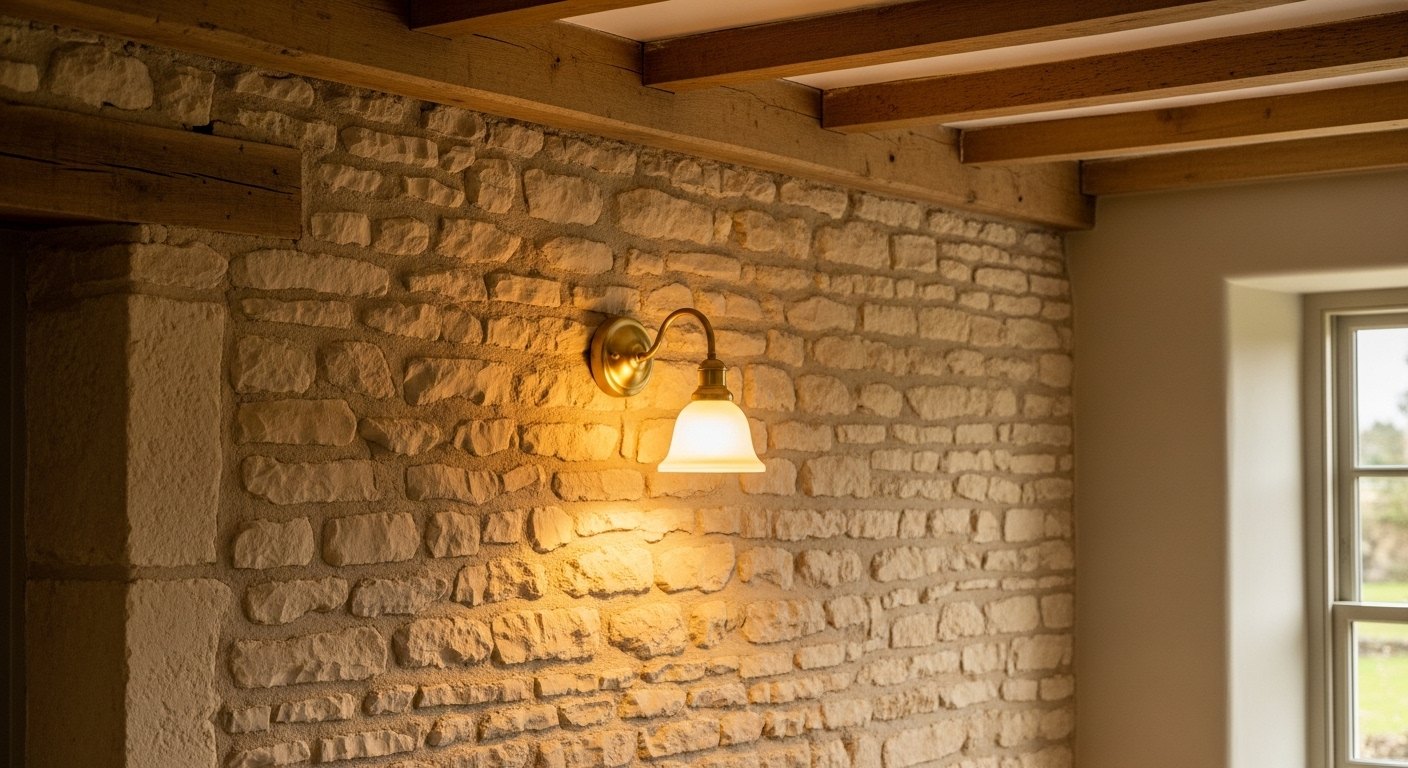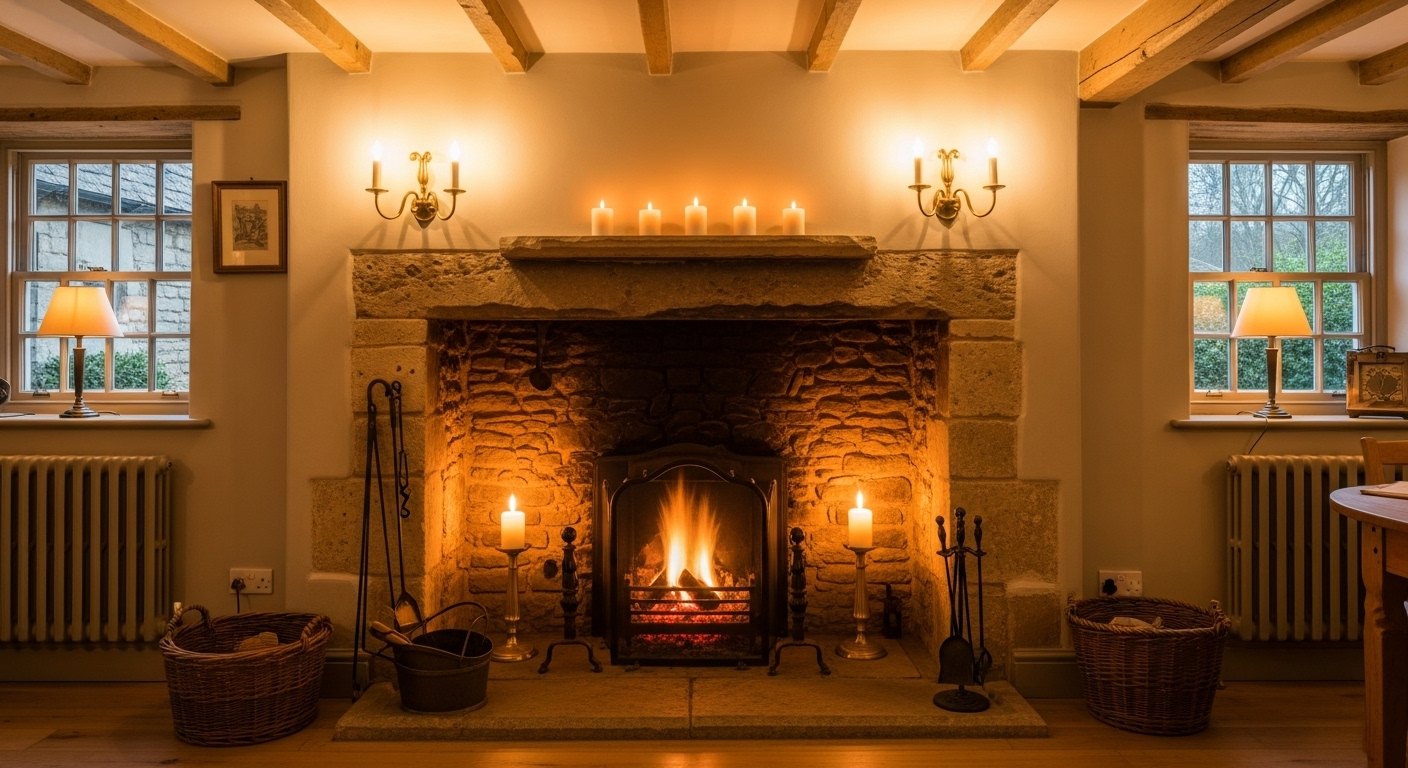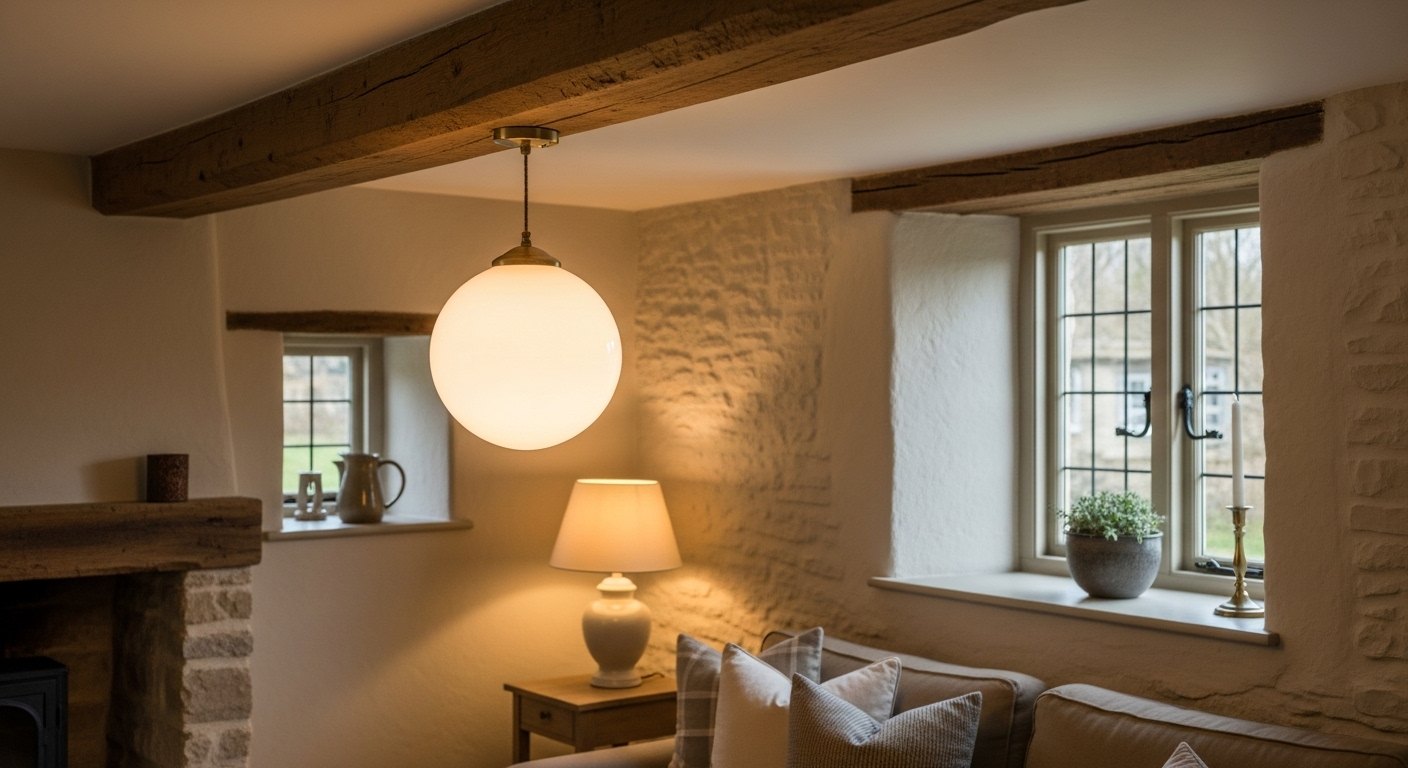
If one shade suits an old cottage, it's milk glass. The soft, creamy opal glow is the kindest light there is for beams, stone, and plaster, gentle, even, and entirely free of glare. We've used it throughout the cottage, and it's the shade I recommend more than any other for a period home. Here's why milk glass works so well, and how to use it.
What Milk Glass Does to Light
Milk glass, opal glass, is an opaque white glass that diffuses the bulb into a soft, even glow with no visible filament and no hot spot. Where clear glass shows the bulb and throws sharper light, milk glass wraps it in a creamy haze. That diffusion is exactly the gentle, lamplight quality an old cottage wants, and it's been used in lighting for generations, so it sits naturally in a period room.
It Lifts a Dark Room
Beyond the quality of the light, the creamy white shade itself lifts a dark, low-beamed room. A glowing milk-glass globe in a dim corner reads as a soft point of warmth, and the pale shade catches and gives back what little light there is. In a naturally dark cottage, milk glass earns its place twice over, for its glow and for its colour.
Milk-Glass Pendants
A milk-glass pendant over a dining table or in a corner is one of the loveliest lights in a cottage, soft, even, and warm. Hung clear of head height, it glows like a small moon. The opal globe and dome shapes especially suit a period room, where their traditional silhouette looks right against beams and stone.
Milk-Glass Sconces and Flush Fixtures
On walls and low ceilings, milk-glass sconces and shallow flush fixtures bring the same soft glow without dropping into the room. In a low-beamed cottage where pendants are awkward, a milk-glass wall light or flush shade is often the perfect answer, period-appropriate, gentle, and out of head height.
Glare-Free and Flattering
Because milk glass hides the bulb entirely, there's never any glare. You see a soft glow, not a bright point. That makes it especially flattering and easy to live with, and ideal in rooms where you'll catch the light directly, like a kitchen or a hallway. For spots wanting a touch more light, you can mix in clear glass pendants elsewhere.
Warm Bulbs Inside
A milk-glass shade is only as warm as the bulb within it. Use 2700K warm white so the creamy glass glows golden rather than stark white. A cool bulb behind milk glass turns a warm, inviting fixture cold and a little clinical. The shade softens the light, but the colour is still up to the bulb.
Choosing One
Match the shape and scale to the spot, a globe or dome over a table, a smaller shade for a sconce or a tight corner. For a cottage, simple traditional opal shapes suit the period best; anything too sleek or industrial fights the room. The beauty of milk glass is that the soft shapes are timeless, so they never date.
The Shade I'd Choose Again
Of everything I've put in the cottage, milk glass is the shade I'd choose again every time. It's gentle, period-appropriate, flattering, and it lifts a dark room, exactly what an old cottage needs. If you take one thing from how we lit this house, let it be a soft milk-glass light with a warm bulb inside.
Where Milk Glass Beats Clear Glass
A milk glass pendant light gives a soft, even, glare-free glow that suits a cottage better than clear glass almost everywhere, over a table, in a hall, in a bedroom. Clear glass shows the bulb and throws sharper light; milk glass wraps it in a creamy haze and lifts a dark room with its pale shade. For gentle ambient cottage light, opal glass wins.
Choosing the Right Milk-Glass Shape
For a cottage, simple traditional opal shapes, globes and domes, suit the period best and never date. Match the scale to the spot: a generous globe over a table, a smaller shade for a sconce or tight corner. Put a warm 2700K bulb inside so the creamy glass glows golden rather than stark, and the milk glass does the rest.
Shop this post: milk-glass pendant lights and glass pendant lights