Our builder said 14 months. We moved back in after 22. He gave us a quote of £68,000. The final invoice — and the invoices from the three specialists who came after him — added up to £142,000. That's not unusual for a full stone cottage renovation in the Cotswolds, apparently. Nobody told us that when we bought it.
I'm writing this not to complain — the cottage is wonderful now and we don't regret a penny — but because I couldn't find anyone who wrote plainly about what a renovation like this actually costs. Everything I found was either vague ("budget generously!") or aspirational ("our dream renovation came in under budget!"). Neither was useful. This is what it actually cost us and why.
What the Original Quote Didn't Include
Our builder's £68,000 covered the roof (which needed full re-slating), the first-floor windows, interior plaster repair, new bathroom, and kitchen refitting. What he didn't budget for — and what we had no idea we'd need:
Lime mortar repointing of the exterior stonework: £12,400. The entire south and east elevations, which catch the most weather, had been badly repointed at some point in the 1980s with Portland cement. Portland cement is harder than Cotswold limestone. It doesn't flex with the stone in freeze-thaw cycles. The result over 40 years was that moisture had been forced into the stone rather than through the mortar joints, and we had patches of stone starting to delaminate. The lime mortar work had to come first, before any interior work, and it had to be done by a specialist masonry contractor — not our builder — who charged accordingly.
I didn't know this was a thing until the specialist came to survey the cottage and explained it very calmly while I tried to do the mental arithmetic of £12,400 extra in week three of the project. If you're looking at a cottage that's been repointed in the last 50 years, get a masonry specialist to assess the mortar type before you buy. The cost of remediation is significant and non-negotiable.
The Structural Surprise Under the Sitting Room Floor
When the builders lifted the old flagstone floor to install insulation, they found that one corner of the sitting room had a timber ground beam that had rotted completely — probably a slow water ingress from a leaking drainpipe that had since been repaired. The timber had to be replaced with a concrete beam and the flagstones relevelled. An extra £8,200. This took six weeks of the project, which delayed everything behind it.
I don't say this to catastrophize. It's a 200-year-old building. Surprises happen. But it meant our contingency budget of £10,000 was gone before the end of month four, which is stressful when you can see everything else still needing to be done.
What We Got Right
We hired a conservation architect to oversee the project, which was £4,800 for the full 22 months. Worth every pound. She caught the Portland cement issue before the builder started — the builder hadn't flagged it at all. She specified the right lime mix for our particular limestone, managed the listed building consent paperwork, and knew which battles were worth fighting with the local planning authority.
The inglenook fireplace restoration, which we were dreading, turned out to be within budget at £3,200 because she'd specified exactly what she wanted before anyone started knocking plaster off. Clarity of specification saves money in old buildings. Vagueness does not.
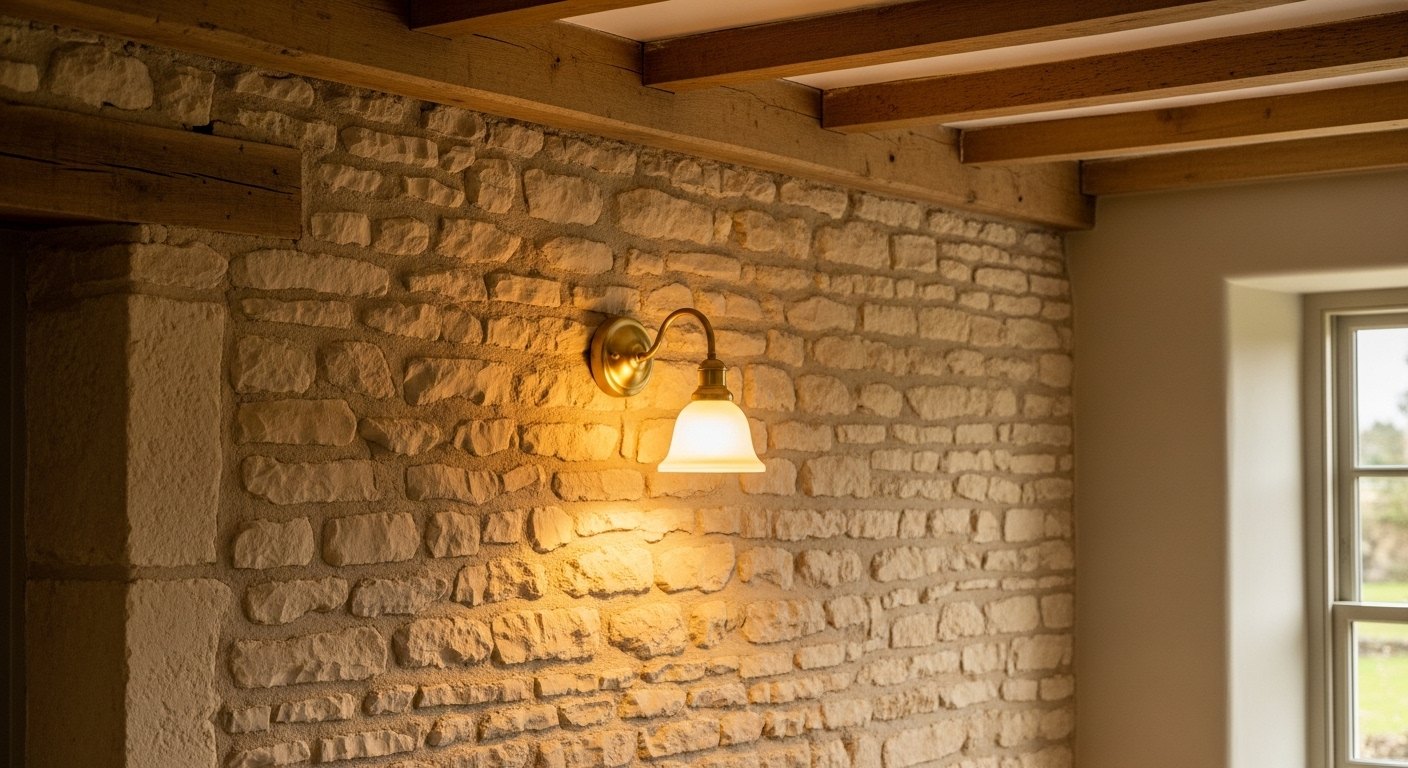
We also spent more than we planned on lighting, specifically on brass wall lights that suit the period of the cottage. That wasn't a financial mistake. The wrong light fittings in a 200-year-old building are immediately jarring, and the right ones cost more than the generic options. Spend the money on lighting. It's the last thing you buy and the thing that makes the renovation look finished.
The Kitchen Didn't Cost What We Expected Either
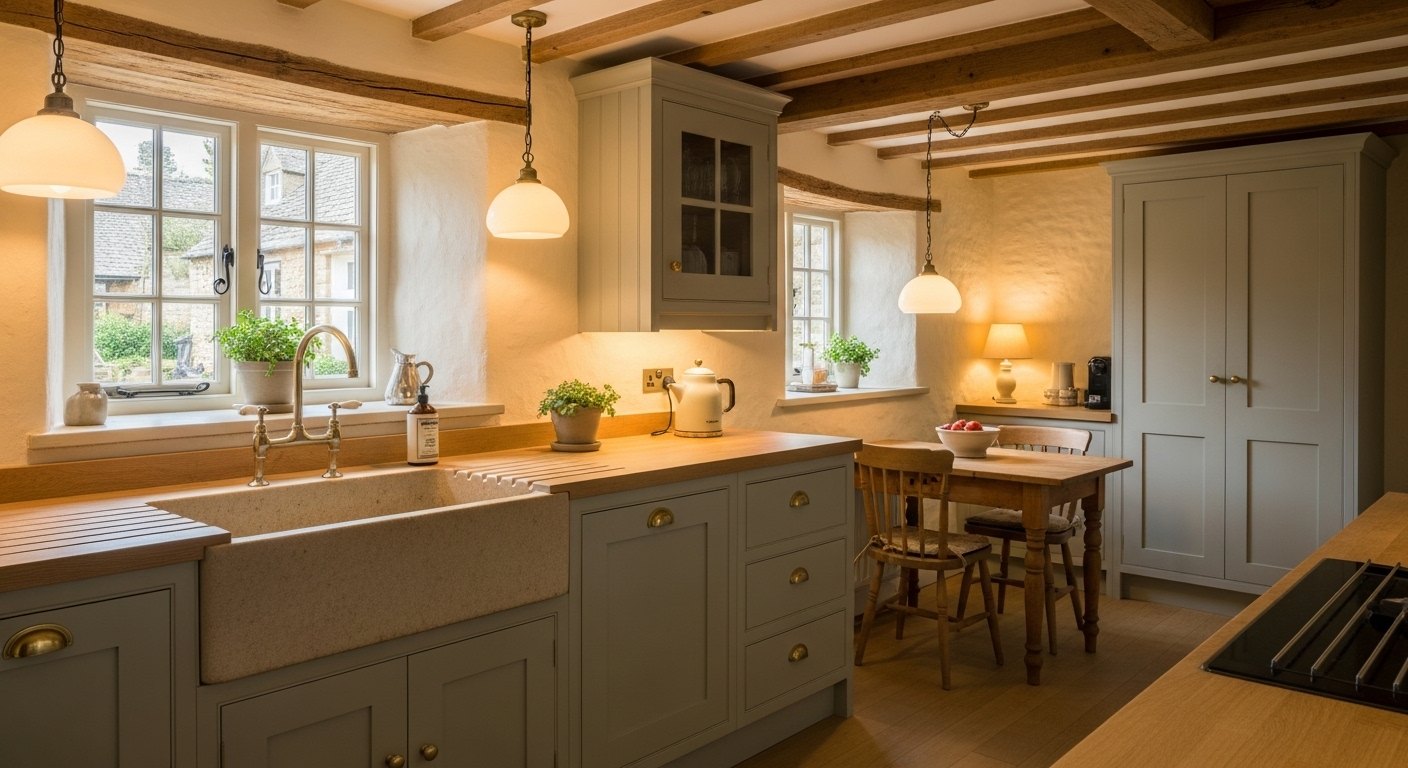
We had budgeted £14,000 for the kitchen. We spent £19,400. The difference came from two things: we upgraded the stone worktop from a mid-grade limestone to a slightly denser one that handles water better (cottage kitchens get wet), and the old plaster on the kitchen walls needed to come off entirely and be reapplied in a lime plaster mix before any tiling or painting could happen. That wall work cost £2,600 and took two weeks that weren't in anyone's original schedule.
The kitchen itself is the thing I look at most gratefully now. The stone sink we found at an architectural salvage yard in Oxford cost £380 and weighs approximately as much as a car. Getting it from the van into the kitchen required three people and a lot of patience. It's the best thing in the house.
What I Would Do Differently
I would hire the conservation architect first — before agreeing a price with any builder — and get a proper condition survey that includes masonry assessment, structural inspection, and an investigation of the existing plaster. The survey would have cost about £2,000 and would have told us about the Portland cement and the timber beam issue before we signed anything. Instead we found out as expensive surprises mid-project.
I would also have a frank conversation with the builder about contingency from day one. We had a vague agreement that he'd tell us if anything unexpected came up. A better structure would have been a clear contingency budget held separately, with a defined process for drawing on it. That would have been less stressful than repeatedly watching it erode.