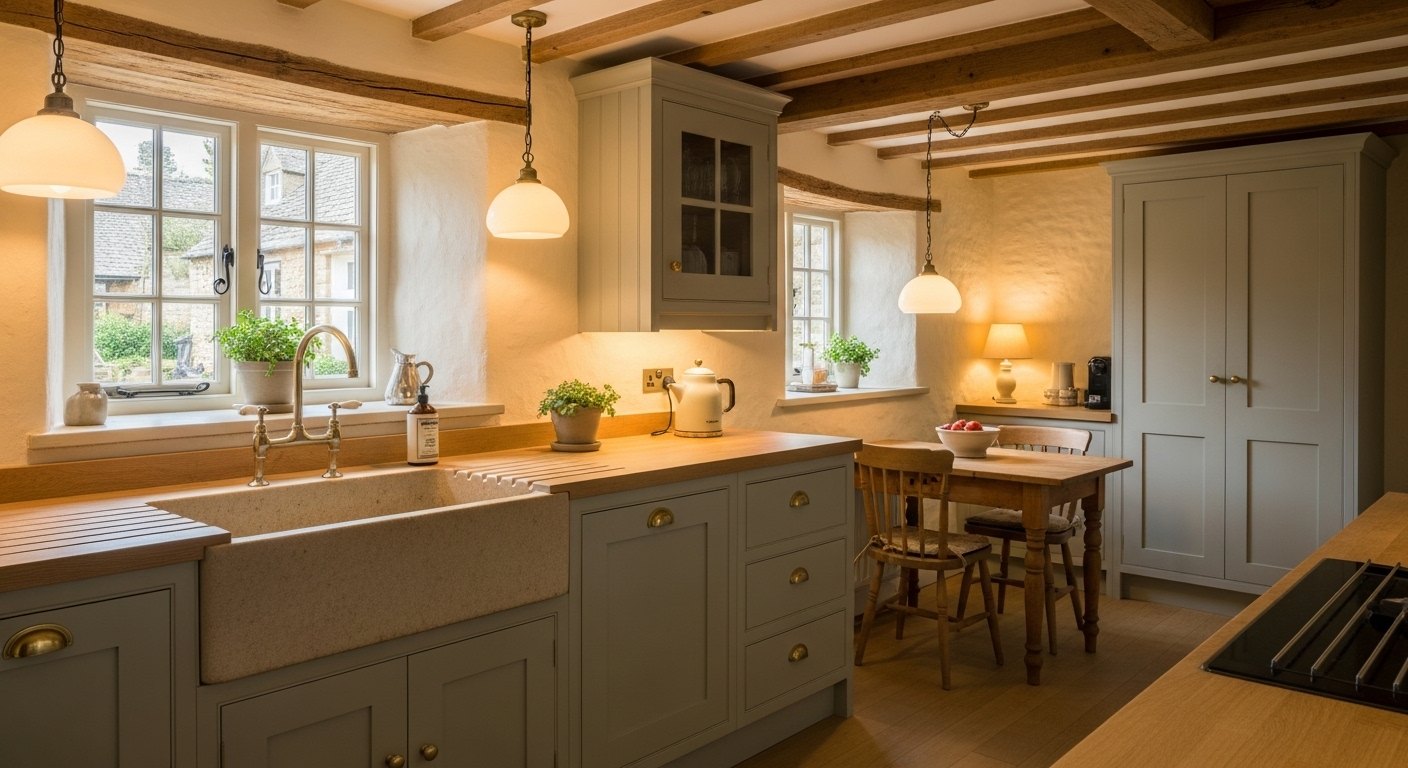
A cottage kitchen should feel like the warm centre of the house. The room where the kettle's always on and everyone ends up. Ours is small, with a deep stone sink set under the window, painted cabinets, and an oak worktop worn smooth in places. Restoring it was about keeping that honest, lived-in warmth while making it work day and night. Here's how it came together.
The Deep Stone Sink
The heart of the kitchen is a deep stone sink under the window, looking out onto the garden. It came with the cottage and we kept it, scrubbed and re-sealed, a sink like that anchors a kitchen in its history. Standing at it on a grey morning, washing up while watching the birds, is one of the small daily pleasures of cottage life.
Painted Cabinets and Oak
We painted the Shaker-style cabinets a soft sage and topped them with solid oak, which is warm, forgiving, and ages into the room. Painted units in a heritage colour and a natural worktop are the backbone of a cottage kitchen, warm and a little collected rather than sleek and fitted. Aged brass cup handles finish them.
Milk Glass Over the Table
Over the little kitchen table I hung two soft milk-glass pendants. The kindest light there is for a cottage, glowing creamy and even with no glare. You can see the range I considered in the dining and kitchen lighting collection. Hung carefully clear of head height over the table, they're the warm focal point of the room.
Light Over the Sink
The sink sits under a window that goes black at night, so a small warm light above it earns its keep, washing the worktop where I actually stand, on its own switch so I can light just the sink in the evening. It's a small detail that makes the most-used spot in the kitchen usable after dark.
Under-Shelf Task Light
We used open shelving rather than wall cabinets to keep the room feeling light, and tucked warm LED strips under the lowest shelf to light the worktop below. Hidden task light is what lets the pretty pendants stay purely atmospheric. The strips do the chopping, the pendants set the mood. Every working surface is lit without a single harsh downlight.
Warm and Layered
Everything is warm 2700K and the pendants are on a dimmer. A cottage kitchen should glow, not glare, bright enough to cook by, soft enough to linger over a glass of wine once the washing-up's done. Layered warm light at several levels is what makes a small kitchen feel both practical and cosy.
Free-Standing Touches
Not everything is fitted. A free-standing dresser holds the everyday china, and a worn pine table does duty as both prep surface and breakfast spot. Unfitted, collected pieces are what keep a cottage kitchen from looking like a showroom. It should feel gathered over years, because the best ones are.
What I'd Do Differently
I'd have run the under-shelf strips before I fell for the pendants, for a month the lovely milk glass left the worktops dim and I was chopping in shadow. Task light first, mood light second, is the order that works. And I'd have kept the stone sink even if it had needed more work; nothing new could give the kitchen that sense of age.
Cottage Kitchen Lighting, Layer by Layer
A cottage kitchen wants three warm layers: a soft milk-glass pendant or two over the table, under-shelf task light for the worktops, and a light over the sink. Keep them all 2700K and the pendants on a dimmer. That layering is what lets the kitchen glow for a slow breakfast and work hard for a busy supper, without a single harsh cool downlight anywhere.
What We Kept and What We Changed
The honest cottage-kitchen lesson was to keep the character and modernise the function. We kept the deep stone sink, the worn flagstones, and the proportions, and changed the wiring, the lighting, and the worktops. Keeping the soulful old bits while quietly updating the practical ones is what makes a cottage kitchen feel both genuine and usable.
Shop this post: kitchen and dining pendant lighting and milk-glass pendants