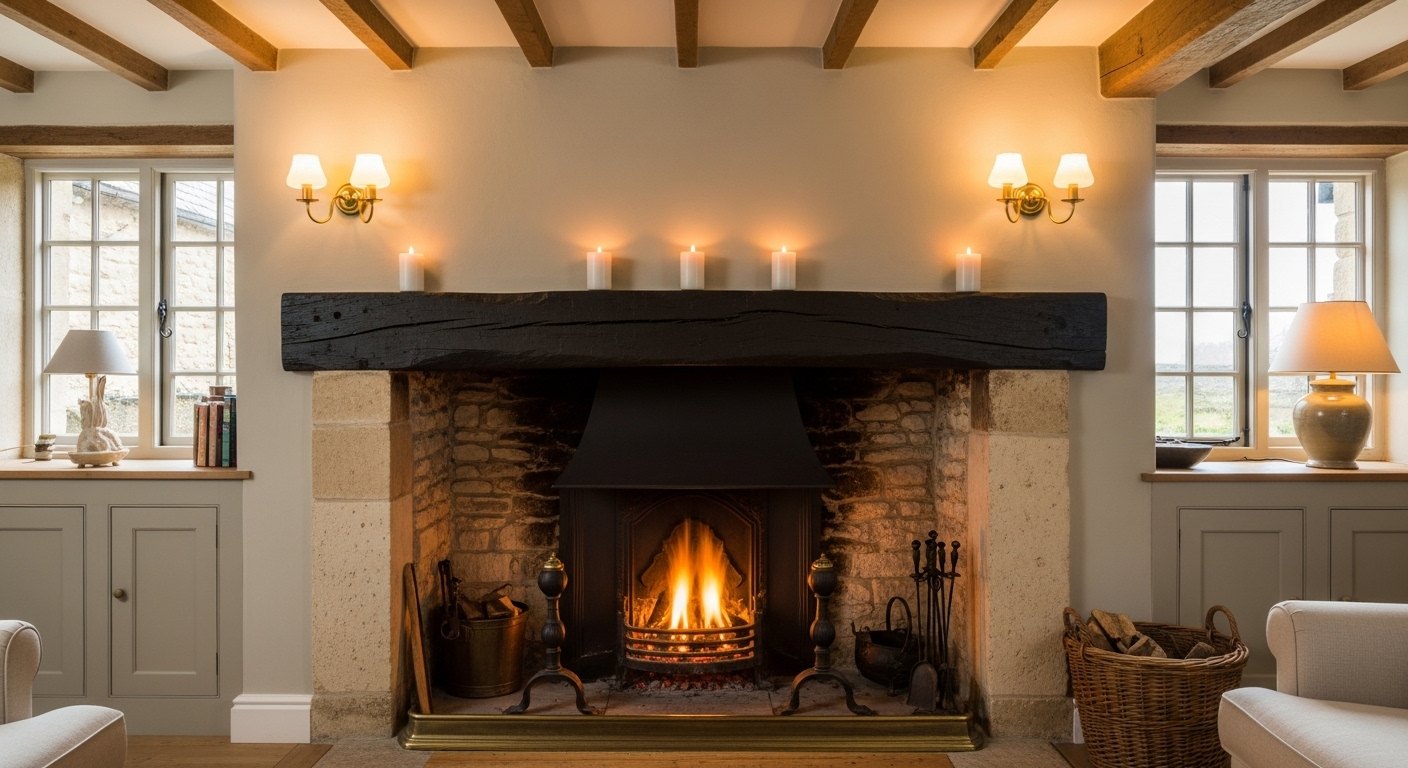
The inglenook is the heart of an old cottage, and ours, a great recessed fireplace with a blackened oak bressummer beam across the top, big enough to tuck a chair beside the fire, was the reason we bought the place. Lighting around an inglenook is a delicate business: the fire must always be the star, and the light's job is only to set the scene around it. Here's how we did it.
Let the Fire Lead
The cardinal rule of an inglenook is that nothing should compete with the flames. That means no bright downlights, no harsh overhead, nothing aimed at the hearth. The fire is the focal point and the primary light source on a winter evening; everything else is a soft supporting glow. Get that hierarchy right and the room almost lights itself.
Flanking Sconces
Either side of the chimney breast, a pair of warm brass sconces washes the stone wall at eye level. I chose the Frigg luxury sconce for its warm copper-and-glass glow, which sits beautifully against old stone. Kept dimmable, they drop right down when the fire is lit so the flames stay the brightest thing in the room.
Inside the Recess
When there's no fire, the deep recess can go cave-dark, so I tucked a small, heat-safe warm light discreetly inside to graze the old stone and the underside of the beam. It turns the empty inglenook into a glowing architectural feature on a summer evening, rather than a black hole. The fire does this job in winter; the little light does it the rest of the year.
The Mantel
The bressummer beam acts as a mantelshelf, and I keep it simple, a row of candles, a foraged branch, one piece of art leaning against the stone. Candlelight along the mantel is the most period-appropriate light there is in a cottage, and it doubles the warm flicker when the fire is going.
Seating Toward the Hearth
We arranged the whole room to face the fire, with the reading chair tucked right into the inglenook itself. Lighting and layout work together here: the soft flanking sconces, the candles. And the fire all draw you toward the hearth, which is exactly where a cottage wants you to sit.
Dimmers Are Essential
Everything around the inglenook is on a dimmer, because the room has two completely different moods. Bright-ish on a grey morning with no fire; low and golden in the evening with the flames going. A dimmer lets the same sconces serve both, and dimming the warm bulbs makes them glow even more like firelight.
Warm Materials, Warm Light
Old stone, blackened oak, and warm brass want warm 2700K light to come alive, cool light makes them look grey and dead. The whole inglenook reads as warm and ancient because the light colour matches the materials. It's the same principle throughout the cottage, but nowhere does it matter more than at the hearth.
What I'd Do Differently
I'd have added the discreet light inside the recess during the restoration rather than fishing a cable in afterwards. And I'd have bought beeswax candles for the mantel from the start. They smell of an old house and burn warmer than the cheap ones. Otherwise, the inglenook taught me the whole cottage-lighting lesson: light the edges, keep it warm, and let the fire be the star.
Inglenook Fireplace Ideas Beyond the Lighting
Once the lighting's right, the rest of the inglenook ideas follow: keep the bressummer beam as a simple mantelshelf, leave the recess deep and uncluttered. And let the stone and the fire be the stars. A log store built into the side of the recess, a simple fire dog, and candles along the beam are all an inglenook needs. The restraint is what keeps it feeling ancient rather than styled.
Why Warm Light Matters at the Hearth
Old stone and blackened oak only come alive under warm 2700K light, cool light makes them grey and dead. Every fixture around the hearth, from the flanking brass sconces to the discreet recess light, is warm, so the whole inglenook reads as warm and old. Match the light colour to the materials and the fireplace glows; get it wrong and even a beautiful hearth looks cold.
Shop this post: brass wall sconces and the Frigg luxury sconce