A low-beamed cottage sitting room is dark by nature, thick stone walls, small deep-set windows, oak beams that drink the light. Ours faced north into the garden, and on a grey Cotswold afternoon it could feel like dusk by two o'clock. The whole job of restoring it was bringing warmth and light back in without losing a single inch of precious headroom. Here's how we did it.
Work With the Low Ceilings, Not Against Them
The first rule of a low-beamed room is that you cannot hang things into it. A deep pendant in the middle of the room is a head injury waiting to happen and flattens the space besides. So the light has to come from the edges and from low down, wall lights, lamps, and only shallow fixtures overhead. Once you accept that, the whole scheme falls into place.
Brass Wall Lights at Eye Level
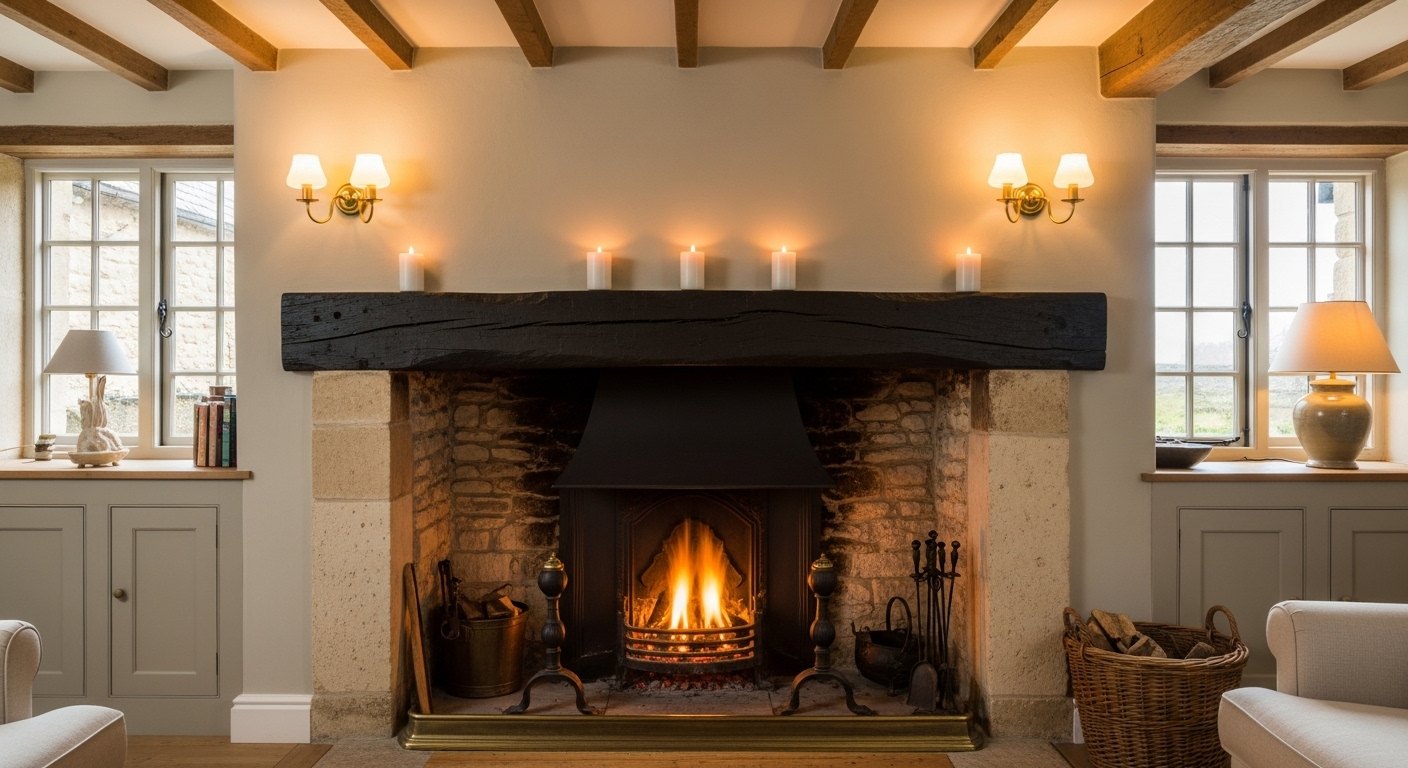
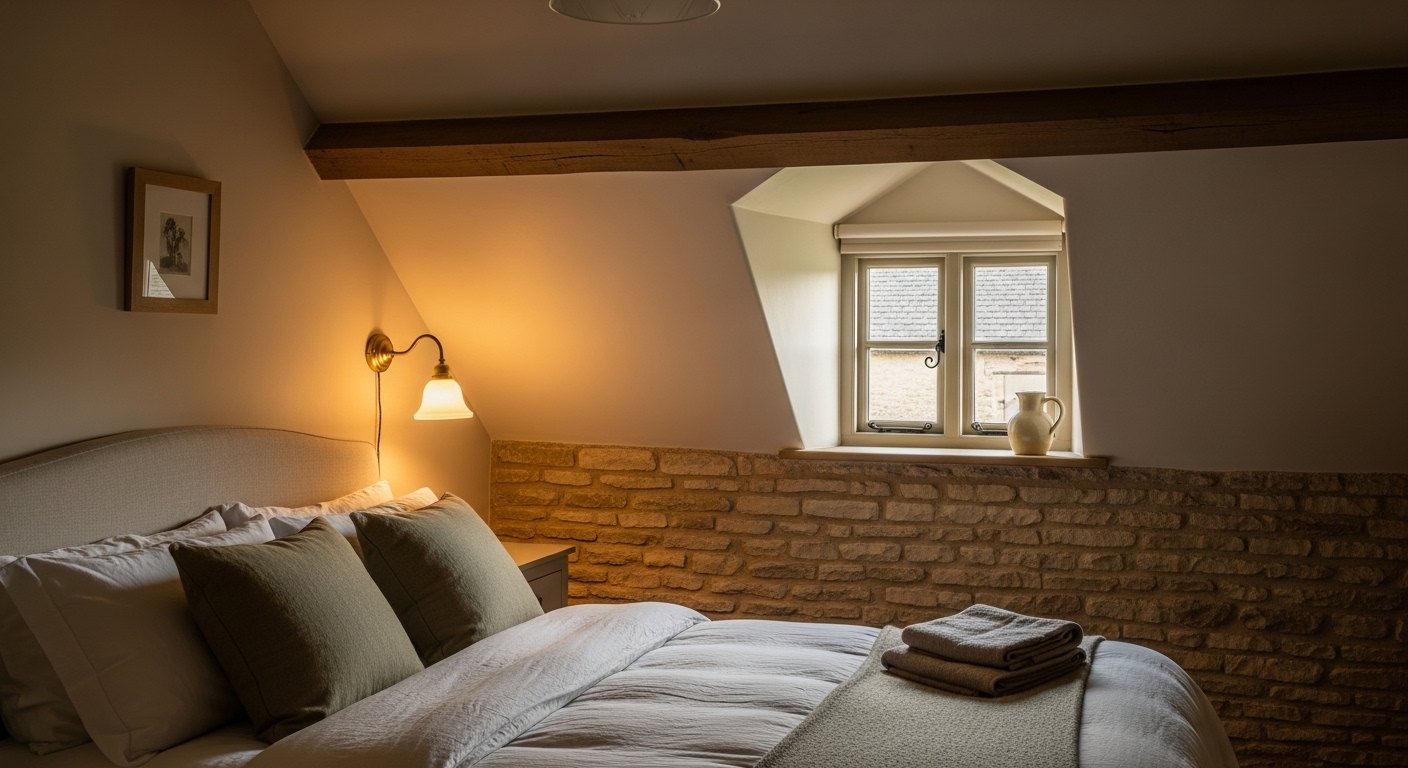
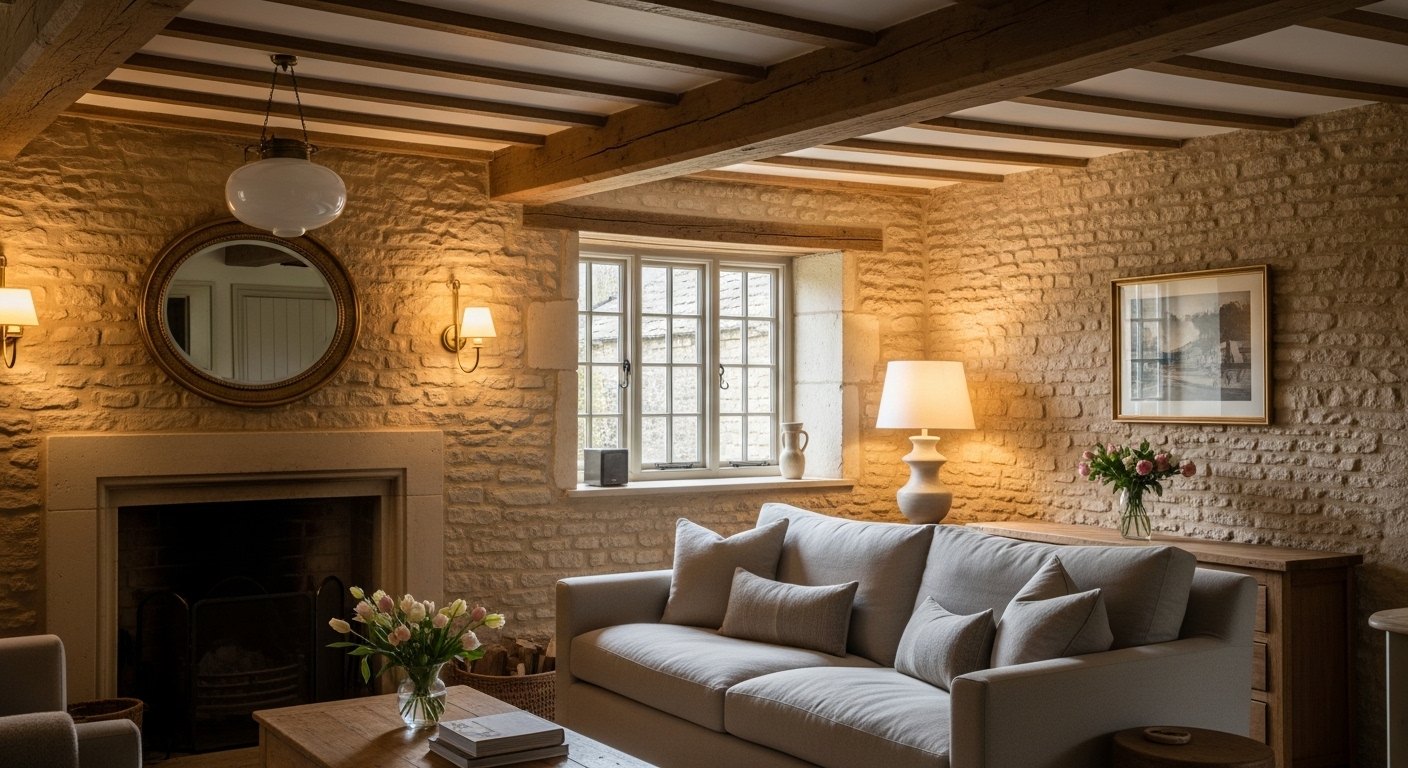
The workhorses of the room are a pair of brass wall sconces flanking the fireplace, mounted at about 150cm. Warm brass against lime-washed stone is the heart of the cottage glow, and at eye level the light is flattering and soft. The lamplight quality an old room was built for. They throw warmth onto the walls without dropping anything into the room.
Milk Glass Where It Can Hang
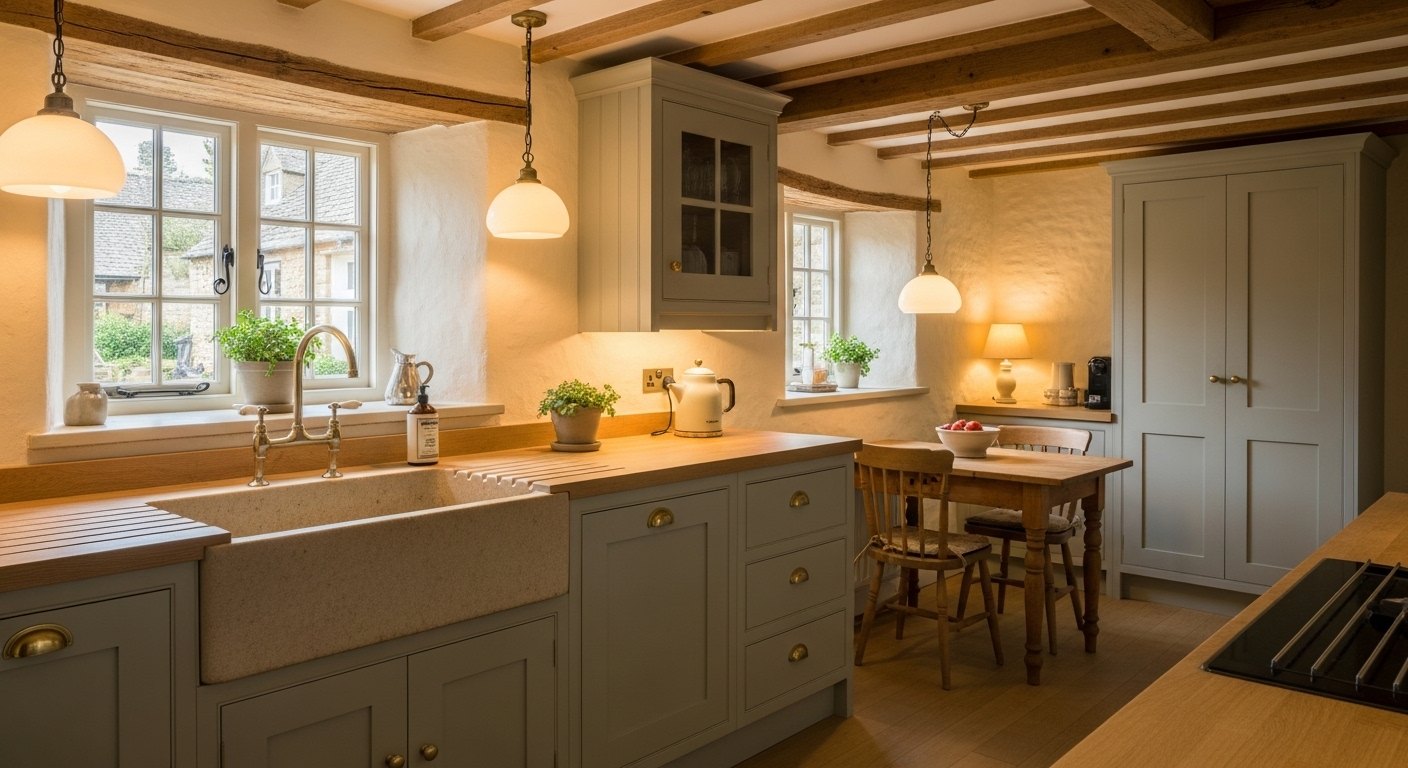
There is one spot with no foot traffic beneath. The corner by the reading chair. And there I hung a soft milk-glass pendant, tucked up between two beams. Milk glass is the kindest light for an old cottage: it diffuses the bulb into an even, creamy glow with no glare. And the soft white shade lifts a dark corner beautifully.
Lamps, Lamps, Lamps
A cottage sitting room wants lamps the way a garden wants flowers. A table lamp on the side table, another on the bureau, a floor lamp by the chair, pools of warm light at different heights. That's five or six sources in one modest room, almost never all on at once. Layered low light is what turns a dark cottage room cosy rather than gloomy.
Lighten the Walls
Light isn't only about fixtures. We lime-washed the walls a warm off-white, which lifts the whole room and bounces what little daylight comes through the deep windows. Against pale walls, the beams read as warm character rather than oppressive dark lines, and every lamp works harder.
Warm Bulbs, Always
Every bulb in the room is a warm 2700K. In a period cottage, warm light is non-negotiable. It echoes the candle and firelight the room was built around, and it flatters the stone and oak. A cool bulb in here would be jarring, making the warm materials look grey and the whole room feel wrong. The ENERGY STAR bulb guide is a clear primer if the numbers on the box confuse you.
A Mirror by the Window
The last trick: a foxed antique mirror hung opposite the deep-set window, bouncing the daylight further into the room. In a thick-walled cottage where windows are small, a well-placed mirror is worth a whole extra window. It catches the lamplight in the evening, too, and doubles the glow.
What I'd Do Differently
I'd have put the wall lights on a dimmer from the start rather than retrofitting it, and I'd have resisted the urge to try a central pendant at all. I hung one early, cracked my head on it twice, and took it straight back down. In a low-beamed cottage, light from the edges is the whole answer.
Low Ceiling Lighting Ideas That Actually Work
If you search low ceiling lighting ideas you'll find a lot of advice that ignores beams entirely. In a real low-beamed room the rules are simpler: light from the edges, never the centre; choose wall lights and lamps over deep pendants; keep flush fixtures shallow; and warm every bulb to 2700K. Those four moves do more than any clever ceiling trick, because they work with the architecture instead of against it.
What It Cost to Light This Room
The whole sitting-room scheme was modest: a pair of brass sconces, a couple of thrifted lamps rewired, a milk-glass pendant for the one safe corner. And a box of warm high-CRI bulbs. Lighting a cottage room warmly costs far less than people expect. Most of the effect comes from the bulb colour and from layering several small sources, not from any single expensive fixture.
Shop this post: milk-glass pendant lights and brass wall sconces