The mantel is the cottage's stage. I keep the whole arrangement under about 18 inches tall and worked around three heights. The one surface everyone's eye goes to, above the heart of the room. Styling a mantelpiece well is a small art: it should look gathered, warm, and a little seasonal, never cluttered or stiff. Ours sits above the inglenook, and here's how I keep it looking collected rather than crowded.
Anchor With Something Leaning
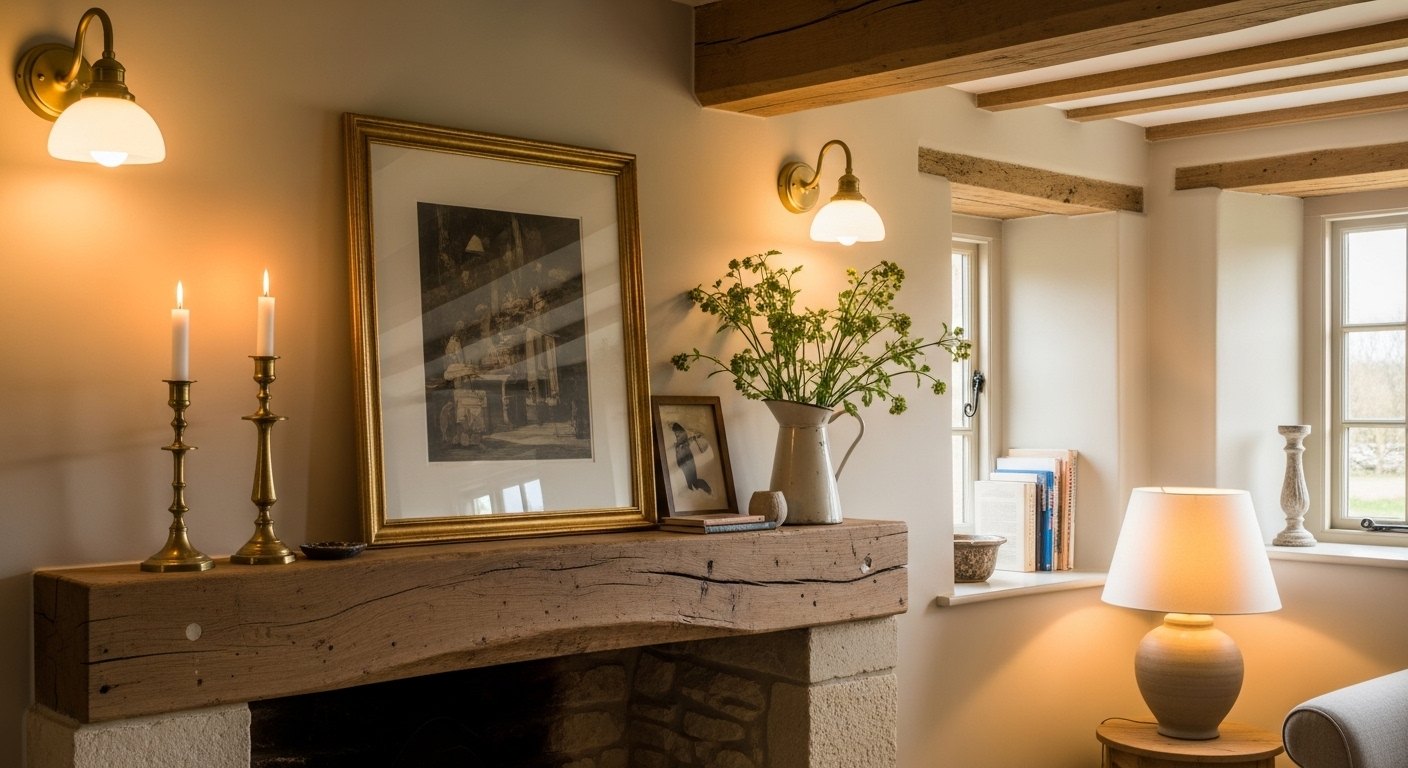
Start by leaning something larger at the back, a picture, a mirror, a piece of art propped against the wall rather than hung. A leaning artwork gives the mantel a relaxed anchor and a backdrop, and propping rather than hanging is a very cottage move. Offset it a little to one side for a gathered, informal feel rather than strict symmetry.
Candles, Always
A cottage mantel wants candles, a pair of brass candlesticks, a cluster of tapers, a tealight or two. Candlelight along the mantel is the most period-appropriate light there is, and it doubles the warm flicker when the fire's lit beneath. Candles are both decoration and light, and no cottage mantel is complete without them.
Bring in the Garden
A jug or vase of foraged stems brings the mantel to life and ties it to the season, blossom in spring, foxgloves in summer, seed heads and branches in autumn. A jug of cuttings from the garden is the simplest, most authentic cottage touch, changing through the year so the mantel never looks static or styled-once.
Work With Heights
The secret to any styled surface is varied heights. The tall leaning picture, the medium candlesticks and jug, a few low objects in front. Variation in height is what makes a mantel look composed rather than lined up like a shelf in a shop. Cluster things loosely at different levels and the arrangement reads as gathered and intentional.
Light the Mantel Wall
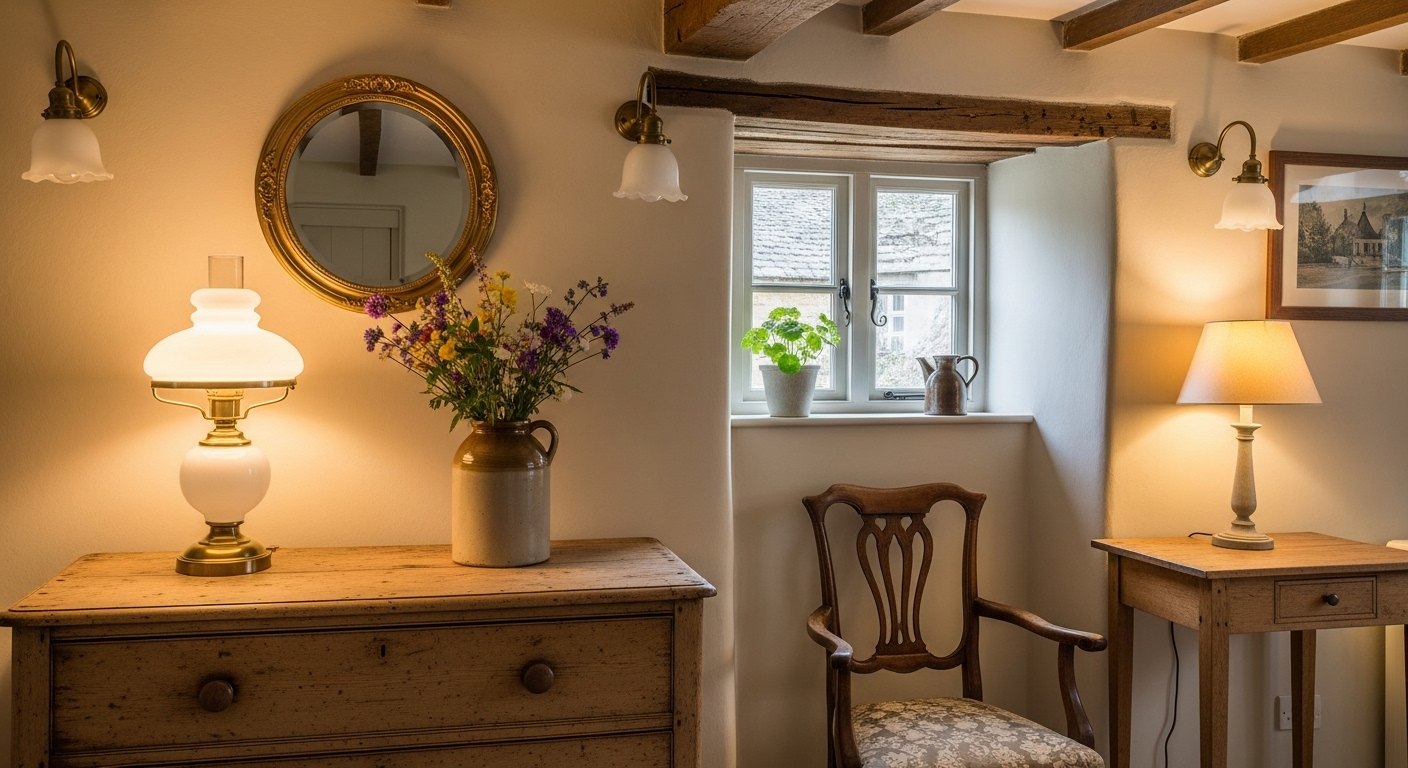
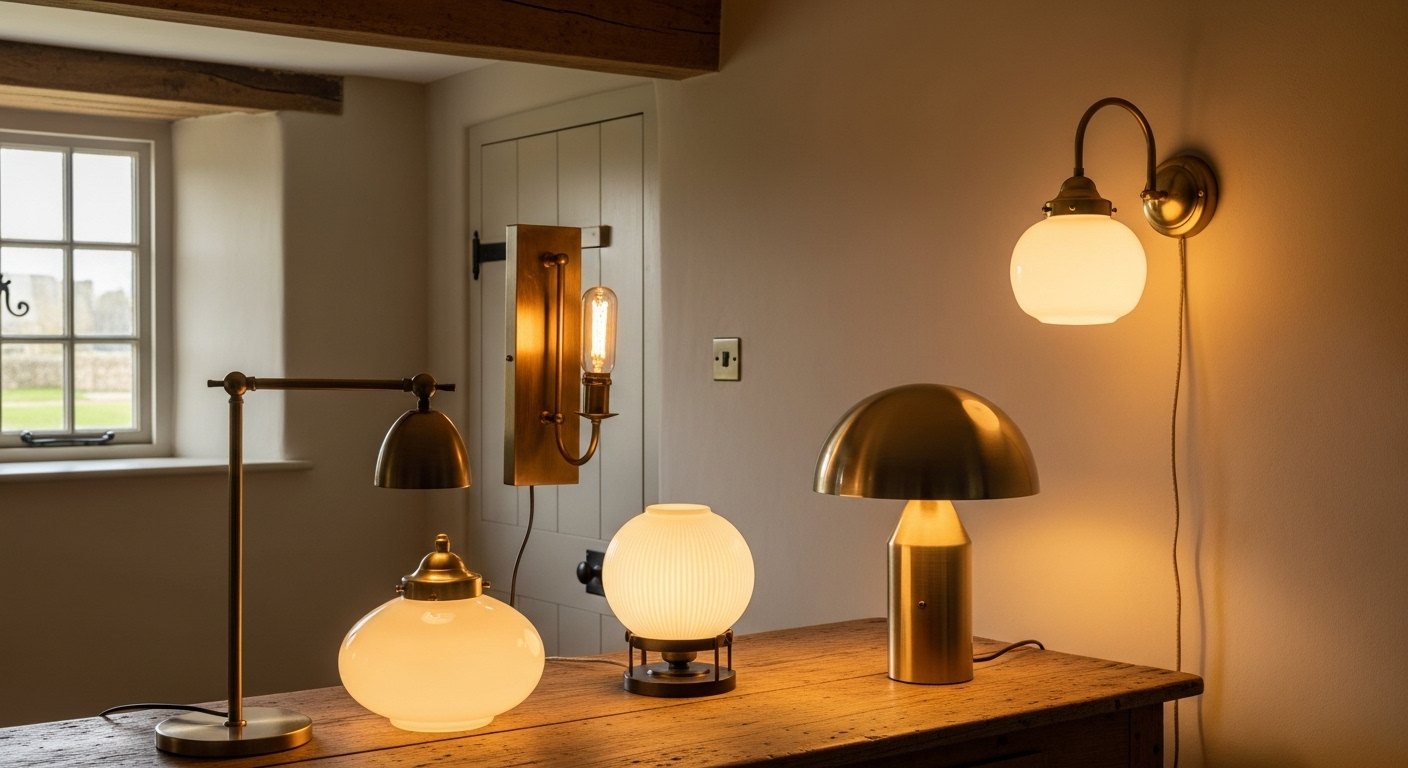
A pair of warm brass sconces flanking the chimney breast frames the mantel and washes the wall with eye-level light, and a picture light over a mantel painting adds a gentle glow. Keep them warm and dimmable so they drop low when the fire's going. The fire and candles should always be the brightest things, with the sconces a soft supporting glow.
Add a Few Collected Objects
Beyond candles and stems, a few collected objects give the mantel soul, old brass, a piece of pottery, a little clock, a found treasure. Choose things you love and that fit the warm palette, and let them look gathered over time. The objects are what make the mantel personal rather than a generic display.
Edit and Leave Space
The single most important rule: leave breathing space. A cluttered mantel comes from too many objects of similar size lined up evenly; a styled one uses varied heights, a little asymmetry, and open gaps. Style it, then remove a third. Negative space is as important as the objects, and a cottage mantel especially wants room to breathe.
Let It Change
A cottage mantel is never finished. The foraged stems change weekly, the candles burn down and are replaced, the odd new find joins the group. That gentle, ongoing change is the charm; the mantel reflects the season and the life of the house. Style it loosely, light it warmly, and let it evolve, and it becomes the warm, gathered heart of the room.
How to Style a Mantel That Looks Gathered
Anchor a mantel with something larger leaning at the back, offset to one side, then layer candles, a jug of foraged stems. And a few collected objects in front at varying heights. Flank the chimney breast with warm brass sconces and leave breathing space. A little asymmetry and an edited hand are what make a mantel look gathered rather than lined-up.
Let the Mantel Change With the Season
A cottage mantel is never finished. The foraged stems change weekly, the candles burn down and are replaced, the odd new find joins the group. That gentle change reflects the season and the life of the house. Style it loosely, light it warmly with candles and flanking sconces, and let it evolve, and it becomes the warm gathered heart of the room.
Shop this post: wall sconces and wall vases and pots