Cottage style isn't florals and bunting, whatever the catalogues suggest. After restoring our 1720s cottage and living in it through every season, I've come to think cottage style is something quieter and deeper than a pattern. It's a way of keeping a home that's honest, gathered, warm, and gently lived-in. Here's what it actually means to me.
Honest Materials
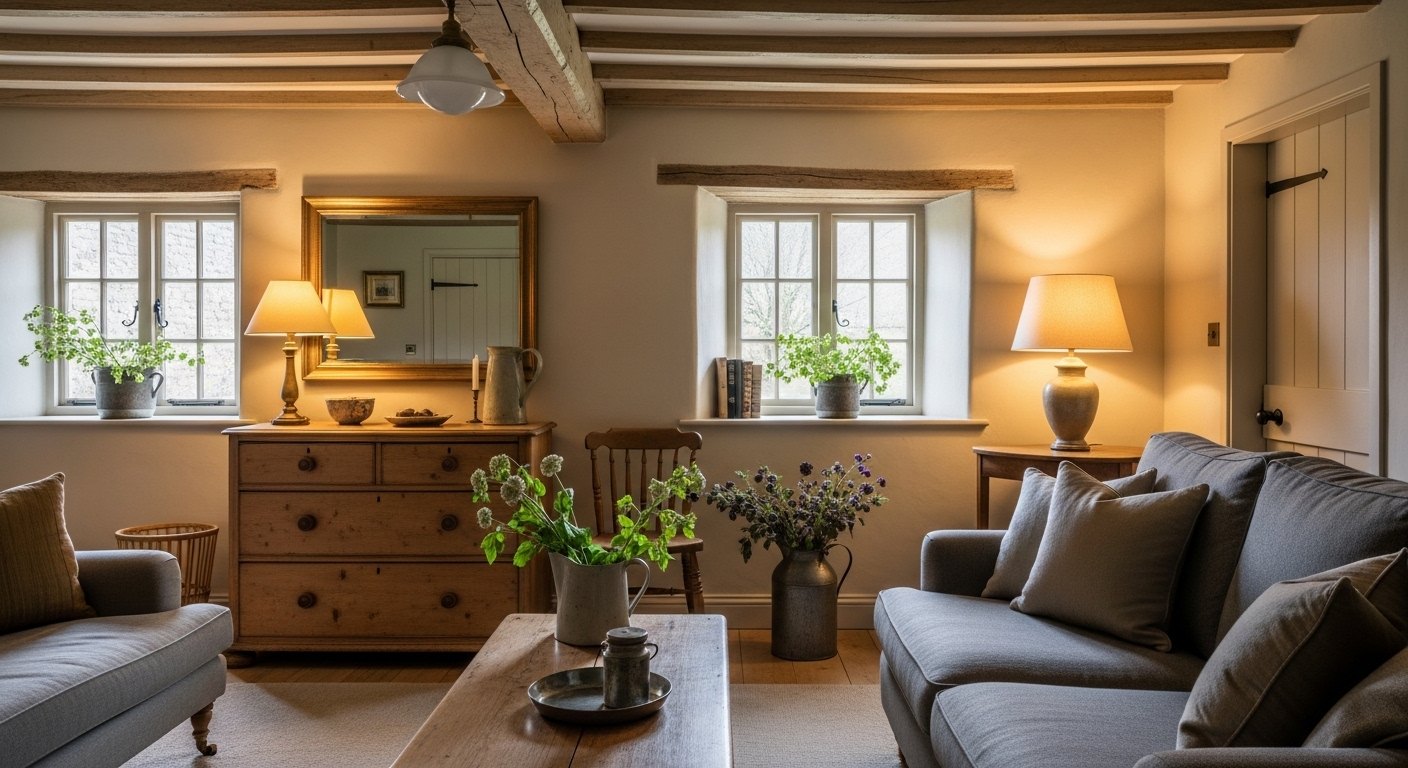
At its root, cottage style is about honest natural materials, stone, timber, lime plaster, linen, wool, brass, glass. Materials that age, that show wear, that were never trying to be perfect. A cottage looks right because nothing in it pretends to be something it isn't; the stone is stone and the oak is oak, worn and warm and real. That honesty is the foundation everything else sits on.
Gathered, Not Coordinated
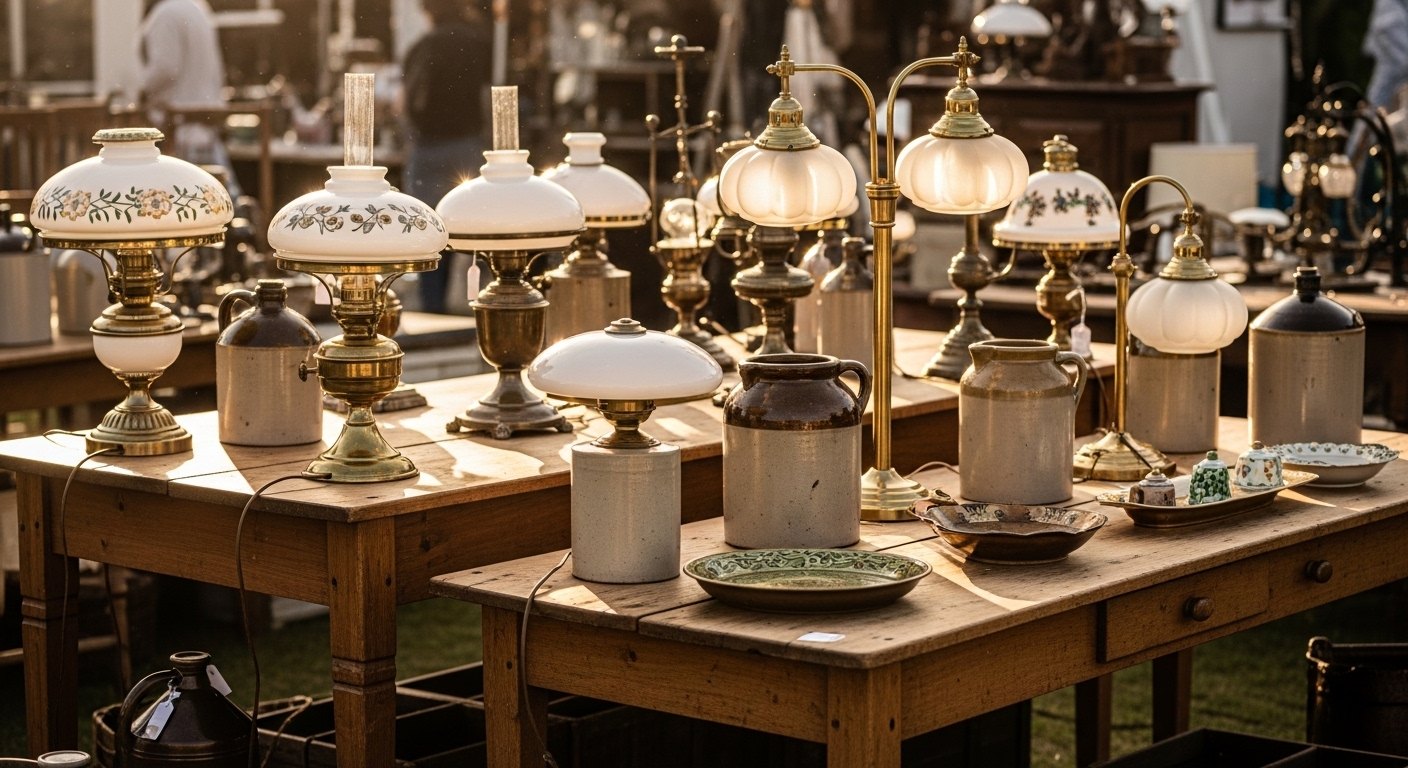
A cottage should look gathered over time, not bought in one go. Inherited pieces, antiques-fair finds, the odd new thing chosen to fit, a collected mix that tells a story. The opposite of cottage style is a perfectly matched, coordinated scheme; the magic is in the slight mismatches, the patina, the sense that the room accumulated rather than arrived. That's why cottage style suits a budget so well.
Warmth Above All
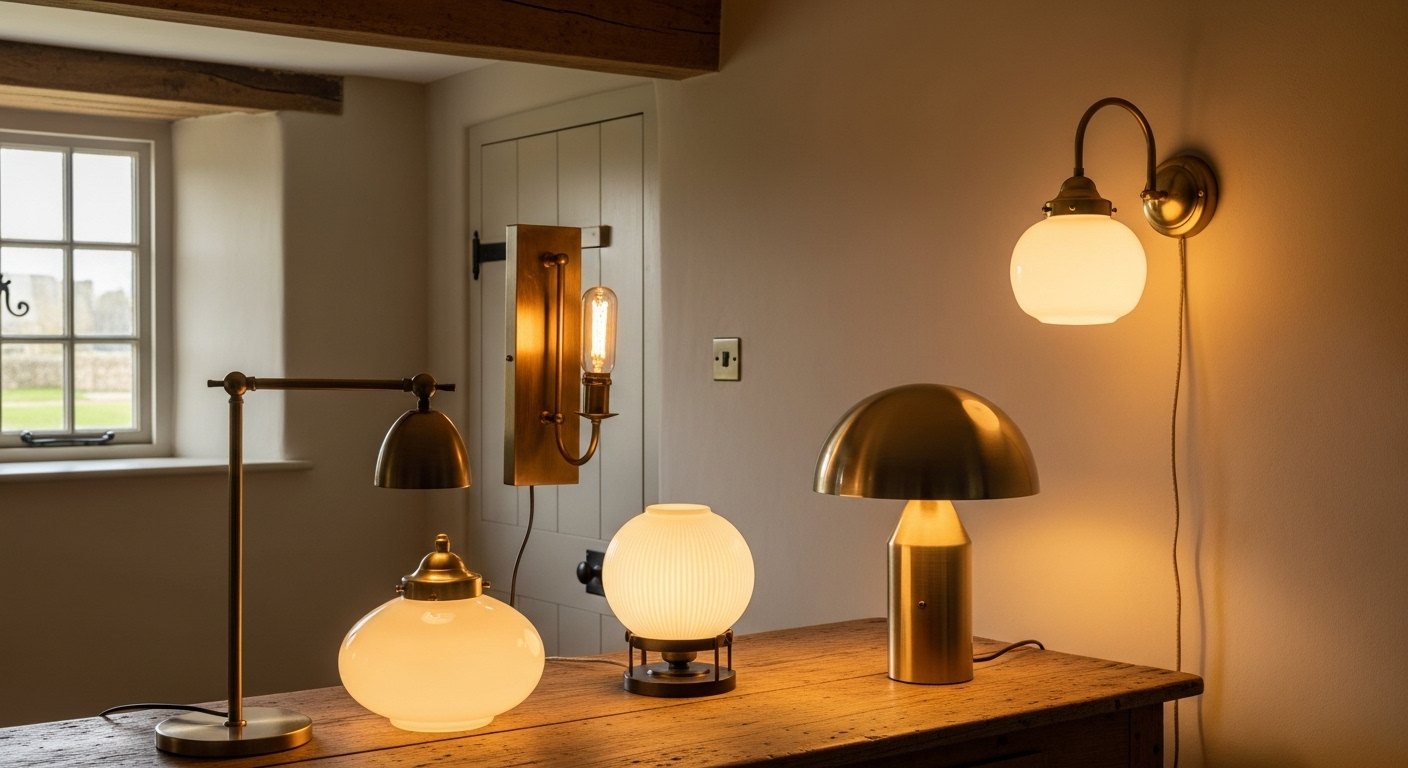
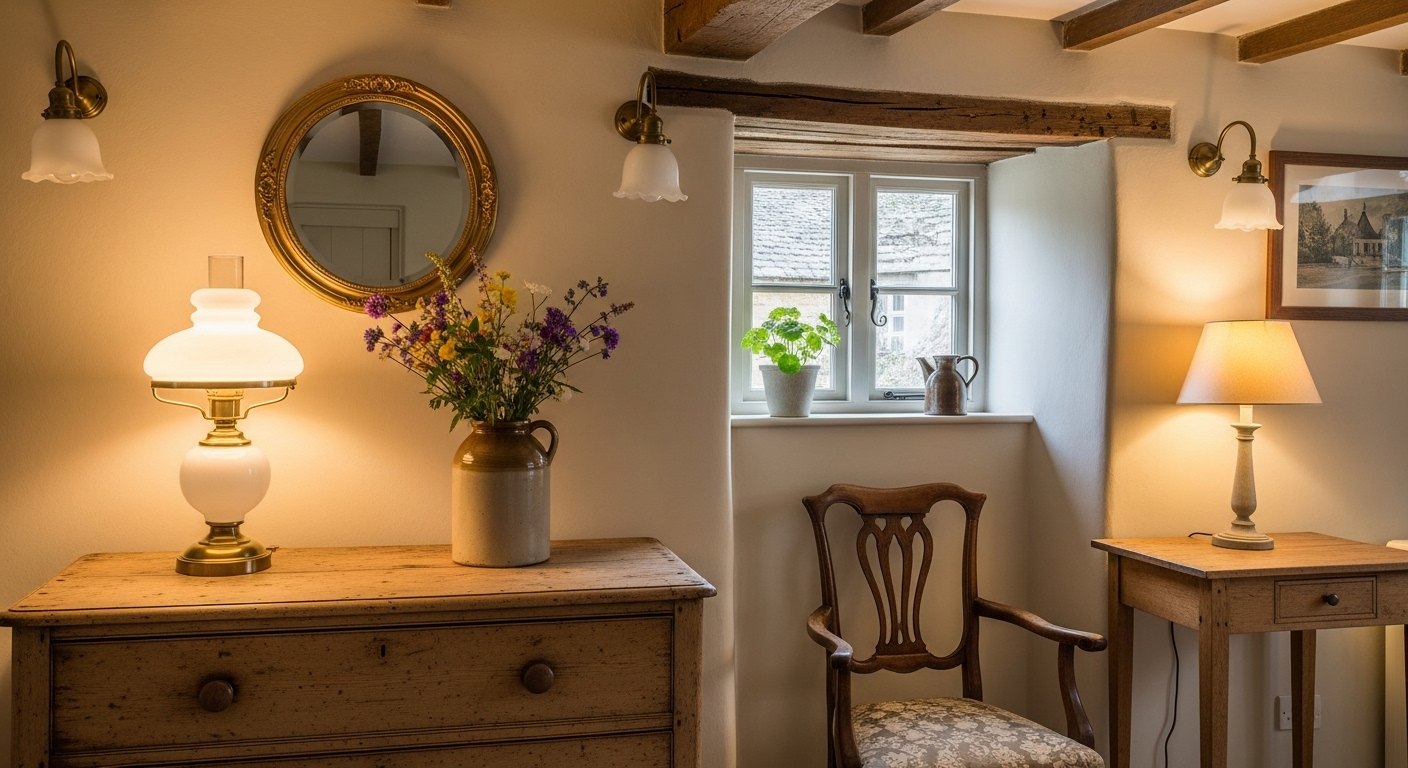
If there's one essential, it's warmth, of materials, of colour, and above all of light. Cottage rooms were built around candle and firelight, so they want warm, low, layered light: brass and milk-glass fixtures, lamps, candles, and the glow of a hearth, all on warm 2700K bulbs. Get the light cold and the whole cottage feeling collapses, however many florals you add.
Not Necessarily Floral
Florals can feature, but they're optional. Our cottage is largely plain, soft heritage colours, natural materials, very little pattern. And reads unmistakably cottage through its stone, timber, lamplight, and the jug of garden stems on the table. Cottage style is about warmth and a lived-in feel, not chintz. If you love florals, use them; if you don't, you lose nothing.
The Garden Comes In
A cottage and its garden are one thing, and bringing the garden indoors is central to the style, a jug of foraged stems, herbs on the windowsill, a wall vase of cuttings. The seasons should be visible inside the cottage, in whatever the garden is offering that week. It's the simplest, cheapest, most authentic cottage touch there is.
Gentle Imperfection
Cottage style embraces the wonky and the worn. The uneven floor, the beam that isn't straight, the scrubbed table marked by decades of use. Where a modern scheme hides imperfection, a cottage celebrates it. The character is in the flaws, and trying to make a cottage perfect is the surest way to lose what makes it lovely.
Comfort First
Above everything, a cottage is for comfort, deep chairs, soft beds, a fire, a warm light to read by. It's a style you live in, not one you admire from the doorway. Every choice, from the seating to the lighting, should serve cosiness and ease. A beautiful cottage that isn't comfortable has missed the entire point.
A Way of Living, Not Decorating
In the end, cottage style is less a look than a way of living, gently, warmly, surrounded by honest materials and gathered things, the garden close at hand and a warm light always on. Get those bones right and you can take or leave the florals. It's the warmth and the honesty and the comfort that make a cottage, and those are things you feel rather than buy.
English Cottage Interior, Defined
An english cottage interior is built on honest natural materials, gathered and inherited pieces, soft heritage colours, garden flowers brought indoors, and warm low lighting. It's comfortable and collected rather than coordinated, embracing the wonky and worn. Get those bones right, warmth, honesty, and a lived-in, gathered feel. And the florals and bunting are entirely optional.
Cottage Style on a Budget
Cottage style suits a budget beautifully because it's built on gathered, vintage, and inherited pieces rather than new designer ones. Hunt antiques fairs and charity shops, mix in what you've inherited, add warm bulbs and lamplight, and forage garden stems. The collected, lived-in look is the opposite of an expensive matched scheme. It costs patience, not money.
Shop this post: milk-glass pendant lights and wall vases and pots