A wicker pendant light in a cottage kitchen has three rules I learned by breaking each of them: size it to the ceiling and not to the island, because ceiling height minus 7 feet is your maximum drop, keep natural wicker away from the hob's steam, and buy hand-woven rattan over machine-wound because the thicker fibres last. My Cotswolds kitchen has a ceiling at 7 feet 2 inches, stone walls that stay cool in summer and cold in winter, and a small island I added three years ago from reclaimed pine boards; when I decided it needed a pendant, I bought the wrong one twice before I got it right. This post is mistake one and the ducking, the low-ceiling rule and the arithmetic, mistake two and the split wicker, what hangs there now and where, the bleached rattan and why, the second smaller pendant over the table, construction quality and the weight test, the cord and the ceiling rose, the bulb inside a woven shade and the pattern it throws, the hob and the steam in detail, cleaning wicker, the £20 that matters, the two together, what the light does to a stone kitchen on a grey morning, the mistakes, and the cost of three pendants.
Mistake One: Too Large
The first pendant was 22 inches in diameter, natural wicker, lovely. On a ceiling at 7 feet 2 inches, even hung at minimum drop, the shade sat at 5 feet 8 inches from the floor, just above eye level for most adults; walking past it required conscious ducking, and my husband, at six foot, walked into it twice on the first evening. It came down after ten days and went to a friend with a 9-foot kitchen, where it's perfect, which is the whole lesson in one sentence.
The Low-Ceiling Rule
For low ceilings the rule I should have known: ceiling height minus 7 feet equals your maximum pendant drop in feet. At 7 feet 2 inches I had 2 inches of drop, meaning a ceiling-flush or semi-flush fixture was technically the only safe option over a walkway; a small pendant on a very short cord, under 6 inches, was the compromise I ended up with over the island, where nobody walks under it, and a flush fitting over the walkway. The low-ceilings pendant post is the rule applied to every room in this cottage, and the kitchen is where it bit first.
Mistake Two: Natural Wicker Near the Hob
The second pendant was perfectly sized, 14 inches, natural wicker, lovely, and I hung it above the end of the island closest to the hob, about 3.5 feet away. By month three, the wicker nearest the hob side had visibly darkened and one section had started to split; steam from the kettle and weekend cooking had worked into the natural fibres, swelled them, and dried them, over and over. I moved it to the opposite end of the island, above the end used for pastry and prep work, no steam, no heat, and two years later it looks almost exactly as it did when new. The pendant was right; the position was wrong.
What I Have Now
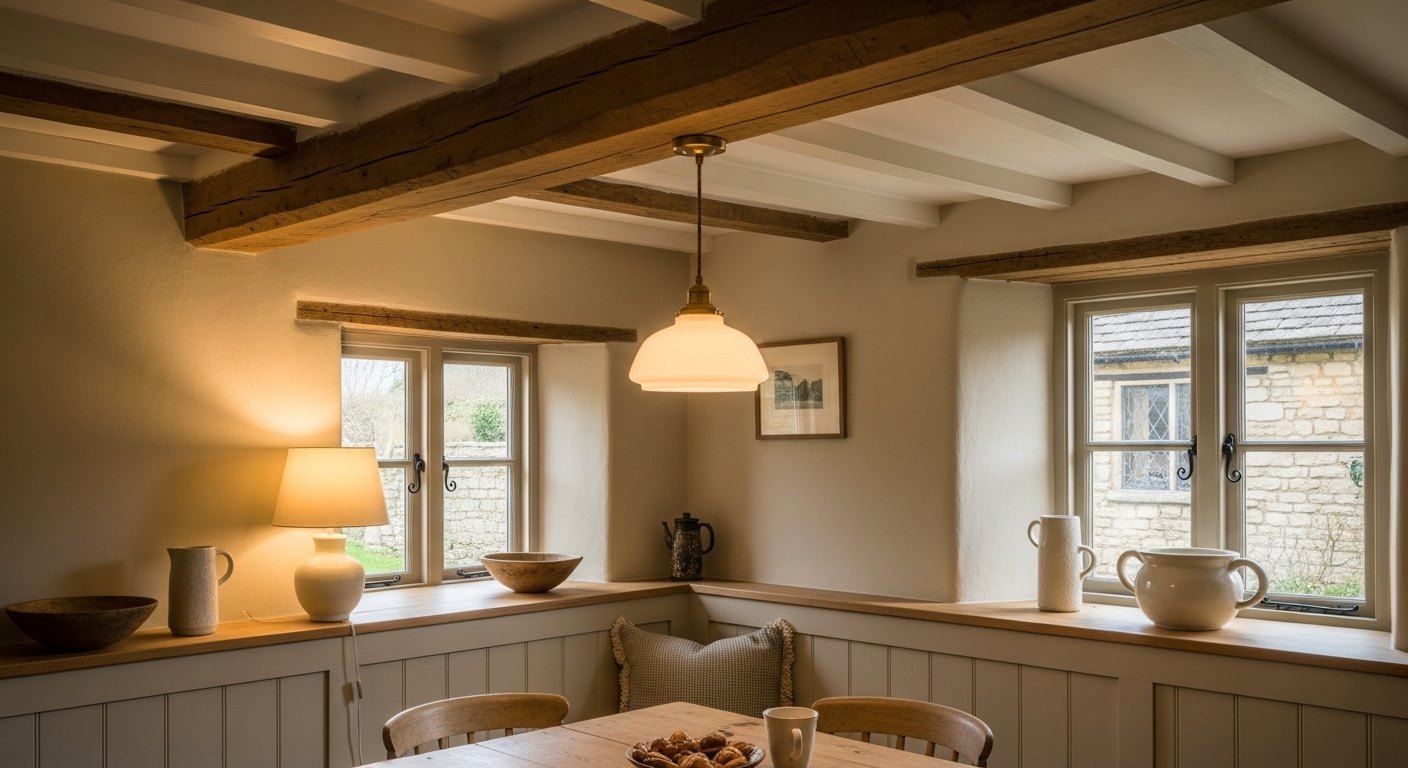
Above the centre of the island: a 16-inch bleached rattan pendant on a 4-inch cord, hanging at 34 inches above the island surface, which puts its bottom at 6 feet 4 inches from the floor, comfortably above a head at the island and out of the walkway entirely. Above the dining end of the kitchen, a small table with two chairs set against the window: a smaller 12-inch version in natural wicker, positioned where no steam reaches it. The two together make the kitchen feel considered rather than lit.
Why Bleached Rattan
The bleached finish gives the island pendant a lighter, more Scandinavian quality that suits the pale pine island top, and a bleached or sealed finish tolerates the kitchen's humidity better than raw natural fibre, because the bleaching process closes the surface a little. It's still kept away from the hob, but it's the one I'd trust nearest to it. The natural wicker over the table, by the window, gets no steam and keeps its honey colour, and the two finishes read as a pair rather than a match, which suits a cottage where nothing matches.
The Second Pendant Over the Table
The 12-inch natural wicker over the small table hangs at 30 inches above the tabletop, lower than the island's because nobody walks under a table, and it's on its own dimmer at 40 percent for supper for two. It's the pendant that came down from the hob end, re-hung where it belongs, and it's the lesson that a wrong position isn't a wrong pendant. The dining room post has the big table's light; this is the kitchen's small one.
Construction Quality: The Weight Test
Not all wicker is equal. Machine-wound wicker has consistent spiral spacing but thinner fibres that crack sooner; hand-woven rattan has visible irregularity but the thicker natural fibres last. You can tell by the weight: a hand-woven pendant at 14 inches weighs noticeably more than a machine-wound equivalent, and the irregular weave is the tell. Spend the extra £20 for the hand-woven version; the split in mistake two was a machine-wound fibre, and the hand-woven one over the table has taken two years of the window's sun without a mark.
The Cord and the Rose
A cloth-covered cord in a natural flax colour, not a chain and not a plastic flex, on a small aged-brass ceiling rose that sits flat to the beam; a wicker pendant on a white plastic flex is a lampshade on a wire, and on a chain it's two materials arguing. The island's 4-inch cord is so short the rose and the pendant almost touch, which looks intentional because the rose is the right colour. Under a low beamed ceiling, the rose is seen at eye level from the stairs, and it has to be as considered as the shade.
The Bulb Inside a Woven Shade
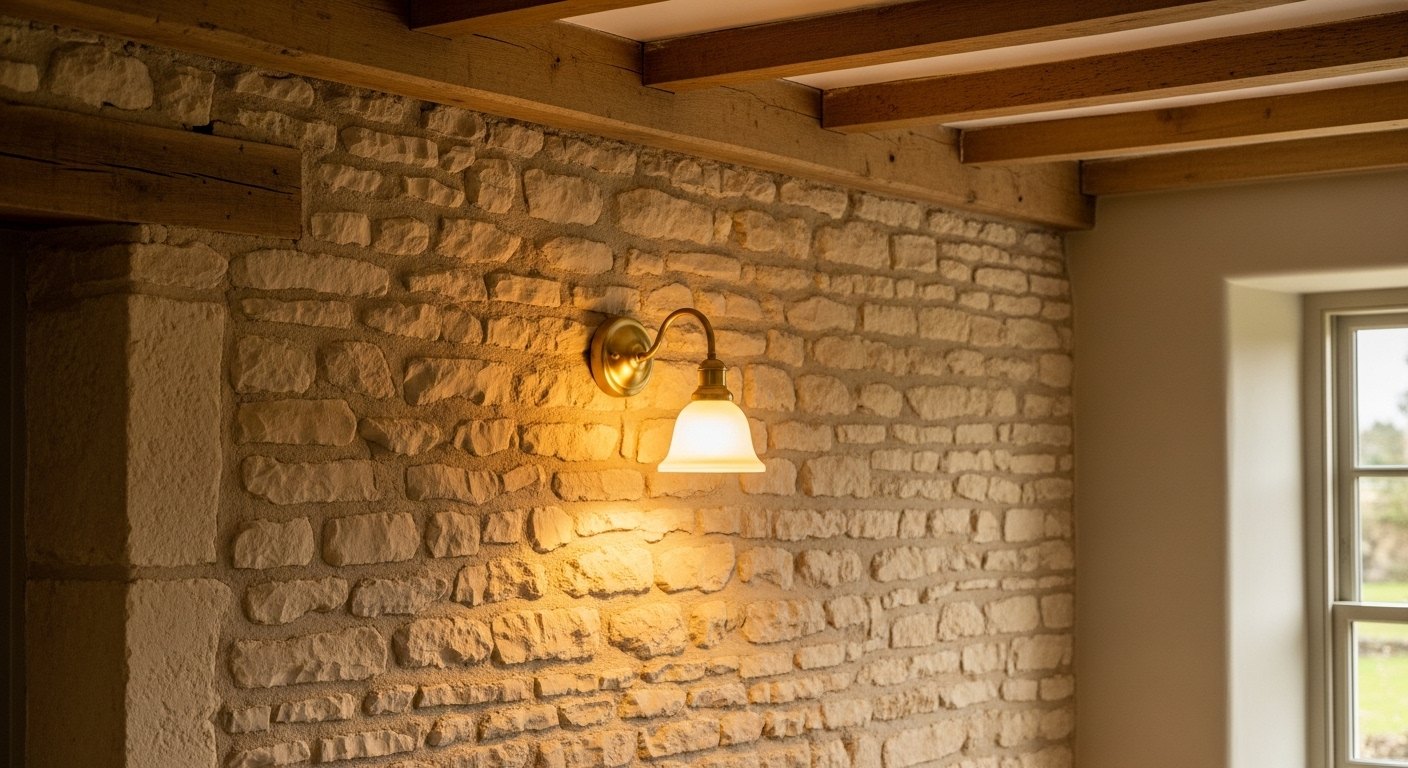
A 2700K LED, 600 lumens, with a frosted globe, because a clear filament bulb inside a woven shade is a bright point seen through gaps and it dazzles at 6 feet 4; frosted, the whole shade glows and the weave throws its pattern on the ceiling and the stone. The pattern is the reason to have a wicker pendant at all: it softens the overhead light into something that looks like morning sun filtered through leaves, which sounds fanciful but is how it reads in the room, on a grey Cotswold morning at 7 a.m. with the kettle on.
The Hob and the Steam, in Detail
A kettle boils twice a day and a Sunday roast steams for four hours, and natural fibre within a metre and a half of that swells and dries repeatedly until it splits; the darkening is the first sign, the split is the second, and neither reverses. The rule is a metre and a half from the hob for natural wicker, a metre for bleached or sealed, and nothing woven directly above a hob at any distance. The extractor helps and doesn't solve it; position does.
Cleaning Wicker in a Kitchen
A soft brush attachment on the hoover every fortnight from the outside, a dry cloth inside monthly, and a barely damp cloth twice a year on the bleached one; never wet, which swells the fibre. Grease from a kitchen settles on the weave over months, and the island pendant, even at its distance, gets the damp cloth more than the table's. It's five minutes and it's the one maintenance a woven pendant asks, in exchange for never showing a fingerprint.
The Two Together
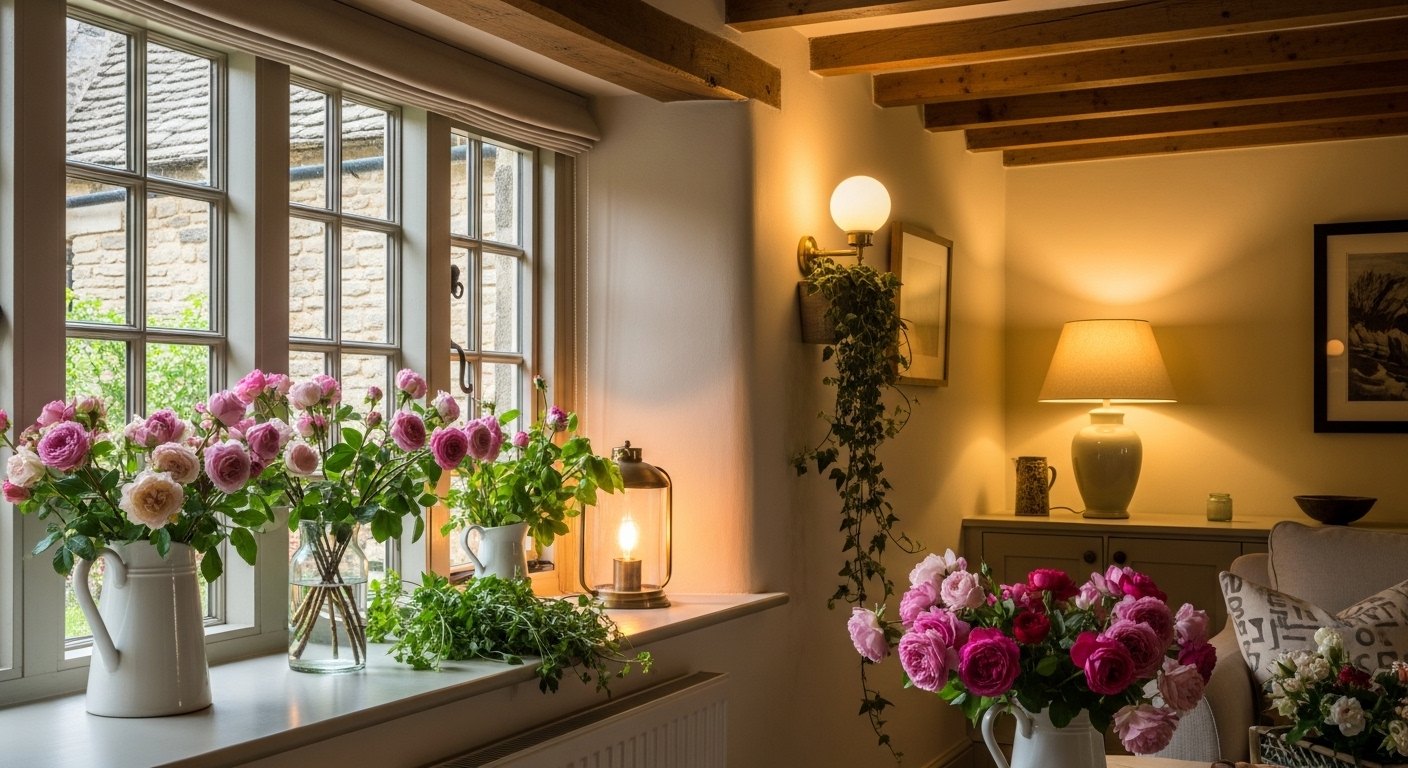
Island pendant at 60 percent for cooking, table pendant at 40 for eating, both off when the window does the work, which in summer is until nine; the kitchen has two warm points at two heights and no overhead glare, and the low-beamed cottage lighting post is why a cottage kitchen's light comes from pendants and wall lights and never from a flush disc in the middle of the beams. The two wicker shades are the kitchen's only decoration and its only light after dark, and that's the right amount of both.
A Grey Morning
Seven a.m. in January, the window still dark, the island pendant on at 60 and its weave on the stone wall behind the hob, the kettle going, and the kitchen the warmest-looking room in the cottage; the pendant does what a fire does in the sitting room, which is to give a cold stone room a warm centre. The grey-day bulbs post is the 2700K rule; the wicker is what makes 2700K look like sunlight.
Where I'd Look
BO-HA's pendant collection has natural material options worth looking at if you want the size and the drop stated up front, which for a low ceiling is the whole purchase; check the diameter and the minimum cord length before the finish. And hold it in the shop, or read the weight in the listing, because the weight is the weave.
Wicker Under Beams
The kitchen ceiling is oak beams at 7 feet 2 and boards between, and a woven pendant under beams is a texture against a texture; it works because the wicker is pale and the beams are dark, and the rattan's weave reads as the lighter cousin of the oak's grain. A metal pendant under these beams looked like a piece of plumbing, which was a fourth pendant I haven't counted because it was borrowed. Natural fibre is the material that belongs under old timber, and the cottage tells you so the moment it's hung.
Wicker and the Stone Walls
Stone walls are cold, grey and uneven, and a woven pendant's pattern thrown across them at night makes them warm and textured; it's the one light in the cottage that turns the walls into a feature rather than a backdrop, and it's why the island pendant is centred so its pattern lands on the wall behind the hob and not on the extractor. The stone walls post is the wall lights' version; the pendant's is a pattern, not a wash.
The Island Itself
Reclaimed pine boards on a frame my husband built, 5 feet by 2, oiled, with the pastry end under the window and the prep end nearest the hob; the pendant is centred on it and not on the room, which are 8 inches apart, and the centring is what makes the island read as a piece of furniture with its own light rather than a table under the kitchen's. The cottage kitchen post is the rest of the room; the island and its pendant are the part added three years ago and the part guests assume was always there.
A pendant over an island is the kitchen's one piece of jewellery, and in a cottage it should be the kind you'd find at a market, not in a showroom.
Mistakes
Twenty-two inches under 7 feet 2. Natural wicker a metre from the kettle. A clear bulb in a woven shade, for a week of dazzle. A white plastic flex on the first pendant. And not measuring the ceiling before buying anything, which is the mistake the other four grew from and the one this post is for.
The Bottom Line
Measure your ceiling height before you buy. Keep wicker away from steam. Choose hand-woven over machine-wound, and bleached or sealed finishes for longevity near cooking. And accept that in a cottage kitchen, the pendant will be the most noticed thing in the room, which means it is worth getting right, even if it takes three.
The Cost of Three Pendants
The 22-inch, £85, given away. The 14-inch natural, £110, re-hung over the table. The 16-inch bleached, £130, over the island. Two cloth cords and roses, £40. Bulbs and a dimmer, £30. About £395 for two pendants that stayed and one that taught me the ceiling rule, and the £85 was the cheapest lesson in the cottage.
Shop the pendant: pendant lights and kitchen pendants with the drop stated for low ceilings