The boot room is where cottage life really begins. The muddy, practical threshold where wellies come off and dogs get towelled down before anyone reaches the warm heart of the house. Ours is small and humble, with a flagstone floor and a row of pegs, and making it both hard-working and welcoming was a quietly satisfying corner of the restoration. Here's how we did it.
A Hard-Wearing Floor
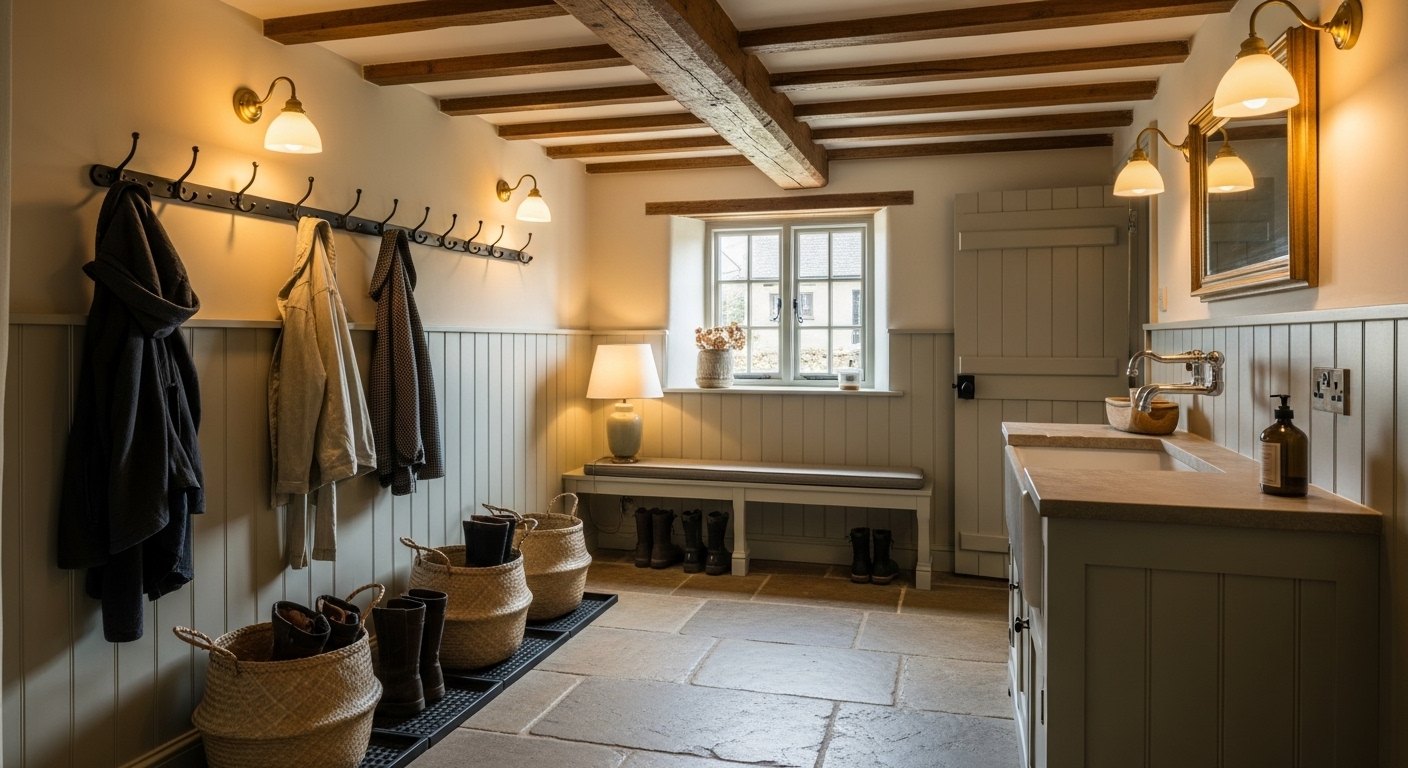
The floor is original flagstone, uneven and worn, and we simply cleaned and sealed it. Flagstone, quarry tile, or slate is the right choice for a boot room. It shrugs off mud and wet boots and only looks better with age. A natural stone floor is both practical and deeply period-appropriate in a country cottage.
Pegs, Baskets, and a Bench
The boot room only works if everything has a place: a row of iron pegs for coats, a low rack and baskets for boots. And a little bench to sit and pull them off. Generous, obvious storage is what keeps the mud and clutter contained at the threshold rather than tracking into the house. A row of well-used pegs is half the charm of the room.
Practical, Warm Light
A boot room needs more practical light than the rest of the cottage. You're finding lost gloves and checking for mud here. A good warm overhead does the main work, and the entryway fixtures I considered all kept that balance of bright-enough but still warm. Crucially, the bulb stays 2700K so the room feels welcoming, not like a utility cupboard.
A Light by the Sink
There's a deep butler sink for washing muddy hands and filling the dog's bowl, and a small wall light beside it makes that corner usable on a dark winter afternoon. A wall light by a working sink or a small mirror is the kind of practical detail that makes a boot room pleasant rather than merely functional.
Humble, Characterful Materials
Painted tongue-and-groove on the walls in a soft heritage green, the flagstone floor, iron pegs, and seagrass baskets. A boot room can be humble and full of character at once, honest, natural materials that look right in an old cottage and don't mind a bit of mud. It carries the warm bulb colour and the heritage palette through from the rest of the house.
Where It Belongs in the House
A good boot room protects the rest of the cottage. It's the buffer between the muddy outdoors and the warm sitting room beyond. Lighting and layout work together to make it the natural place to pause, shed the outside, and step into the warm. It's the least glamorous room in the house and one of the most useful.
What I'd Do Differently
I'd have added more pegs. You can never have enough. And put the overhead on a sensor so it greets us with warm light when we come in laden with shopping and muddy from the garden. Otherwise, the boot room taught me that even the humblest cottage room deserves warm light and proper storage.
Boot Room Ideas for a Cottage
The best boot room ideas are all about generous, obvious storage and a hard-wearing floor: a long row of pegs, baskets and a rack for boots, a bench to perch on. And flagstone or quarry tile underfoot. Add a deep sink and warm, practical lighting, and the muddiest room in the cottage becomes the one that keeps the rest of the house clean.
Keeping It Part of the Cottage
A boot room can be humble and still feel part of the house, carry through a heritage paint colour, a warm 2700K bulb. And natural materials, and it reads as cottage rather than utility cupboard. The trick is letting it be practical without letting it be cold; warm light and a painted tongue-and-groove wall do most of that work.
Shop this post: entryway light fixtures and wall sconces