Every cottage has a box room. The smallest bedroom, too little for a proper guest and too useful to waste. Ours became the study, the smallest and hardest-working room in the house. With the right use of the walls, the window, and two layers of light, a box room makes a surprisingly good study; its very smallness suits focused work. Here's how we did it.
The Desk Under the Window
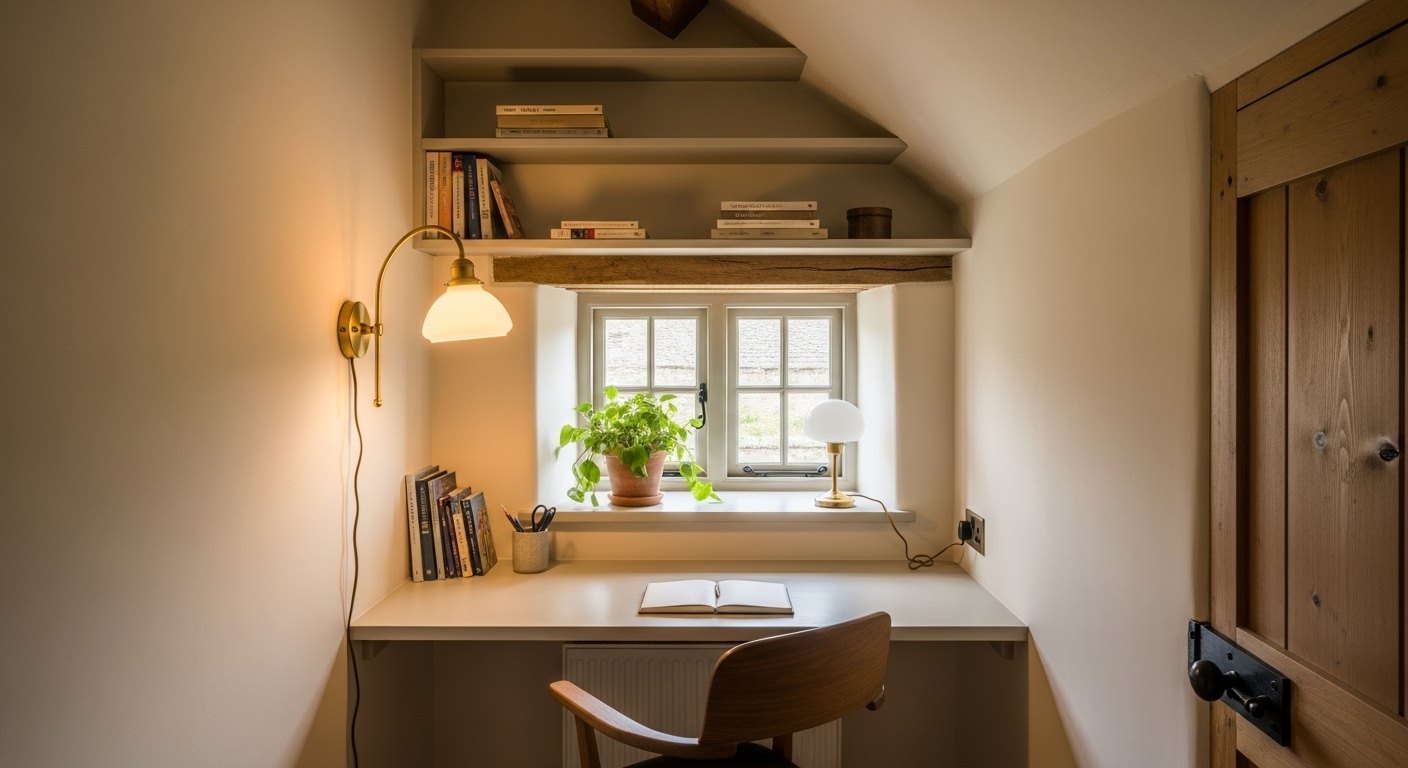
A compact desk sits under the little window, borrowing the daylight and a view of the lane. Putting the desk under the window uses the wall most small rooms waste and gives you natural light to work by. We angled it so the window doesn't glare on the screen, with a light-filtering blind for the bright part of the day.
Shelves to the Ceiling
The key to a box-room study is building storage upward. We ran shelves right up to the sloping ceiling on two walls, which clears the floor and the desk and holds books, files, and the inevitable clutter. In a tiny room, going vertical with storage is what keeps the working surfaces clear and the room from feeling cramped.
Task Light That Keeps the Desk Clear
A small adjustable wall light beside the desk throws focused light onto papers without taking up precious desk space or glaring on the screen. In a box room every inch of surface counts, so a wall-mounted or clip task light beats a desk lamp. Positioned to the side of my writing hand, it lights the work without casting a shadow.
A Warm Ambient Layer
A small lamp on the shelf adds a soft ambient glow so the room isn't lit by the task light alone. Two layers, task and ambient, keep even a tiny study from feeling like a harsh little cell. The lamp also makes the room inviting in the evening when it doubles as a quiet corner to read.
A Light, Warm Palette
The walls are a warm off-white to keep the small room feeling open, with the shelving painted to match so it recedes. A light, warm palette is what stops a box room feeling boxed-in, and it lets the books and the warm light be what you notice. One small piece of art and a plant on the sill add life without clutter.
Warm and Focused
The ambient light is warm 2700K; the task light I can run a touch cooler for daytime focus, or swap for a tunable bulb that shifts through the day. A study is the one cottage room where a slightly cooler working light earns its place, balanced by warm light for the edges of the day.
What I'd Do Differently
I'd have built the shelves all the way up from the start rather than adding them in stages. And I'd have chosen a wall-mounted task light immediately instead of cluttering the small desk with a lamp first. A box room rewards using every vertical inch and keeping the surfaces clear.
Small Home Office Ideas for a Box Room
The most useful small home office ideas all use the walls and the window: a compact desk under the window for daylight, shelves built to the ceiling. And a wall-mounted task light to keep the desk clear. A box room makes a surprisingly good study precisely because its smallness suits focused work, go vertical with storage and light it at two warm levels.
Task and Ambient in a Tiny Room
Even a tiny study wants two layers, a focused task light on the desk and a soft ambient lamp. So the room isn't lit by one harsh fixture. A wall light keeps the small desk clear, and a warm lamp makes the room inviting in the evening. The ambient light stays warm at 2700K; the task light can run a touch cooler for daytime focus.
Shop this post: wall sconces and table lamps for the living room
My friend Sarah at The Kinney Home is brilliant on making small, organised rooms work for a busy household, her box-room-and-organisation ideas translate straight to a cottage study.